First, an apology: there will be no photographs. I didn’t take many. I was too busy being flabbergasted. Also, eating.
Rosemarie and I are back from our first-ever Malice Domestic conference. It won’t be our last. We’ll enjoy them all, but I daresay that future installments of this convention devoted to the traditional mystery novel won’t quite match this one, and not only because it was Malice’s silver anniversary edition.
As explained earlier, we ventured to deepest Bethesda, Maryland in order to receive this year’s William F. Deeck-Malice Domestic Grant for Unpublished Writers. We’d won the honor for our novel Design For Dying: An Edith Head Mystery. We were eager to meet our fellow recipient Ellen Byron, whose book Reality Checked is set in that most murderous of environments, the private school world of L.A.
The grants committee members gathered us up early and took fantastic care of us. Among the first things that we learned was the incredible number of previous winners who had returned to Malice as published novelists and nominees for the Agatha Awards. More impressive was the willingness of these writers to share their wisdom with us.
This year’s convention featured quite the array of special guests, with Laurie R. King, Aaron Elkins, Carolyn Hart and Peter Robinson receiving honors. There was also a stellar array of panels covering a host of crime fiction topics.
Saturday night was the Agatha Awards banquet, where the missus and I got our moment in the sun. It’s not a moment either of us is likely to forget. When grants committee chair and unofficial guardian angel Harriette Sackler announced the premise of our book – that Hollywood’s most famous costume designer must turn detective to solve a young actress’s murder – an encouraging buzz rolled through the ballroom. In the bar after dinner, newly-minted Mary Higgins Clark Award winner Hank Phillippi Ryan told us, “That was the sound of a roomful of writers saying, ‘Why didn’t I think of that?’” We received congratulations and advice from plenty of attendees including Agatha winners Louise Penny and Catriona McPherson and toastmaster Laura Lippman, who closed the event on Sunday with an inspirational Q&A. (The full round-up of Agatha nominees and winners is here.) And we had several conversations with agents and editors that were, in a word, extremely promising. (OK, that’s two words. Clearly, I need an editor.) I cannot stress this enough: if you have ever harbored any interest in writing a mystery novel, you owe it to yourself to look into this grants program. It is a transformative experience.
But what had the greatest impact was easily the sheer number of mystery readers – Rosemarie and I lost count at two dozen – who walked up to one or both of us to say how much Edith Head meant to them. Not only as a style icon, but as a professional woman who blazed a trail that is still being followed. Writer Carole Nelson Douglas told us about reading an interview in Parade magazine in which Edith described essentially conning her way into a job at Paramount Pictures despite having no training as a sketch artist. “Edith taught me to say yes to things,” Carole said. It’s an invaluable life lesson, and one our Malice whirlwind has made us take to heart anew. We are saying yes to all of this.
Random notes: if you want cocktails in the District of Columbia, I heartily second all the recommendations I heard for The Passenger. The bartender there made me a whiskey smash with pear liqueur that I can taste even now. And I have to commend the staff at the Hyatt Regency in Bethesda, who truly got into the spirit of the occasion including a doorman dressed as Sherlock Holmes and nightly themed drinks at the hotel bar. One was called the Who Done It?, which meant I had Tavares in my head all weekend. Here’s the song. Maybe it will make up for the lack of photographs.
Tuesday, May 07, 2013
Me Elsewhere: Memories of Malice

Wednesday, May 01, 2013
Book: The Disaster Diaries, by Sam Sheridan (2013)
Sam Sheridan is an MMA veteran as well as a former EMT and wilderness firefighter – and he feels unprepared for catastrophe. If he’s not ready for The End of the World as We Know It (or TEOTWAWKI, as he helpfully abbreviates it), then yours truly is even worse off. No cocktail ice or Major League Baseball? I might as well lie down and wait for the rampaging hordes to come to me.

In addition to the scrupulous research and a surprisingly clear-eyed and optimistic closing chapter, Sheridan frames all of this information in terms of an epic and ongoing calamity. It starts with The Big One striking the West Coast, followed by a mysterious viral outbreak, zombies, an alien invasion, bad weather and cannibalism. Any two of these things in combination would break lesser men yet Sheridan is resolute, curing his own clothes and wood-smoking gunshot wounds. Seriously, I will be of no use to you when shit goes bughouse.
Actually, scratch that. There is one thing I can do. I can lead a ragtag band of survivors to the ruins of a library and point them toward this entertaining, useful book. With any luck, they’ll eat me last.
Friday, April 26, 2013
Cocktail of the Week: The Corpse Reviver #2
In which a fire that had not lost its spark is nonetheless rekindled.
Tackling the obvious question first: what happened to the Corpse Reviver #1? It was hushed up by a covert government agency in the wake of an unpleasant incident at a suburban Pittsburgh shopping mall in 1978. Obviously.
In truth there’s an entire brood of Corpse Revivers, all part of an unruly genus of cocktails. Call them what you like: the bracer, the eye-opener, the hair of the dog. Drinks meant to get you up and out following a night of being down and dirty. Corpse Reviver #1 (now declassified thanks to my Freedom of Information Act request) calls for Cognac, apple brandy and sweet vermouth, and there are a host of other formulae. But #2 has become the standard, to the extent that the number is often omitted. In the Savoy Cocktail Book (1930), Harry Craddock famously warned that “four of them taken in swift succession will unrevive the corpse again.”
It’s a simple recipe, originally consisting of equal parts gin, Cointreau, lemon juice, and Lillet. Which brings us to our problem.

Deliverance came from Italy in the form of Cocchi (pronounced co-key) Americano. This aperitivo, from the same people responsible for the Vermouth di Torino that has of late been elevating my Manhattans, reasonably approximates Kina Lillet. It’s as close as we’re going to get to recapturing lightning in a bottle. I’d always enjoyed a Corpse Reviver #2 made with Lillet Blanc. But substituting Cocchi Americano gives it a structure I’d never noticed it was lacking, the additional bitterness only augmenting the drink’s ebullience. It’s like meeting the cocktail again for the first time, and falling even harder for it.
This discovery will pay immediate dividends. The Corpse Reviver #2 is my go-to selection whenever I’m asked to play bartender at a summer party, to the extent that I even bought a mister. The strong citrus presence means it’s refreshing. Because it’s an equal parts drink you can prepare them by the pitcher, with one in the refrigerator in advance of your guests. When you have to make refills – and you will – everybody gets into the act, one partygoer juicing lemons while another prepares the glasses with absinthe (or Pernod). Try it yourself and tell me I’m wrong. The name may say Walking Dead, but for Mad Men season there’s nothing better.
The Corpse Reviver #2
¾ oz. gin
¾ oz. Cointreau
¾ oz. Cocchi Americano
¾ oz. lemon juice
dash of absinthe (or Pernod)
Shake. Strain into a glass rinsed or misted with absinthe (or Pernod). Garnish with a cherry.
Wednesday, April 24, 2013
Books: Double Down
Quick takes on new titles from veteran hands.
Thomas Perry’s The Boyfriend (2013) kicks off with a strong chapter depicting an awkward lunch between a trio of former sorority sisters, the most content of whom is lying about her livelihood as a high-priced call girl. When she’s brutally killed, the woman’s heartbroken parents hire private eye Jack Till. Till expects to come up as empty as the LAPD did, but instead stumbles onto several other murders of similar looking escorts across the United States. Till’s attempt to outthink the killer sets up a twist that startles even as it anchors the book firmly in Perry’s wheelhouse. The pattern Till unearths stretches credulity considerably, but Perry commands attention with his otherwise compact plotting, the all-too-plausible history of his villain, and a thorough exploration of how technology has altered the business of prostitution.

Friday, April 19, 2013
Cocktail of the Week: The Manhattan
In a serendipitous convergence, the ninth anniversary of this blog coincides with the fiftieth – the fiftieth! – Cocktail of the Week installment. I’m going to celebrate the occasion by paying tribute to the mixed drink you are most likely to find in my glass. And why are you nosing around my glass, anyway? Get yer own. Bar’s over there.

Quoting the estimable bartender/historian Gary Regan: “(T)he Manhattan is the best cocktail on earth. It’s so simple, but so darn complicated.” Of course, in Chinese the word for complication is also the word for opportunity. (OK, I know it’s actually “crisis” and “opportunity,” and I’m also aware that that saying isn’t technically true. But work with me here. I’ve cranked out fifty of these things.) The Manhattan consists of three ingredients – whiskey, vermouth and bitters – and altering any one of those elements transforms the entire drink. My golden ratio is below, but you owe it to yourself to find the balance of ingredients that works best for you. All cocktails are matters of personal preference, none more than the oh-so-malleable Manhattan.
Whiskey. The Manhattan began as a rye cocktail. For decades, though, it was made with bourbon. It’s only with the recent rye revival that the pendulum has swung back. I still enjoy bourbon Manhattans, but the original will always be my first choice.
Vermouth. “Perfect” Manhattans, featuring equal amounts of rosso and dry vermouth, are now popular, but I have to confess I’m not a fan. Dry vermouth tends to flatten the whiskey’s taste. Plus sweet vermouths offer a great avenue for experimentation. Lately I’ve been making Manhattans with Cocchi Vermouth di Torino, based on a recipe from 1891 and boasting strong notes of cocoa that you won’t find in any other members of its family.
Bitters. I ordered a Manhattan at a bar in Los Angeles once and the chagrinned bartender told me he didn’t have bitters. Any bitters. At all. I did not immediately cancel the order and walk out, mainly because a) I was young and didn’t know any better; b) there were no other bars close by; and c) the place had been a regular haunt of the Rat Pack and I couldn’t bring myself to take my foot off the same rail where Dean Martin had once rested a loafer. (Later, I stood up to use the restroom and literally walked into William L. Petersen, who could not have been nicer. Here ends my best Hollywood story.)

Oh, and a cherry. I should probably say a word about the garnish. Man up and get the cherry, just make sure it’s the right cherry. Not one of those sickly sweet maraschino jobs out of a bottle; veteran bartenders have told me that in the bad old days of the 1970s, Manhattans were not only served with these gaudy neon ringers but with some of the juice from the jar slopped in for good measure. You can make your own by steeping sour cherries in maraschino liqueur or you can go to the source – Luxardo, primary producers of the liqueur – and buy a jar. One you sample the genuine article, you won’t be satisfied with anything else. Cheers.
The Manhattan
2 oz. rye (or bourbon) (but ideally rye)
¾ oz. sweet vermouth
2 – 3 dashes of bitters
Stir. Strain. Garnish with an authentic maraschino cherry.
Friday, April 12, 2013
Cocktail of the Week: The Income Tax
It’s too easy, spotlighting the Income Tax around April 15. I should have thought outside the box and featured the Millionaire instead. But I don’t have any apricot brandy on hand. There’s always next year.
Plus, the drink deserves to be remembered, and not just during the IRS’s busy season. That’s because its foundation is a classic that once stood astride the cocktail world like a colossus. In the 1930s, the Bronx was mentioned in the same breath as the Martini and the Manhattan. In the film version of The Thin Man, William Powell’s Nick Charles counsels bartenders to shake the drink in two-step time.

The Income Tax takes the Bronx and simply adds bitters, an act I am wholeheartedly in favor of. I put bitters in my breakfast cereal. Well-chosen bitters add complexity to any drink and, lest we forget, were an original ingredient in the Martini. Angostura and OJ work particularly well together. The thinking is that the presence of bitters is how the Income Tax got its name. No one’s exactly happy about kicking in their fair share to the government.
Where it gets confusing is that a drink called the Maurice turns up in several older cocktail books including my trusty Duffy’s Official Mixer’s Manual with the identical recipe. Where it gets more confusing is that there are alternate versions of the Maurice where the only difference is the presence of absinthe instead of bitters.
So think of it this way: you just got three cocktail recipes for the price of one. The Bronx, The Income Tax, and The Maurice. Good luck getting that kind of return from Uncle Sucker come Monday.
The Income Tax
1 ½ oz. gin
¾ oz. dry vermouth
¾ oz. sweet vermouth
juice from ¼ of an orange
2 dashes of Angostura bitters
Shake in two-step time, just like William Powell advises. Strain. Garnish with an orange twist.
Wednesday, April 10, 2013
Movies: Paul Williams Still Alive (2011)/Phantom of the Paradise (1974)

Consider it part of an entirely new genre: the cinema of the oblivious. Documentaries in which the filmmakers insist on inserting themselves into the proceedings in order to demonstrate their love of their subject only to reveal their ignorance of its essentials. My favorite example of the form is Ultrasuede: In Search of Halston, which is more about director Whitney Smith’s vintage wardrobe and affinity for period hairstyles than the fashion designer.
Kessler tracks down his one-time idol, now twenty years sober and still possessed of a heroic work ethic, and goes on the road with him. Kessler is at times spectacularly irritating, wondering why he and Williams aren’t hitting it off, grousing about the performer’s wife ruining their time together, interrupting Williams mid-story to focus on the narrative he wants to tell.
What stymies him is Williams’ genial refusal to play along. Like Kessler, I remember Williams as a pop culture staple. A talk show fixture who’d guest on any crime drama, Williams would win an Academy Award one night then parachute out of a plane on Circus of the Stars the next. He’s also genuinely talented, writing terrific songs (“The Rainbow Connection”!) and some brilliant, deliberately bad ones for Ishtar. He’s got a hard-won understanding of what fame has cost him and given him, and he won’t allow Kessler to put him in a convenient box. When the director asks if all those game show appearances harmed his career, Williams essentially says sure, but: “Some part of Paul Simon wishes he’d done more Hollywood Squares, and I wish I’d written ‘Bridge Over Troubled Water.’” Williams’ only regrets stem from his behavior when he was an addict. His dogged refusal to view himself as a has-been or a failure means that Kessler can’t see him that way, either. Williams pointedly tells Kessler that the fact that his life in the last few years has been interesting “fucks up your movie – and I love that.” By the time it’s over, Kessler has grown to love it, too, and the curious bond that develops between putative chronicler and alleged subject makes the film a compelling investigation of celebrity. Here’s Williams appearing, shall we say, in character with Johnny Carson on The Tonight Show.
I followed up the documentary with a project from the height of Williams’ fame. Phantom of the Paradise is Brian DePalma’s rock opera take on The Phantom of the Opera. You’d think that Williams, with his diminutive size and his songs’ facility for tapping into isolation, would make a haunting phantom. Instead he’s cast as the villain, and he offers a game performance. An antic William Finley plays the title role without a hint of tragedy – and, bizarrely, with Williams’ singing voice. Childhood crush Jessica Harper is a rock goddess equal parts Stevie Nicks and Debbie Harry. Only Brian DePalma would end a musical with a split-screen assassination attempt. It’s like the man can’t help himself. Enjoy the trailer.
Monday, April 08, 2013
Extra, Extra!: Noir City
The Spring 2013 issue of Noir City was heaved off the trucks and hawked by our upstanding crew of clean-cut young newsboys on Friday. No doubt you heard their melodious, church-trained voices at appropriate hours throughout your weekend as they enticed you with the wonders contained within the pages of this fine e-lectronic periodical, the house rag of the Film Noir Foundation.

Also on hand is the latest installment of Keenan’s Korner, featuring crime fiction and cocktails. This outing includes reviews of the latest books by Dennis Lehane, Max Allan Collins and Lawrence Block. Plus a host of other terrific articles like Jake Hinkson on Frank Lovejoy, Imogen Smith’s profile of Jean Gabin, Carl Steward’s tribute to smoky songstress Julie London, Dan Akira Nishimura’s interview with director Monte Hellman (Two-Lane Blacktop), and Philippe Garnier on the dirty little secret of France’s fabled noir publisher. All of it gloriously interactive and impeccably designed by Michael Kronenberg. Seriously, just look at Michael’s amazing cover, inspired by the work of the late comics artist and publisher Carmine Infantino.
All this goodness sent to your inbox with the contribution of twenty dollars or more to the FNF. Help support the restoration of classic films and provide nutritious gruel for our corps of orphaned urchins. Go on, you know you want to.
*I can’t lie to you. The shitty retread of D.O.A. is not one of the winners.
Friday, April 05, 2013
Cocktail of the Week: The Dandy
What we have here is a tale of two mixed drinks. Both with the same basic ingredients – rye whiskey, Dubonnet Rouge, triple sec and bitters. The first, the Deshler, is named after a boxer, the second for a fop. The difference is one of balance and attitude. Or in a word: élan.
Don’t let the handle or the peacock tendencies fool you. Dandies are not to be trifled with. In a recent profile, Andrew Bolton, curator of the Costume Institute at the Metropolitan Museum of Art, said, “Beau Brummell, the original dandy, was defying previous sartorial codes, all that male plumage. He was the grandfather of punk, although he insisted that he wanted to be invisible.” Bolton also cites the Incroyables, the clotheshorses who dressed ostentatiously as a political gesture in response to the Reign of Terror. Albert Camus was even more direct: “The dandy is, by occupation, always in opposition. He can only exist by defiance.” Underneath all that flamboyance there’s a backbone.

And let’s not forget the garnish. The Dandy demands both lemon and orange twists. I tried intertwining them. Why two twists? They don’t call it the Dandy for nothing.
The Dandy
1 oz. rye
1 oz. Dubonnet
1 tsp. Cointreau
1 dash of Angostura bitters
Stir. Strain. Garnish with a lemon and an orange twist.
Friday, March 22, 2013
Cocktail of the Week: The Crux
Among my favorite moments in cocktail bars are those exchanges that make your drink choice a collaborative process. You provide direction while yielding to your bartender’s expertise, indicating what taste you’re in the mood for while leaving room for interpretation. With a few questions, an accomplished professional can divine exactly what you didn’t know you wanted.
You do not expect one of those questions to be, “How do you feel about Hawaiian Punch?”
That’s the question that Ben Perri of the Zig Zag Café put to Rosemarie when she said she was in a Cognac state of mind. Ben parried with the Crux, an overlooked offering that he described as a sophisticated version of the battery-inducing childhood favorite (watch the ad), having the flavor with none of the cloying sweetness.
Rosemarie was intrigued. The cocktail was exactly what Ben promised. I wrote the recipe on a coaster and started making them at home.

Hawaiian Punch famously featured seven kinds of fruit (again, watch the ad). In the equal parts Crux you get lemon juice, plus the bitter orange notes of Cointreau and both Cognac and the fortified wine Dubonnet providing a touch of the grape. That’s, what, three, maybe four fruits? Clearly there’s some kind of wizardry involved, because the result is wonderfully balanced and not remotely saccharine. Or, to put it another way, damned if doesn’t taste like Hawaiian Punch all grown up, holding down some tech sector job and living in a swank bachelor pad.
The Crux
¾ oz. Cognac
¾ oz. Cointreau
¾ oz. Dubonnet
¾ oz. lemon juice
Shake. Strain. No garnish.
Monday, March 18, 2013
Me Elsewhere: Fashioning A Mystery
This news went out via Twitter and Facebook over the weekend. Time to sing it from the rooftops here.

The whole thing was Rosemarie’s idea. A comic mystery – ideally, the first in a series – with the legendary costume designer (who would eventually receive thirty-five Academy Award nominations and win eight times, more than any other woman) forced to turn detective and solve a murder in 1937 Hollywood. It was an opportunity for the two of us to work together, on a project that combines some of our favorite things: intrigue, glamour, and show business. If you follow Rosemarie’s Twitter feed, you now know where all those #30sbeautytips and #30sfashiontips come from.
Needless to say, we are thrilled to be this year’s recipients. This is a tremendous validation of our efforts, and we will eternally be in debt to the judges. (Although not literally – it’s a cash prize!) Some fine writers have won this award in the past, and we hope to do it justice. We cannot wait to attend the Malice Domestic convention in May to accept the honor. With luck, the new draft will be finished by then.
Friday, March 15, 2013
Cocktail of the Week: The Borden Chase
The circumstances under which a cocktail was christened in honor of writer Borden Chase are unknown. What is beyond doubt is that the man deserved to have a drink named after him. Even though his name wasn’t actually Borden Chase.

Chastened by the experience, Fowler caught on as a sandhog then a taxi driver, piloting a hack through the Holland Tunnel that he’d helped to dig. He’d become a different kind of hack himself, churning out fiction for rags like Argosy. His novel about his sandhog days would become the 1935 Raoul Walsh film Under Pressure. Hollywood purchased other of his stories; one served as the basis for the Mike Shayne film Blue, White and Perfect. Fowler would then head west himself, but first a new handle was in order. He dubbed himself Borden Chase after the milk company and the bank, cashing in on their name recognition. Chase made his reputation with westerns, earning an Academy Award nomination for his work on Red River and writing several Anthony Mann/James Stewart films including the magnificent Winchester ‘73, before finishing his career in TV.
As for the drink, it’s part of the small but exceedingly close-knit family of Scotch cocktails. The Borden Chase is a savory variation on the best known of the clan, the Rob Roy, which itself is a Scotch Manhattan. The primary difference is the addition of pastis, in place of the original absinthe. Pernod pairs quite nicely with blended Scotch whisky. Feel free to use a more robust vermouth like Carpano Antica. This drink, like the work of its namesake, roughhouses, so don’t shy away from the strongest ingredients.
The Borden Chase
2 oz. Scotch
½ oz. sweet vermouth
¼ oz. Pernod
dash of orange bitters
Stir. Strain. No garnish.
Friday, March 08, 2013
Cocktail of the Week: The Cloister
One sip of the Cloister, its sophisticated taste combining the long, mellow finish of yellow chartreuse with competing notes of citrus as a generous but not overwhelming pour of gin gazes down benevolently from above, and you will think: such elegance has a storied history. This cocktail has been with us for some time, was consumed illicitly in speakeasies. Surely, Myrna Loy herself enjoyed many of these.
The 1970s. That’s how long the Cloister has been around. It’s a product of the leisure suit era, a fairly modern drink that somehow seems like a classic.

The Cloister
1 ½ oz. gin
½ oz. yellow chartreuse
½ oz. grapefruit juice
¼ oz. lemon juice
¼ oz. simple syrup
Shake. Strain. Garnish with a grapefruit twist.
Tuesday, March 05, 2013
Noir City Northwest: Lucky Seven, Part Two
Did you miss part one?
Night Four
An evening of African-American noir brought the undisputed coup of this year’s festival, a restored version of what Eddie Muller calls “an incredibly significant ‘missing’ piece of cinema history”: the 1950 adaptation of Richard Wright’s landmark book Native Son – with Wright himself portraying his own creation, Bigger Thomas. The film’s fascinating history is detailed by Jake Hinkson in the latest issue of Noir City magazine. (Donate to the Film Noir Foundation and the magazine will be delivered to your inbox.) In sum, it’s an English language production made in Argentina by an expatriate French director, influenced heavily by the film noir cycle and the 1941 stage version of Wright’s book co-produced by Orson Welles.
Native Son’s importance as a cultural artifact cannot be overstated, but as a film it has to be regarded as an ambitious failure. Wright, who stepped into the lead role when first choice Canada Lee balked, was not a professional actor, yet he’s onscreen virtually every second. Worse, he’s a good twenty years older than Bigger in the book, an age difference that irrevocably alters the character’s impetuousness and panic. Still, there’s tremendous resourcefulness on display particularly in terms of set design and unauthorized shooting in Chicago locations, and it is never less than astonishing to see a film from the 1950s dealing so explicitly with race relations – and from an African-American perspective.

Night Five
Suspense night paired, for the only time this Noir City, two movies we’d already seen. We skipped Blake Edwards’ dark 1962 procedural Experiment in Terror, presented in a brand new 4K digital restoration courtesy of Sony, and Cornell Woolrich’s boy-who-cried-wolf sleeper hit The Window (1949), shown in a 35mm print paid for by the FNF, to have dinner with Eddie and mutual friends. I peeked into the theater after selling noir swag in the lobby, though, and can report both films looked sensational.
Night Six
aka The Night We Were All Waiting For. 3D Noir!

Muller put any challenge to the noir bona fides of 1953’s Inferno to bed with a single observation: it’s The Postman Always Rings Twice told from the point of view of the victim. Here the inconvenient husband is Robert Ryan, an irascible millionaire left to die in the desert by his wife (Rhonda Fleming) and her lover. Only Ryan decides not to go gentle into that scorching afternoon. Inferno succeeds on its own merits as a man-against-nature saga, with Ryan battling his stubbornness as well as the elements to the accompaniment of his stream-of-consciousness voiceover. But in director Roy Ward Baker’s hands the 3D photography is more than a gimmick, turning the landscape itself into another character. Easily the popular favorite of the whole run.
Night Seven
A double dose of Cornell Woolrich would have been enough. But Eddie had to ring down the curtain on Noir City in style and program a triple feature.

Several years ago I watched a shoddy public domain version of The Chase (1946) that was so dark and confusing I thought that scenes were missing. (The trouble with Woolrich is that you can never be sure.) Now that I’ve seen the film in a gorgeous new print partly funded by Martin Scorsese’s Film Foundation, I can state unequivocally that the movie is just batshit crazy. Good luck following the nominal plot, in which ex-serviceman Robert Cummings lands a job as “driver” (more human airbag) for control freak hoodlum Steve Cochran, only to fall for his tres exotique wife. Muller sold The Chase as a forerunner to David Lynch, but I can’t quite go there. The movie is more disjointed than dreamlike, set in a South Florida with a population of about five people, all of whom inexplicably know each other. It does feature its share of jaw-dropping, did-that-just-happen? scenes. Concentrate on Peter Lorre and don’t take your hands off the wheel.
Noir City Northwest began with a film saved from obscurity by the efforts of the Film Noir Foundation. Why not end with one, too? High Tide (1947) has one of the more arresting openings in film noir, with two men trapped in a wrecked car with water rising around them. We then flash back to how they met their fate. Hell-raising newspaper editor Lee Tracy hires journo-turned-shamus Don Castle to watch his back after he’s stirred up gangsters, but Castle has his own sordid past to deal with. Tide is the cinematic equivalent of a Black Mask story: hardboiled, nasty and fast (74 minutes), with an untrustworthy hero. No surprise it’s based on a yarn by Raoul Whitfield (Green Ice). And it closed out this year’s proceedings in fine fashion.
Noir City rolls into Los Angeles in April, with subsequent outings in Chicago and Washington, D.C. But I have it on reasonable authority that Czar of Noir Eddie Muller will be working his dark magic somewhere much closer to home, no matter where you live. Stay tuned.
Friday, March 01, 2013
Noir City Northwest: Lucky Seven, Part One
Amazingly, 2013 marks the seventh Seattle installment of the Noir City Film Festival. I haven’t missed one yet. Every year when Eddie Muller, maestro of the Film Noir Foundation, brings his dark carnival into town it consumes my life for a week. My involvement with Noir City now has multiple components.
1. The films. A double bill – and sometimes more – a night for seven straight nights. Eddie goes out of his way to bring curios and obscurities with him, titles unlikely to appear anywhere else.
2. Volunteering. For the last several years, Rosemarie and I have worked the FNF table in the theater lobby, selling great noir swag – including the newly released Noir City Annual #5, featuring several articles by yours truly – answering questions about the Foundation’s mission, and signing people up for membership. We want to do our bit for the organization. Also, Rosemarie likes to dress up.
3. Socializing. Somebody’s got to take Muller out for a cocktail afterward so he can wind down.
On top of those commitments I was also battling multiple deadlines. Something had to give, and sadly it was my traditional daily festival recaps. But fear not. Uncle Vince hasn’t forsaken you. Herewith, a whirlwind summary of this year’s madness in (probably) two parts.
Night One
 The best way to kick off a Noir City festival is by showcasing the FNF’s efforts. We began with Try and Get Me! (1951), aka The Sound of Fury, a neglected nightmare gloriously restored with help from the Foundation. Based on a Jo Pagano novel inspired by a shocking true crime, the film is essentially three stories. One recounts how a working stiff desperate to support his family is gulled into becoming a getaway driver for a slick stick-up man – who then dreams up a disastrous kidnapping scheme. Frank Lovejoy plays the regular Joe, and I would like to retroactively cast him as Richard Nixon in a film about Tricky Dick’s bitter Senate race against Helen Gahagan Douglas. Lloyd Bridges is sensational as Lovejoy’s partner in crime, and there’s a remarkable supporting performance by Katherine Locke as the creepily lovelorn Miss Weatherwax. Then there’s the depiction of mob violence, unsparing in its savagery. These two elements are linked by an indictment of yellow journalism that is undermined by the presence of one of the most irritating characters in film noir, Renzo Cesana as know-it-all Professor Simone. It’s a flawed film, but one replete with moments of great power and a fitting kick-off for the series.
Scranton-born director Cy Endfield was blacklisted after Try and Get Me! and moved to England, where he continued working. One of his follow-up efforts, 1957’s Hell Drivers, was next on the bill. Ex-con Stanley Baker hires on at a mercenary trucking company and tangles with his bosses, his co-workers and the comely Peggy Cummins (Gun Crazy). Drivers should have won an award for its casting director, who rounded up early work from soon-to-be-stars David McCallum, Patrick McGoohan and Sean Connery. But these powerhouse players and Endfield’s muscular direction can’t compensate for a heavy-handed and formulaic script. Still worth watching for the pre-007 Connery and some bad-ass leather coats.
Night Two
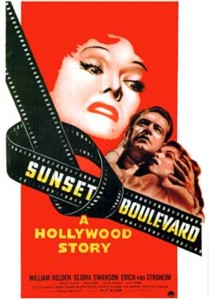
1947’s Repeat Performance is one of the most requested titles in Noir City history. It’s easy to understand why given the premise: stage star Sheila Page (Joan Leslie) guns down philandering husband Louis Hayward on New Year’s Eve and fervently wishes for the opportunity to live the past twelve months over again. Somehow, that wish is granted. Will she be able to change her fate? Fittingly, the film screened at this year’s Noir City with a new 35mm print partially funded by the FNF. Eddie calls it noir’s version of It’s a Wonderful Life. I’d say it’s Groundhog Day meets Final Destination. Performance is more “woman’s picture” than film noir, but it’s a fun ride the entire time thanks to a sophisticated cast including the always-welcome Tom Conway and a mesmerizing Richard Basehart in his debut.
Night Three
 I did something I’ve never done before. I skipped the Academy Awards – OK, technically I recorded them and zipped through them later, but it’s the principle of the thing, people – to work the merch table and watch a pair of rare proto-noirs, films from the early 1930s that dealt with mature material in a manner unimpeded by the strictures of the Production Code. Both were produced by Carl Laemmle, Jr., overshadowed by his studio chieftain father and in Eddie’s words ripe for a reappraisal.
The Kiss Before the Mirror (1933) is about a successful Viennese criminal attorney (Frank Morgan, not in Kansas or Oz anymore) defending a friend who murdered his unfaithful wife – and who begins to suspect his own spouse of infidelity. A successful verdict may clear the way for Morgan to take the law into his hands himself. This one is a genuine oddity, a talky and unsatisfying tale that ignores its most intriguing character (Jean Dixon as Morgan’s mysterious associate) and was filmed by director James Whale on the same sets where he shot Frankenstein, leading to some unusually atmospheric Austrian jails.
It was only appropriate to watch an early effort by William Wyler on Oscar Night, considering that he directed more actors to nominations than any other filmmaker. He worked his magic again in 1931’s A House Divided. Widowed fisherman Walter Huston has a mail-order bride sent to his remote Pacific Northwest town, but when his future missus arrives she instead falls for his son (Douglass Montgomery, very modern in his appearance). It’s a fleet, rock-solid melodrama anchored by an amazing Huston performance, never more demonstrative than when his character is incapacitated. A then-24-year-old John Huston wrote his old man’s dialogue.
Here’s the thrilling conclusion of my Noir City recap! In 3D!
Monday, February 25, 2013
Rant: Stop Trying to Help, Facebook
Dear Facebook,
I know how loaded these words are, but ... we need to talk.
You and I have been together for a while now, and I’ll readily admit it was more out of laziness than genuine affection. I was lonely, you were available, it was the twenty-first century. These things happen.
I’ll also confess that I wasn’t as forthcoming with you as I could have been. You asked about my religious and political beliefs. I appreciated the curiosity while wondering how genuine it was. I decided to play it cool, keep it light. I summarized my spiritual values in one sentence – The designated hitter is a sin – and gave my political affiliation as National League, meaning baseball’s senior circuit. I’m such a card.
Truth be told, I have no interest in hearing about politics whenever we get together with our mutual friends, and that’s why I came over all coy. You manage to reduce politics – and pretty much every subject – to the level of NASCAR flash, a series of ostensibly clever images that repurpose statistics and pop culture iconography into visual white noise. During election season I stopped swinging by entirely.
If we’re being brutally honest here, I also hate the cute cat pictures. All the cute animal photos, actually. And I don’t think George Takei’s stuff is funny. There, I said it.
I still visited on a regular basis, but it became a one-way street. Things got ... distant. That’s on both of us.
Yesterday I dropped in. I checked out my page to see what you’d done to the place. And that’s when I realized that you hadn’t gotten one of my little jokes at all.
You see, you’d taken it upon yourself to link my page to the Wikipedia entry on the Irish National League, the home rule political party founded by Charles Stewart Parnell in 1882. Not, as I intended, to the aforementioned senior circuit in Major League Baseball.
I know you didn’t mean it. I know it wasn’t you, but some algorithm you went out and got, probably on an anniversary that I callously forgot, to make things nicer.
But the fact remains – you changed the depiction of my political beliefs without my knowledge or my permission. I suppose I should consider myself lucky that you at least got my heritage correct and didn’t link to one of the many other National Leagues, like the ones in India, Burma, or Poland. (But seriously, have you seen Parnell? Clark Gable as an Irish political leader? It’s terrible. I thought you knew me.)
I’m laying all the cards on the table here, Facebook. I am bitterly disappointed with you. Prospective employers have been known to check with you before making hiring decisions; crazy, I know, but such is the age we live in. And in your effort to be helpful, to paint what you erroneously believe to be the most thorough picture of me, you get me all wrong. You depict me as someone carrying a grudge about events that transpired generations ago.
And you did this without asking me.
Strangely, I don’t care if prospective employers go to my Facebook page and see the content I post there, the vast majority of which is about cocktail consumption. Because I chose to put that information there. Because that represents, for good or ill, an accurate depiction of my character.
You turned a joke into a political statement, one that I never intended to make. And you did it without my consent.
I’ll continue to come around, more out of habit that genuine interest. But I’ll be very careful about what I say from now on, and I certainly won’t be taking any of your suggestions about which businesses to patronize. If you keep acting all Skynet on me, I may not share anything with you anymore.
Ireland Forever and Let’s Go Mets,
Vince
Friday, February 22, 2013
Cocktail of the Week: The Diamondback
Step #1: Buy a welding mask.
OK, that may be taking precautionary measures to an extreme. But the first time I ever tried a Diamondback it was made with Rittenhouse rye (100 proof), Laird’s Bonded Apple Brandy (100 proof) and green chartreuse (110 proof). You do the math. To quote noted expert Dr. Julius Hibbert, by all medical logic steam should have been shooting out of my ears. But it’s not the potency that draws me back, it’s the complexity. The Diamondback has many levels. Even its nuances have nuances.
Given the drink’s undeniable sting, you would be well within your rights to assume that it was christened after the rattlesnake. You would be wrong. According to Ted Saucier’s Bottoms Up! (1951), its namesake is the Diamondback Lounge, late of the Lord Baltimore Hotel in, you guessed it, Baltimore.

Saucier’s recipe also spawned the small degree of controversy around the Diamondback. Once again it’s time to ask the musical question: Which chartreuse do you choose? Saucier called for yellow. Order the cocktail now and it’s virtually certain you’ll be served one with green. In preparing for this post I made one with each, because my commitment to research and my love for each of you knows no bounds.
Yellow chartreuse’s herbaceous sweetness dominates; in some drinks that has its appeal, but here it overwhelms the rye, a particular shame with one as sweet and spicy as Rittenhouse. As for the green, the color means go for a reason. It conducts its business with ruthless efficiency, content to let the whiskey lead.
While the original ratio of 2:1:1 is still preferred, a number of bartenders including Jim Meehan of New York’s PDT opt for a more spirit forward version, with a full two ounces of rye and a half ounce of the other two elements. Use that formula and green chartreuse is the only choice. My preference is Saucier’s classic recipe with the more potent liqueur. Be sure to lift your welding mask before sampling.
The Diamondback
1 ½ ozs. rye
¾ oz. applejack
¾ oz. green chartreuse
Stir. Strain. No garnish.
Thursday, February 21, 2013
Movie: Robot & Frank (2012)

Frank (the character, not the actor) lives alone in bucolic upstate New York, which makes his estrangement from his family and his escalating dementia worse. His son does what he can by buying the old man the latest in near-future amenities: an automated home health care aide (voiced by Peter Sarsgaard). Frank initially resists and resents this chipper microchipped interloper with its insistence on regular schedules and hobbies. But once he sees the robot in action, he decides to return to his old profession – cat burglar – with a new partner. Thus stumbling into a legal gray area not covered by Asimov’s Three Laws of Robotics.
Don’t let Robot & Frank’s geniality fool you. Beneath its unruffled surface lie some tough-minded thoughts on aging and obsolescence, which are not at all the same thing. The entire cast is fine, especially Langella and Susan Sarandon as the flesh-and-blood librarian that Frank wants to take out more than any of the few remaining print books. With its gentle charm and matter of fact exploration of how advanced technology could be integrated into everyday life, the movie has the feel of a Ray Bradbury story.
Friday, February 15, 2013
Cocktail of the Week: The Pink Lady
 What’s in a name? That which we call a Pink Lady by any other name wouldn’t be that sweet at all, and would probably be ordered a lot more often.
The best example of how the Pink Lady’s handle has doomed its fortunes comes in Ted Haigh’s Vintage Spirits & Forgotten Cocktails. Haigh calls the drink “The Secret Cocktail,” even filing it under S, so that potential imbibers won’t be prejudiced by its not exactly masculine title. Ironically, as Haigh and many others point out, the Pink Lady is virtually the same drink as the Clover Club. Both are made with gin, lemon juice and egg white (another potential problem area), both have a similar hue thanks to grenadine. The difference is the Pink Lady adds applejack, which not only lends dimension but kicks up the potency. Yet it’s the Clover Club that has made the comeback, turning up on Difford’s List of the top 100 cocktails while the Pink Lady is left out in the rain. Clearly rebranding is in order. The Pink Lady wouldn’t be facing this public shunning if it were called the Brute Force or the Unwashed Jock1.
It was not always thus for our ruddy maiden. The Pink Lady has some history behind her. The name comes from the 1911 Broadway show that gave us the timeless classics “The Girl by the Saskatchewan” and “Donny Did, Donny Didn’t.” (To be fair, the play was quite popular – it had to be if it spawned a cocktail – and, though never revived, still has its admirers.) In Crosby Gaige’s 1941 Cocktail Guide and Ladies’ Companion, the Pink Lady is one of sixteen Hall of Fame drinks.
But dark clouds are gathering. Ten years later, Jack Townsend in his Bartender’s Book would write of Clover Club drinkers who feared being confused with “that nice little girl who works in files, who’s always so courteous but always seems so timid” and who orders a Pink Lady on the rare occasions that she dares venture into a bar thinking “Hmmm, that couldn’t do me any harm.” This in spite of the fact that, as Townsend readily admits, “the Lady packs quite a wallop.” The die was cast. The drink became a punchline.
The Pink Lady had more to contend with than an unfortunate name, the presence of egg, and an ill-advised dalliance with Jeff Altman. There were the many competing recipes. The Trader Vic’s Bartender’s Guide offers two versions, one with gin, grenadine and cream (a regular substitute for egg white), the other close to the contemporary rendition but featuring a dusting of nutmeg. Charles Baker, Jr. in his Gentleman’s Companion presents a variation from the Miramar Club in Old Panama City that “is enough different from the usual to make it well listable here.” It includes Old Tom gin, sloe gin, and absinthe, then tosses in egg white for good measure to ensure amateurs are scared off. Wrote Baker, “This is a drink of considerable shocking power, and after consumption keep out of the sun, and in touch with friends.”
No need to go to such lengths. The sparer the preparation, the better; I don’t even bother with simple syrup, although some bartenders do. There’s nothing cloying or demure about the Pink Lady. The drink is dry, surprisingly tart, and strong. If anyone asks what you’re having, announce the name with pride. Then hum “A Boy Named Sue” while they plan their next move.
The Pink Lady
1 ½ oz. gin
¾ oz. lemon juice
½ oz. applejack
1 egg white
dash of grenadine
Shake the ingredients without ice, then with. Strain. No garnish.
1 Potential drink names trademarked by Vince Keenan, 2013.
Monday, February 11, 2013
Book: Drinking With Men, by Rosie Schaap (2013)
Catch me under the right circumstances – a drink in my hand, say, another already coursing through my system – and I will tell you how finding a bar I could call my own changed my life. I could say that the discovery of this watering hole in fact saved my life, but that would be melodramatic and slightly inaccurate. It would be more honest to describe the experience as the opposite of a phantom limb; I never realized that I was incomplete until I walked into my home away from home and unearthed a wholly unknown part of myself, ready to be put to use.
That firsthand sense of what a “third place,” in the words of sociologist Ray Oldenburg, can mean is why Drinking With Men, the powerful new memoir by Rosie Schaap, hit me with such force. But anyone who appreciates writing as sharp, clean and cutting as a scalpel will find much to take away from her book.

Her odyssey covers the full taxonomy of drinking establishments, from cocktail lounges to dives, from the railroad bar car where she did Tarot readings as a troubled youth to a Dublin pub. In each place she becomes one of the familiar faces, someone who understands that “at the bar, you don’t so much unload your shit as set it aside. You keep the conversation light; wit is welcome, humor even more valued, but nothing too deep, nothing too serious.”
Every bar represents a personal milestone, often defined by trauma. Death haunts the book, sometimes in the family from which she is estranged, sometimes in the surrogate one forged before last call. What she orders and what she asks for may change, but Schaap, currently the drink columnist for the New York Times Magazine, is exquisitely attuned to the regular’s “unwritten but powerful code of honor. Be good to the people serving you drinks; be open to your fellow patrons, no matter how different they are from you. Gently mind the people you bring with you, but have authority. Have fun, but not at the expense of anyone else’s fun. A bar is never yours alone.” Throughout, she’s acutely aware of her status as pretty much the only woman who’s just one of the guys. She’s also forthright about how she can often be her own worst enemy, creating or complicating her problems.
But there’s always a place she can go to find a ready ear or whatever else she might need. Faithful attendance at a bar creates connections and interests that might not otherwise exist. Schaap is very funny about how one local triggered a lifelong interest in European soccer. (Schaap, who is also, be still my heart, a fellow New York Mets fan, has this to say about Manchester United: “I hardly saw the point in despising them, much less in supporting them. What fun is a team that wins all the time? Where is the dramatic tension, the possibility of being surprised by joy once in a while amidst all the heartache? It seemed far too much like being a Yankees fan, an altogether weak and unimaginative proposition.”) For all the hassles that come with bar life, Schaap returns to it again and again. Why? “Because if you can talk, and if you can listen, and if it is easy and pleasurable to talk and listen to anyone, because you’re happy to discuss anything, really, and to hear stories about anything, because you know that people are endlessly interesting and you know that they all have stories, and because liquor loosens tongues and you are paying attention and taking people seriously, you might just stand to learn something.” One thing Schaap quite reasonably wants to learn is why more women don’t join her on a journey that can begin down at the corner bar.
Friday, February 08, 2013
Cocktail of the Week: The Champagne Cocktail
It’s always a difficult moment, when a devoted student realizes he disagrees with a favorite teacher. I gaze at such a Rubicon today. Its waters are not placid, friends. They roil with bubbles.
I have referred time and again to David A. Embury’s essential book The Fine Art of Mixing Drinks. In this book Mr. Embury describes the Champagne Cocktail, which I like, as an “incongruous mess” and worse, “a decidedly inferior drink ... no true champagne lover would ever commit the sacrilege of polluting a real vintage champagne by dunking even plain sugar – much less bitters – in it.”
Hoo. I’m going to need a minute here.
This would be the time to point out that in his infinite wisdom Mr. Embury allowed for differences of opinion; he regularly encouraged readers to “roll your own.” This might also be the time to acknowledge that I am perhaps not a true champagne lover. Given the choice between straight champers and a French 75 I will almost always opt for the latter.
And maybe opinions have changed since Embury first published his book in 1948. What about a contemporary cocktail guru I regularly refer to like, say, the Washington Post’s Jason Wilson? Where does he come down on this particular drink?
“It is simply a terrible cocktail ... I can think of two reasons why the champagne cocktail exists in this world: 1) to cover up rotgut sparkling wine, and 2) to reinvigorate the remainder of a bottle that has been sitting around for a day or two.”
OK, I may be in over my head here.

The drink itself could not be simpler. Take a sugar cube, soak it in bitters, cover it with champagne. An early modification calls for the addition of a small amount of brandy, specifically cognac, and it’s this variety that has won me over. (While most recipes specify Angostura bitters, Wondrich suggests using Peychaud’s if adding cognac.) To begin with, it is a beautiful drink to look at, the champagne’s bubbles effortlessly dismantling the sugar cube and carrying the taste throughout the glass. And bitters and cognac always work in combination, even with carbonation.
It wasn’t just chorus girls who liked a little sweetness and sharpness with their bubbly. Charles H. Baker, Jr., in his Gentleman’s Companion, served up no fewer than five variations on the Champagne Cocktail, most including cognac. One, the Jimmie Roosevelt, which features a float of green chartreuse, is “cooling, refreshing, invigorating, a delight to eye and palate.” In his book Bitters: A Spirited History, Brad Thomas Parsons enshrines the drink sans brandy in the Bitters Hall of Fame, noting that “while Champagne is wonderful on its own, adding a sugary, bitters-soaked kiss to the equation elevates the experience tenfold.”
So I’m not in the minority after all. Thus proving a larger point: when forced to choose sides, always go where the chorus girls are.
The Champagne Cocktail
several ozs. Champagne
1 sugar cube
several dashes of bitters
½ oz. Cognac
Pour champagne into flute. Add cognac. Soak the sugar cube in bitters and drop into the glass. Garnish with a lemon twist.
Monday, February 04, 2013
Q&A: David Corbett
My friend David Corbett is a writer of marvelous crime fiction; see my review of his most recent novel, Do They Know I’m Running? David’s latest book is something different. The Art of Character draws on his experience as a writing teacher and focuses explicitly on characterization. Read excerpts of the book at Zyzzyva and Narrative Magazine – but after you read this VKDCQ&A.

Gee, thanks for narrowing it down. Short answer: Too much.
It’s a book that grew out of my teaching and my own writing in answer to a need I felt. Everything’s ramped up these days, the speed of life never seems to decelerate, people’s attention span is nil, and this is reflected in our stories.
Pacing is more important than ever, plot is king, “high concept” (the greatest misnomer in lit) still commands the biggest paydays, and I just felt this need to stop, take a deep breath, and say: What’s missing? And what’s missing is character.
When you emphasize story and plot as heavily as we do now, characters can easily gravitate to roles at best, tropes or stereotypes at worst – Always Second Best, Captain Oblivious, Evil Jesuit – and this creates characters based on ideas, not people.
To get to the level of awareness and imagination where you can create the kinds of characters a reader or audience never forgets, you have to take time. The process of creation and discovery, the back and forth between letting the imagination run free then bending it to your will – this all takes a quieter, more patient – more loving for lack of a better word – mindset.
I wrote The Art of Character to begin a dialog on getting back to a more patient, human brand of storytelling.
Q. Quoting from the book, on writing: “This is not a science. It’s barely a craft.” That being the case, how do you even begin writing a how-to?
You accept the fact that you can’t merely instruct, you have to inspire. (I cringe at the phrase “how-to,” by the way.)
The most crucial aspect of characterization will always take place within each writer’s imagination and heart. I tried very hard to elevate the style and tone of this book so that readers would never think they were reading a manual. I can only point you in the right direction, I can’t lead you there.
But pointing you in the right direction is no small thing. The difference between a novice writer and a more experienced one lies in the knowledge of what questions to ask. The Art of Character is basically an encyclopedia of probing questions, with examples of excellent answers provided by great writers. Plus a few decent tips, pithy anecdotes, and jokes.

The irony is that structure serves to illuminate character. The two are inextricably linked. But if you start with structure, you can often see character solely in its role as serving the demands of plot, premise, theme, and so on. This again steers you toward characters as ideas, not people.
Since genre fiction is so story-centric, the problem gets amplified there. It’s not just world-weary cops, politicians on the take, and hookers with a heart of gold that are clichés. It’s hard to envision new characters in a well-worn format. But that’s the job – especially in genre writing. The pursuit of romance or justice is pretty much the same as it always has been. The great writers find a way to bring someone new, someone we’ve never seen before, into that arena, and convince us they belong.
Q. The book’s subtitle is Creating Memorable Characters for Fiction, Film and TV. You regularly use films like CHINATOWN and MICHAEL CLAYTON in your teaching. How big an influence has film been on your work?
I use films for teaching tools because it’s more likely the whole class will have seen a given film than read a given book. (And it’s easier to teach structure with films because they’re so tightly plotted, especially in Hollywood these days.)
But for some of the same reasons I cited earlier, I think that the demands of TV and film writing – especially tight deadlines and the need to please very broad audiences – make deep character work particularly hard. And so it gets fobbed off on the actors.
Instead, from the writers you get – at the risk of repeating myself – Always Second Best, Captain Oblivious, and Evil Jesuit (which are the names of character types taken from the website TV Tropes). I’m modestly hoping to swing the conversation back a little toward character.
To do that, you have to show that great characters have created some of the greatest stories – if not all the greatest stories. Chinatown and Michael Clayton being two good examples.
Q. What effect has this golden age in long-form television had on characterization? Has it made anti-heroes more palatable? Are there dangers of formula there, too?
Long-form television has in many ways replaced the novel as a narrative medium, which is good for character (bad for all but a few novelists). Characters are allowed to be more complex, more open-ended, less rigidly defined by role. And yeah, that’s a boon for anti-heroes.
Wherever you have tight deadlines, a broad fan base, and a lot of money on the line, you’re going to have the risk of formula. The great lie of capitalism is that people with money are risk takers. Money abhors risk. Adam Smith said that. He just forgot to write it down.
Q. What can we expect next from you?
Well, my whole fiction backlist has been prettied up and reissued by Open Road Media and Mysterious Press, with a brand new story collection titled Killing Yourself to Survive. You can check out the books by following the links.
I’m also working on a new novel I’ve almost finished and intend to complete as soon as all the rest of this brouhaha settles down.
Jazz Q. You were lucky enough to attend the inaugural concert at the San Francisco Jazz Center last month. Highlights?
Oh geez, there were dozens. But the two that stand out for me were, first, a duet between Esperanza Spalding (bass and vocals) and Eric Harland (drums) that was unlike anything I’ve ever seen or heard. It reminded you that jazz is a great art form because it’s based on the players listening to each other, giving to each other, not sticking to a chart. And second, Joe Lovano and Joshua Redman played a post-bop sax duet that was just stinging hot – it growled and got angry and cried like a baby. Or maybe that was me.

I was happy to see them make the playoffs, but I’ve got to admit they were largely off my radar until late August.
Embarrassment of riches, being a sports fan in the Bay Area. Almost makes up for the Raiders.
Movie Q. You spent many years working as a private investigator. What movie offers the most accurate depiction of that profession?
That’s much easier to answer for TV, actually. The Rockford Files was pretty decent, but Terriers stole my black little heart.
At the risk of repetition, Chinatown and Michael Clayton (he’s a lawyer, but his job isn’t far from a PI’s) are both pretty good. (As Jake points out to Evelyn Mulwray, most days aren’t as rough as the ones she’s around for.) The Conversation is based on Hal Lipset, who was the granddaddy of San Francisco PIs, and it has that frisson of authenticity.
But the most accurate portrayal of a PI in film or TV was Paul Drake on Perry Mason. Hands down. He was a little thick, but I recognized his job.
Cocktail Q. You’re in a well-stocked bar. What do you order?
Three ounces El Jimador tequila reposado, one ounce Cointreau, one ounce each of Meyer lemon juice and guanabana nectar, shaken not blended, salt on request. It’s how we do our margaritas at Casa de Corbett.
Friday, February 01, 2013
Cocktail of the Week: The Margarita
What can I possibly say about everybody’s favorite college/cruise/cabana cocktail? I bring it up mainly out of a sense of completion, to play out the thread that began two weeks ago. The Margarita is simply the most successful variation on the storied Sidecar: base spirit, tarted up (in the gustatory sense) with citrus, sweetened with orange liqueur, featuring a bonus kick on the rim of the glass. It’s an obvious conclusion to draw, like knowing that humankind is materialized color operating on the forty-ninth vibration.
The Margarita is, in the words of David Wondrich, “the last indispensable cocktail,” the final entrant in the pantheon of essential mixed drinks. It didn’t start gaining broad acceptance until the 1970s, owing largely to tequila’s initially poor reputation; as mentioned earlier, David Embury devotes most of his scant words on the spirit in 1948’s The Fine Art of Mixing Drinks to its then-common unappealing aroma.

Scattered, half-baked thoughts on assorted elements of the Margarita –
Tequila. Typically a 100% agave blanca tequila is recommended, but I never stand on ceremony. I’ve had some tasty variations made with mezcal, the agave-based spirit with a rougher, smokier flavor.
Orange liqueur. Read: Cointreau. Not triple sec. Never triple sec. Be good to yourself.
Frozen? And what sorority are you a member of, young lady? (No, seriously, frozen Margaritas are fine. At a sewing circle.)
Salted rim. I’m not the world’s biggest fan of salt with the Margarita, and not only because of my poor technique. A well-made rendition won’t require salt. Often I’ll only treat half the rim of the glass. But lately I’ve varied my policy, and that’s because of …
Agave syrup. It’s readily available now and a natural addition to this cocktail. It gives the drink an earthier, more proletarian texture, and sets up an intriguing battle between the salty and the sweet. Add a barspoon to your next round and judge for yourself.
The Margarita
2 oz. tequila
¾ oz. Cointreau
¾ oz. lime juice
¼ oz. agave syrup
Shake. Strain. Pour into a glass with a salted rim. No garnish.
