Noir City Northwest: The Unsuspected (1947)/Desperate (1947)
Numerous cocktails were consumed after this evening’s screenings, yet still I post. Let’s see if I live to regret it. Let’s see if I live.
On night two of Noir City, the thematic net was cast a little wider. Media of all types, not just newspapers, were on display, as well as the evolution of the genre itself. The two 1947 films shown contrast the end of the ‘40s “high noir” approach, driven by expat filmmakers and emphasizing cinematography, with the nascent style of the following decade’s directors, primarily Americans with editing backgrounds, who focused on pace and put raw emotion onscreen.
Michael Curtiz is the textbook example of the studio filmmaker. The Unsuspected marked his Hollywood debut as an independent producer. It’s based on a novel by Edgar winner Charlotte Armstrong, whose work is still inspiring adaptations like Claude Chabrol’s Merci pour le chocolate (2000). I give you our host Eddie Muller’s accurate one-word review of The Unsuspected: incomprehensible. Claude Rains plays a successful radio personality, a proto-Alfred Hitchcock, who has both a dead secretary and an amnesiac niece. It’s the sort of movie where poisonous swells swan around an estate firing barbs at each other. The slightest dip in quality would render it unwatchable, but Curtiz’s sumptuous visuals and canny performances by Rains and the divine Audrey Totter, one of Eddie’s Dark City Dames, make it a hoot.
Desperate was the last film directed by Anthony Mann before the extraordinary run of titles (Railroaded!, T-Men, Raw Deal) that won him a place in the noir pantheon. Character actor Steve Brodie gets a crack at a lead role as a newlywed truck driver roped into a robbery by old friend Raymond Burr. Brodie and bride go on the run, but Burr will not be denied. Desperate is a minor film, subject to the peculiarities of B-movie logic; not many fevered manhunts include Czech weddings, two-plus trimesters of pregnancy, and multiple career changes. But Mann redeems the occasional lapse with a humdinger of an ending.
OK, strictly speaking Desperate isn’t a media noir of any kind. But Brodie does it all for his one true love, which makes it a Valentine’s Day noir. And on February 14, that works for me.
Sunday, February 15, 2009

Saturday, February 14, 2009
Noir City Northwest: Deadline U.S.A. (1952)/Scandal Sheet (1952)
I’ve got a lot on my plate at the moment, and briefly toyed with the idea of running an apologia in advance saying I might not post nightly during my third Noir City. But this year’s theme is newspaper noir, so missing deadlines seems like poor form. And considering that the very paper cosponsoring the festival is itself on the clock, I think the ironies are thick enough, thank you very much.
Our host and programmer Eddie Muller is all too aware of them. He’s been asked more than once if this year’s “immersion in ink” represents a tribute or a memorial to that bygone age when being a newspaperman – not a reporter or a journalist – was the greatest job in North America.
We began with Deadline U.S.A., a film that is not strictly noir but according to Eddie has the power to make every hard-bitten city desk jockey “puddle up.” Humphrey Bogart plays the editor of a prestigious paper losing the circulation race to the tabloids and about to be sold. He pins his hopes on one last big story, a takedown of the local mob kingpin. Deadline is historic in that regard, the first studio film to depict Italian-American organized crime. It’s also prescient; the arguments Bogart makes have been taking place in newsrooms and boardrooms around the country and a stone’s throw from the SIFF theater. Speaking of stones, you’d have to have a heart of one not to “puddle up” when Kasia Orzazewski, so moving as the mother in another journo drama, Call Northside 777, haltingly delivers Richard Brooks’s speech about how the newspaper taught her how to be an American.
Hang on. I need a minute.
This year’s festival attempts to recreate the theatrical experience of the era by pairing features with true B-movies, shorter programmers meant to fill out a bill. Thus was Deadline followed by its photo negative, Scandal Sheet. Broderick Crawford plays the brains behind the kind of rag that’s driving Bogart out of business. When he commits murder, it’s his own ace reporter (John Derek) who tightens the noose. Crawford, knowing a sensational story when he sees one, can’t help putting his crime on the front page even though every column inch could put him six feet under.
Harry Morgan has a blast as a Weegee-style shutterbug. Phil Karlson, one of the finest noir directors of the 1950s, keeps the action lean and tight. It’s all based on a novel by Samuel Fuller, who in the same year made his own tribute to the fourth estate in Park Row. The greatest independent filmmaker in American movie history would still rather have been a newspaperman.
Here’s the Seattle Post-Intelligencer’s article on Noir City including a sidebar on the city’s contribution to the genre, actor Howard Duff.
Friday, February 13, 2009
Book: Sucker Punch, by Ray Banks (2009)
Screw delicate American sensibilities. This book will always and forever be Donkey Punch, baby.
Ex-con turned quasi-P.I. Cal Innes is still recovering from his misadventures in Saturday’s Child, and that includes nursing a bouncing baby painkiller addiction. His sole friend and employer Paulo asks him to escort a promising young boxer to a tournament in Los Angeles. Cal quickly discerns that the competition may not be on the up and up.
The plot is more of a vignette, but I will seize any opportunity to spend time in Cal’s foul-mouthed, hair-trigger, good-hearted company. Banks is a ferociously funny writer, and he has few peers when it comes to scenes of male posturing that escalate out of control.
Of course, our Raymond also has a lackluster website, an unhealthy preoccupation with the amount of water in Stateside toilets, and the wrong opinion of jazz. But these are problems that can be worked out in time.
Book: Leading Lady, by Heywood Gould (2008)
You know what’s a good word, at least when it comes to books and not boxing? Punchy. Punchy’s a good word. It certainly applies to this novel by Heywood Gould, recently nominated for the Hammett Prize.
Gould is a screenwriter, but this yarn owes more to his days as a reporter for the New York Post. It’s the kind of story that rag could really sink its teeth into. A wily veteran thief escapes from prison intent on tracking down the people who set up the job that lead to the death of his female partner, the “leading lady” of the title. The motley crew includes aging wiseguys, a Russian “businessman,” an aspiring actress, and a team of Homeland Security agents who don’t officially exist. Gould sketches them all in detail without sacrificing his relentless pace. Lots of fun.
Wednesday, February 11, 2009
Book: The Red Right Hand, by Joel Townsley Rogers (1945)
It’s one of those books that pulp aficionados speak of with reverence. For years, I’ve been meaning to read it. A short time after Donald E. Westlake died, Ed Gorman reran a 2006 interview in which Westlake said that “The Red Right Hand should be reissued every 5 years forever.”
That cinched it. And now I owe Mr. Westlake even more.
The cover of the copy I bought at San Francisco’s Kayo Books describes Hand as “a classic of suspense-horror-mystery.” That claim does not represent indecision on the part of the promotions department. The book belongs in all three genres, and is a smashing success in each. It’s a singular, deranged, balls-out masterpiece.
I won’t describe the plot, for fear of spoiling even one of its treasures. All you need know is that it’s about the hunt for a mad killer. An unforgettable one, an “ugly little auburn-haired red-eyed man, with his torn ear and his sharp dog-pointed teeth, with his twisted corkscrew legs and his truncated height.”
Rogers achieves wonders with POV, the narrator never quite having a grasp on his own story, what he didn’t see every bit as important as what he witnessed. Never have I read a book that so effortlessly conjured up feelings of dread, with paragraphs of fevered Lovecraftian detail that make the inside of the skull sweat. And structure? Read the closing pages and be amazed. I finished the book in the wee hours and sat there dumbstruck, listening to the walls creak.
Then I almost read it again, just to figure out how Rogers did it.
DVD: Le Trou (1960)
This movie also knocked me on my ass. Jacques Becker’s final film is perhaps the definitive prison break drama. Non-professional actors, documentary realism, a pitiless focus on the physical toll of the bust-out, and an ending that had me hollering at the screen grindhouse-style.
It’s been a good week.
Miscellaneous: Links
A pair from the AV Club: Random Roles with Bruce Campbell and an appreciation of the brilliant commentary track on the DVD of The Limey.
The Financial Times on the relationship between comics and movies. H/t to Arts & Letters Daily.
And a headline that perfectly captures the Florida that I know: Fake Foreigner drummer allegedly steals Corvette.
Sunday, February 08, 2009
Book: Beat the Reaper, by Josh Bazell (2009)
Here’s how good this debut novel is. I am willing to ignore the fact that it was written by a doctor completing his residency. Who do these Type A types think they are?
Peter Brown is already having a lousy day at Manhattan’s worst hospital when a dying patient identifies him as Pietro “The Bearclaw” Brnwa, a notorious Mafia hit man who escaped into witness protection. The book alternates between Peter’s efforts to prevent his old acquaintance from ratting him out, and Pietro’s journey to stone killer.
Reaper is a perfectly turned comic noir. Too many recent entries in the genre start at over-the-top and proceed from there. Bazell smartly grounds the action in the reality of the hospital setting and lets it dictate the pace. He’s also genuinely funny, studding the book with sharp throwaway lines. Like Peter telling the hopeful Mob patient that ‘you have a chance’ is “surgeon talk for ‘I need a slightly longer Chris-Craft.’” Or the observation that the Diagnostic and Statistical Manual “seeks to sort out the vagaries of psychiatric malfunction to the point where you can bill for them.” There are a few plot holes I had to work to overlook – Pietro Brnwa to Peter Brown? WITSEC relocating him from New York to ... New York? – and I gleefully overlooked them. That’s another sign of how good the book is.
Upcoming: Noir City
Consider this reminder the bulldog edition. Noir City rolls off the presses and into Seattle starting this Friday. This year’s timely theme, in case you haven’t guessed, is newspaper noir.
Seven nights of double-bills for only ten bucks a pop. Features paired with authentic B-movies in an experience that host and programmer Eddie Muller says is as close as you’ll get to actually going to the movies in 1948.
I don’t expect Seattle to match up to San Francisco and its ability to sell out the Castro Theater night after night. But the Northwest can represent, dammit. If you’re reading this and you’re anywhere near the Emerald City, come on out. I guarantee you won’t be disappointed.
Wednesday, February 04, 2009
Memes: V For Victory
No less an authority than Dr. Johnson said it: memes are the last refuge of the overworked. This one has been making the rounds at Facebook and Mark Evanier has done it, so I figure it can’t hurt to post mine here.
The rules are simple. 20 questions. Each answer must start with the same letter as your first name. No repeated answers. If you’re tagged by someone whose name begins with the same letter, you can’t repeat their answers, either.
1. Your name: Vince
2. Four letter word: Vent
3. Boy’s name: Vance
4. Girl’s name: Vivian
5. Occupation: Vintner
6. Color: Violet
7. Something you wear: Vest
8. A food: Vindaloo
9. Something found in the bathroom: Vileness
10. A place: Verona
11. A reason for being late: Vapors (the)
12. Something you shout: “Visigoths!”
13. A movie title: Vanilla Sky
14. Something you drink: Vieux Carre
15. A musical group: Ventures (The)
16. An animal: Vole
17. A street name: Vine
18. A type of car: Volkswagen
19. A song title: Veronica, by Elvis Costello
20. A verb: Vivisect
No tags, but if your name also begins with V, let’s see what you’ve got.
Miscellaneous: Links
OK, you deserve a little more than that. Via John August comes this post on the grammar and aesthetics of comic book lettering.
Yahtzee may have outdone himself with his review of Little Big Planet.
Speaking of video games, more fun Flash: The Visitor, via Paul Herzberg.
Sunday, February 01, 2009
Miscellaneous: Stuff
Taken (U.S. 2009). Luc Besson knows how to make action films – sturdy, slick, a little sleazy – and he delivers the goods once again. There hasn’t been a kill-your-way-up-the-ladder movie in a while. Having the villains be members of a human trafficking ring means that ex-CIA op Liam Neeson could off them twice and they’d still deserve it.
The Mystic Arts of Erasing All Signs of Death, by Charlie Huston (2009). Huston’s latest, about an LA slacker who becomes a crime scene cleaner, felt kinda slight to me. But the chapter in which our hero spends a boozy afternoon with his estranged father, a teacher turned one-shot novelist turned semi-legendary if unproduced screenwriter, is a scorching character study and the best piece of writing I’ve encountered in a while.
The Swinger (1966). Some rubicon has clearly been crossed. Once I could watch bad movies with relish. Now I keep a finger poised over fast forward. The button got quite the workout during this exercise in ersatz ‘60s hipness, with Ann-Margret as a decent Midwestern girl pretending to be a hellion so she can be published in a smut rag. (I didn’t get it either.) There were so many Dutch angles I thought I’d stumbled onto A-M playing a forgotten Batman villain, The Vixen. During her striptease to “That Old Black Magic” I wanted to put my wallet in her mouth so she wouldn’t swallow her tongue. For further appreciation, consult the title sequence.
Bars of Black and White. An interesting hand-drawn Flash game.
Thursday, January 29, 2009
Book: Jack London in Paradise, by Paul Malmont (2009)
The first 2009 title I’ve read, and it’s a good one.
Paul Malmont’s debut The Chinatown Death Cloud Peril, in which several legends of pulp fiction find themselves caught up in a plot they could have devised, is one of my favorite novels of recent years. His follow-up also involves real-life figures but in a less fantastical tale.
Hobart Bosworth is largely forgotten now, but this contemporary of D. W. Griffith was a big name in the early days of Hollywood. In 1915, however, he finds himself at the end of his tether, verging on bankruptcy and about to lose his company to partner Adolph Zukor and the nascent Paramount Pictures. But Bosworth, famed for his adaptations of the hugely popular works of author Jack London, has a plan: to persuade London to write an original screenplay. Step one is to track London down. Step two is to save him from himself.
Once Bosworth locates London in Hawaii, the paradise of the title, the story meanders somewhat. But Malmont’s bracing descriptions of the landscape, physical action, London’s tumultuous marriage, and two men facing different kinds of crises more than compensate, and the various threads coalesce into a potent ending. Malmont is a name to watch.
Meaningless Milestones: Post M
This is the 1,000th post I’ve written for this site. Reaching the four figure mark in a little under five years isn’t that impressive compared to the output of the bloggers I emulate and frequently rip off, like Ed, Bill and Ivan, but it’s not bad, either.
Monday, January 26, 2009
Noir City San Francisco: Wicked as They Come (1956)/Slightly Scarlet (1956)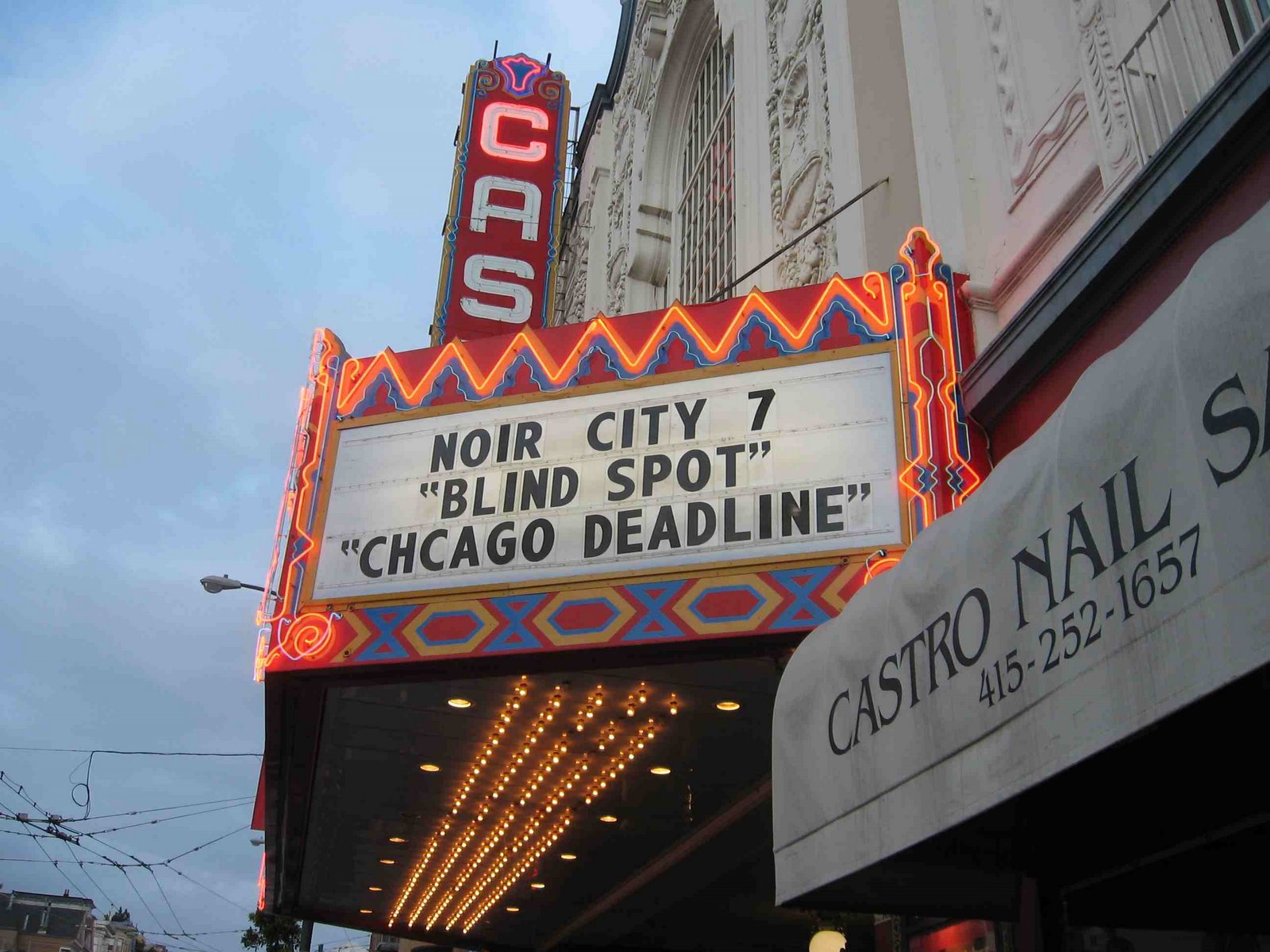 Whenever the dark carnival that is Noir City rolls into Seattle, as it will next month, Rosemarie and I are at every screening. But host and programmer Eddie Muller told us more than once that we weren’t getting the full experience until we took in a double bill at the Castro Theater in San Francisco, the place where Noir City was born. This year, we decided to rectify that.
On Saturday night, we were part of a crowd over 1400 strong, the second consecutive sell-out of the festival. Things get off to a rollicking start with David Hegarty on the Castro’s mighty Wurlitzer organ, playing a mix of favorites from the ‘20s and ‘30s. He finishes the set with a rendition of San Francisco, the crowd clapping along as the Wurlitzer sinks below stage.
The evening is a tribute to actress Arlene Dahl, so after a few welcoming words from Eddie Wicked as They Come unspools. Arlene plays a woman hell-bent on escaping her drab working class life, no matter how many seductions it takes. Wicked, based on the novel Portrait in Smoke by Bill S. Ballinger, is a familiar story complete with pat psychological explanation, but Arlene plays the bad girl with such relish that it goes down easy.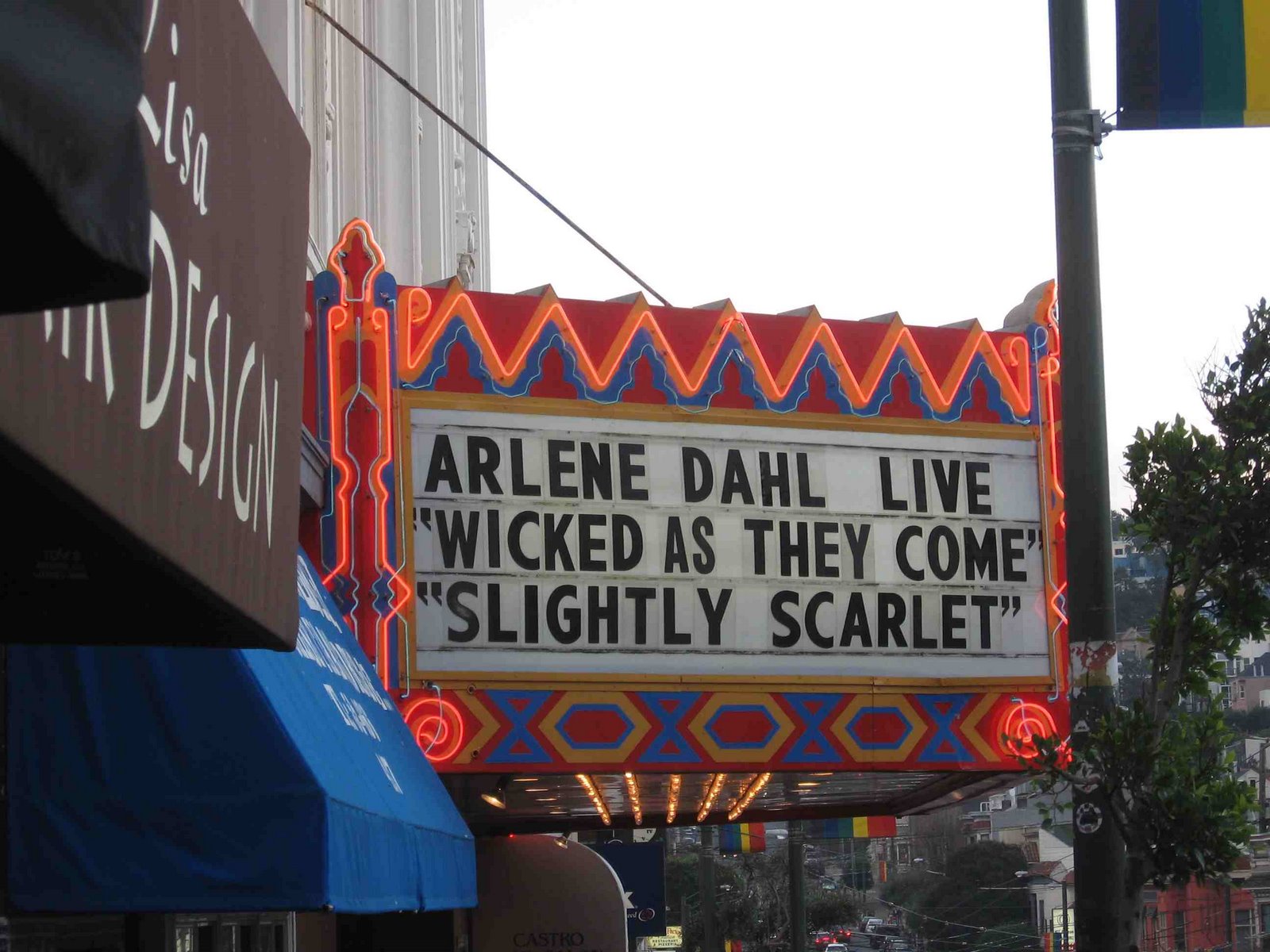 Ms. Dahl, glamorous and fiery of both spirit and mane at age 83, is in attendance along with her son, actor Lorenzo Lamas. (Dude, it’s Renegade!) Eddie interviewed her on stage over champagne. She talked about her memorable first day on the MGM lot (watch the hands, Errol Flynn!), working with the great cinematographer John Alton and director Anthony Mann on the Noir City discovery Reign of Terror, her relationship with John F. Kennedy. She won me over completely by speaking highly of Chez K favorite Dennis Morgan, her co-star in her first “official” movie My Wild Irish Rose.
A redhead, Ms. Dahl said she was often used “to bring color” to films, but what she really loved was to play the femme fatale. The twain met in our next feature, Slightly Scarlet, which teamed Arlene with fellow titian titan Rhonda Fleming. I had seen the movie before, but never in Technicolor on the big screen. Yowza. In this James M. Cain adaptation the ginger goddesses play sisters – Arlene’s the bad one – who both fall for intellectual gangster on the make John Payne. It was every bit as delirious and unhinged as I remembered. I’m still fairly certain the ending makes no sense. And the capacity crowd ate it up.
That was it for the movies, but there was more noir to come. We went to the fabulous Kayo Books, where I nearly wept at the sight of so many pulp classics up for sale. I should have brought a second empty suitcase with me. Still, I made a dandy haul that included some Fredric Brown, a copy of Joel Townsley Rogers’ The Red Right Hand to call my very own, and a Johnny Liddell thriller by Frank Kane, who wrote pretty much every episode of the old Mickey Spillane’s Mike Hammer TV series.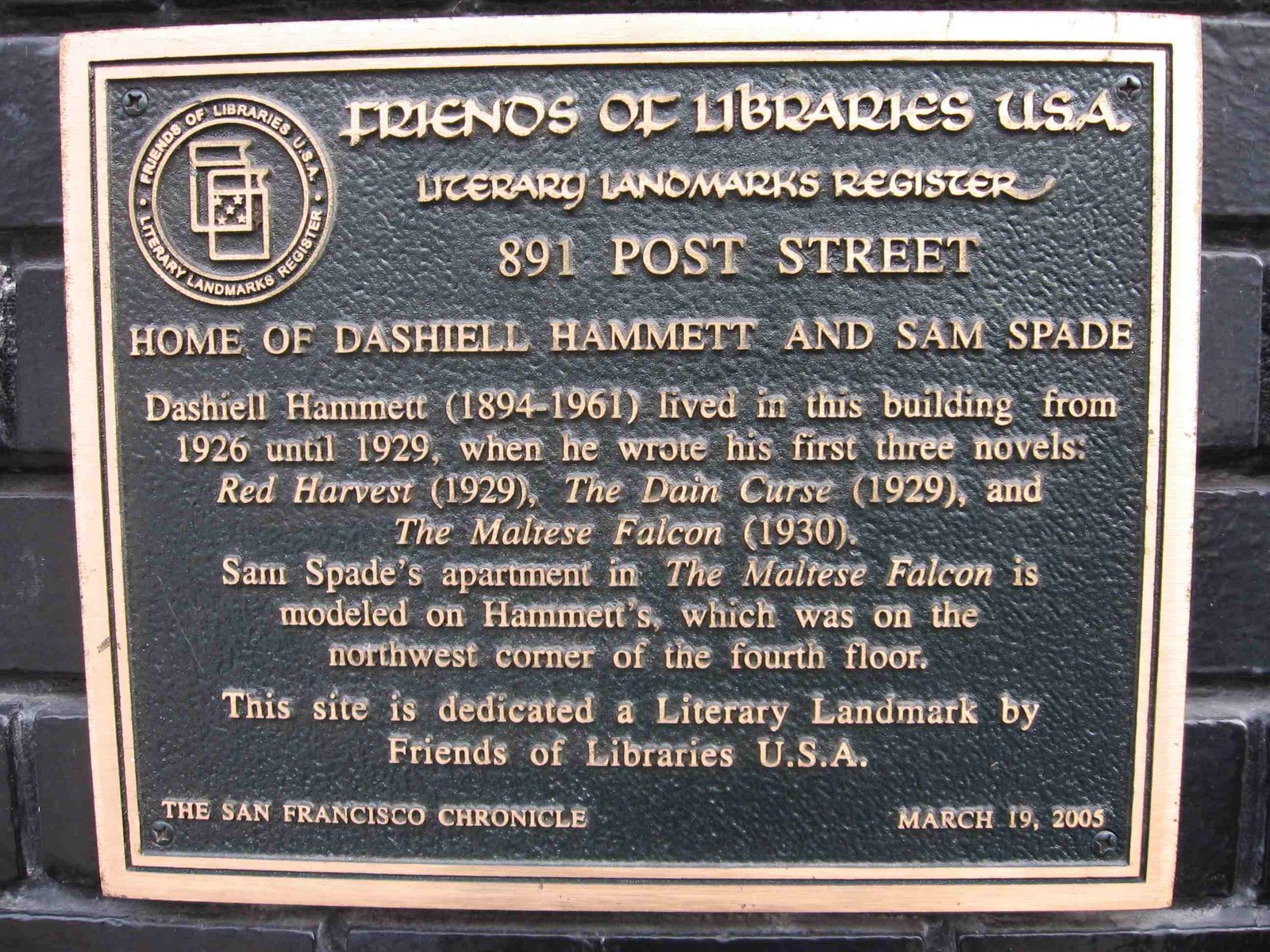 Across the street from Kayo is the apartment building where Dashiell Hammett lived while he wrote Red Harvest and The Maltese Falcon. I stopped by to pay my respects, and later went to the corner of Bush and Stockton, where Miles Archer breathed his last in Falcon.
Cocktail report: I’d long wanted to bend an elbow at Bourbon & Branch, and I’m happy to report it’s as good as advertised. The rye maple fizz on the new menu is extraordinary. I’d also heard great things about the Alembic Bar but was concerned that Haight-Ashbury would be a bit out of the way on this trip. I needn’t have worried. (Thanks, Todd and Chad!) The Alembic is worth making time for. Their Vieux Carré had me flying before I reached the airport. It was the perfect way to wrap up a fantastic weekend.
More photos are up at my Flickr page.
Tuesday, January 20, 2009
DVD: The Maltese Falcon (1931)/Satan Met a Lady (1936)
At last I have caught up with the two adaptations of Dashiell Hammett’s The Maltese Falcon that preceded John Huston’s definitive 1941 version. In the process, I received an object lesson in screenwriting.
No bones about it: 1931’s The Maltese Falcon is lousy. It’s stilted, and despite an interesting supporting cast – Thelma Todd, 42nd Street’s Una Merkel, the original Renfield Dwight Frye as Wilmer the gunsel – is hamstrung by having the one-dimensional Ricardo Cortez play Sam Spade. Mainly, though, it’s a perfect example of playing the notes but missing the music. Many of the beats and lines of dialogue that Huston took directly from Hammett’s novel are here, yet each one feels off.
Brown Holmes – now that’s a moniker! – cowrote the ’31 film and received solo credit on Satan Met a Lady, which treats the story as more of a comedy. Prevented from using Hammett’s names, Holmes threw the Falcon out as well; here the MacGuffin is a ceremonial ram’s horn stuffed with jewels. He also reinterpreted the characters. Spade’s capable secretary Effie Perine is now a ditz, but one who may not be as dizzy as she seems. The Levantine Joel Cairo becomes enormous Englishman Arthur Treacher. And “the fat man” Kasper Gutman is a woman. Who is, to be fair, still pretty big.
Spade, rechristened Ted Shayne, is played by Warren William, who had already portrayed Perry Mason and Philo Vance and would go on to be the reformed jewel thief The Lone Wolf. In Rosemarie’s words, Shayne is “whimsical to the point of derangement.”
Again key scenes survive from the book, but Holmes mixes them up, reassigning dialogue and bits of business, playing them for laughs. The thing is ... it works. The documentary on the DVD had me hating Satan in advance, only using clips that made it appear foolish. As it happens, my main dislike was Warren William’s enormous hat. It’s a testament to Hammett’s novel that it survives adaptation even when pushed into Thin Man territory.
Both movies are considerably shorter that the ’41 Falcon. One reason is that the scripts eliminate my favorite scene, where Spade blows out of his initial meeting with Gutman in order to test the fat man, only to return and learn the statue’s history. I understand why this edit was made; it’s a common note to collapse scenes so locations aren’t repeated unnecessarily. But we lose a great moment.
It’s also worth noting that the two earlier films break the first-person POV hewed to so rigorously by Huston and taken to its logical extreme by Robert Montgomery in his adaptation of Raymond Chandler’s Lady in the Lake. After Miles Archer’s murder in the ’41 film, Spade appears in every scene. The other films accelerate the action by cutting away from Spade to follow the conspirators or the police. These moments by themselves don’t hurt the films, but they do break the spell.
Satan Met a Lady will air on TCM as part of its Bette Davis tribute – Bette Davis is in it, did I mention that? – on January 26 at 11:15AM EST.
Upcoming: Noir City
This interview with my friend Eddie Muller paves the way for Noir City, kicking off in San Francisco this weekend. This year’s irresistible theme is newspaper noir. The exception is a special event this Saturday honoring actress Arlene Dahl with a Q&A and screenings of her films Slightly Scarlet and Wicked as They Come.
Yours truly will be at that event. I’ll also be at every screening when Eddie brings Noir City back to Seattle next month. And while I won’t dress vintage, I will dress appropriately.
Miscellaneous: Links
Jeff Pierce of The Rap Sheet introduces the spin-off site Killer Covers of the Week.
This ad is NSFW. It’s also the funniest thing I’ve seen in weeks.
Sunday, January 18, 2009
Movie: Vertigo (1958)
A heads up for Seattle film fans: for the next two weeks, the Cinerama is screening Alfred Hitchcock’s Vertigo in 70MM. Perfect timing for our upcoming jaunt to San Francisco. I notice something new every time I watch the movie, especially a print of this quality. I gasped audibly at the sight of the lush red flocked wallpaper in Ernie’s Restaurant, and never before appreciated the way the light bleeds out of the scene in the Argosy book store as Scottie Ferguson first hears the tale of mad Carlotta – and how it returns once he and Midge step out onto the sidewalk. Few lines in film history wound as much as Scottie’s desperate plea to Judy, “It can’t matter to you.”
It occurred to me as the film ended this afternoon that every time I’ve seen Vertigo it’s been on the big screen. I’ve never watched it on television. I think I’ll keep it that way. If you’re in this neck of the woods, check the schedule and make your plans.
Books: The Edgar Awards
Whoops. These nominations have been out for days. Special congratulations to VKDC favorite Christa Faust, getting a nod in the always-tough Best Paperback Original category for Money Shot.
Thursday, January 15, 2009
Friday’s Forgotten Books: When Gravity Fails, by George Alec Effinger (1987)
Patti Abbott was kind enough to ask me to participate in her Friday’s Forgotten Books series again. You could make the argument that choosing a novel nominated for both the Hugo and the Nebula Awards and handsomely reissued in 2005 means I have a loose definition of the word “forgotten.” But as far as I’m concerned, nowhere near enough people know about George Alec Effinger – and that includes crime fiction readers.
When Gravity Fails is the first of Effinger’s novels set in the Budayeen, the shady quarter of an unidentified Middle Eastern city in the late 22nd century. It’s the place Marîd Audran calls home. A street-level operator always willing to do a favor provided you meet his price, Marîd is the Budayeen’s answer to both Jim Rockford and Matt Scudder. He finds himself drawn into a string of brutal murders that target Friedlander Bey, the quasi-benevolent 200 year old kingpin of the Budayeen. Bey in turn drafts Marîd into becoming his personal private investigator.
Effinger’s world, rich in detail, is one where the West has long been in decline and life has taken on a decidedly Islamic cast. Into it Effinger injects an array of societal and technological evolutions. Abuse of sophisticated neurological drugs. Elaborate transgender surgeries. And that most desired of upgrades, cranial modification. Once you’ve been wired, you can chip in personality modules (“moddies”) that allow you to become anyone you wish, or “daddies” that temporarily give you whatever skills you require. In the first chapter, a man wearing a James Bond moddy commits a cold-blooded execution. Later, after being forced by Bey to undergo modification, Marîd becomes Nero Wolfe to solve the case. Effinger’s deft depiction of how devout believers deal with these advances is one of the book’s joys.
Effinger followed up Gravity with A Fire in the Sun and The Exile Kiss. Additionally, several short pieces are collected in Budayeen Nights. They’re all worth reading for fans of mystery and SF alike. Effinger’s Budayeen tales are the rare works of speculative fiction that function as a crystal ball. More and more it seems that the world he created in these pages is the one we’re rushing toward headlong.
Wednesday, January 14, 2009
Ricardo Montalban (1920-2009)
In the late actor’s long career, there were several distinct phases. Stardom in Mexico. Making waves with Esther Williams. “I am Mr. Rourke, your host.” Soft Corinthian leather. Star Trek II: The Wrath of Khan. An entire generation of kids now knows him as the grandfather from the Spy Kids movies. Not many performers stay relevant for so long.
But you know the Montalban who will be celebrated here: the hard-boiled one. The undercover federale working hand in hand with an American agent to bust an immigrant smuggling ring in Border Incident. The small-town cop faced with big city murder and willing to take a chance on the boys in the lab in the proto-CSI Mystery Street. The detective itching for some of his crooked partner’s action in The Money Trap. All good movies made better by Montalban’s charismatic presence.
Mark Evanier has a story about working with Ricardo Montalban that’s a good one.
Monday, January 12, 2009
DVD: Moontide (1942)
What a singularly odd movie. Where to begin?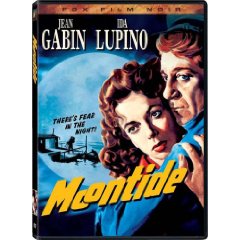 Let’s get the plot out of the way. Itinerant wharf rat Bobo (Jean Gabin) saves the life of suicidal “hash wrangler” Ida Lupino. Their budding romance is enough to keep him working at a bait barge in a California harbor. But Bobo may have committed a murder during an alcoholic blackout. And his only friend, played by Thomas Mitchell, may be willing to trade on that fact to secure his own future.
The story of the movie, full of almosts and near-misses, is far more interesting than the one in it. Moontide was meant to serve as the great Gabin’s introduction to a wide American audience; the film’s mixed reception contributed to his return to France. The source novel, by character actor Willard Robertson, is by all accounts a catalog of depravity that was greatly watered down for the screen. Original director Fritz Lang walked off the production – apparently due to a clash with Gabin over mutual paramour Marlene Dietrich – and was replaced by Archie Mayo. Salvador Dali contributed to the blackout sequence, only to have other hands complete the actual design.
I’d love to say that Moontide transcends such turbulent origins, but I can’t. Every compromise shows. The movie is a jumbled, fascinating mess.
At first, novelty carries the day. Nothing in Moontide feels remotely real. That otherworldly mood is partly a result of logistics; plans to shoot in San Pedro, California were scrapped after Pearl Harbor, so filming took place on a huge soundstage. But mainly it’s the forced marriage of American and European sensibilities that anesthetizes the proceedings. After a while longueurs set in, to use le mot juste.
The thin, obvious story doesn’t help much. Neither does the self-conscious approach to the lives of “little people.” I wouldn’t have been surprised to read the credit “Written by Barton Fink.” The actual script is by novelist John O’Hara.
Gabin lobbied to cut out stereotypical French behavior, but he still manages to carve exquisite jambon in his performance. He does have several fine moments, like one on the restorative powers of breakfast. Mitchell’s jovial stage Irishness has rarely been put to better use. Lupino and Claude Rains work their customary magic.
All for a movie that remains inert. I never thought about turning Moontide off, but I couldn’t wait for it to be over. Primarily so I could start talking about it. Three last thoughts:
I don’t care what Fox says, Moontide is not noir. It’s melodrama. Pure, uncut, prison-grade melodrama.
The movie uses an instrumental version of Irving Berlin’s “Remember” as its theme of undying romantic love. Which is fine unless you know the lyrics. (“You promised that you’d forget me not/But you forgot to remember.”)
If you are compelled to call a character Bobo, do not compound the error by having everyone repeat his name.
Miscellaneous: A Critical Question
It’s posed by Bill Crider. UPDATE: The link is now fixed.
Sunday, January 11, 2009
On The Web: More Westlake
The Rap Sheet collects memories of and tributes to Donald E. Westlake from dozens of crime writers in two posts. Also, a reminiscence by director Stephen Frears, Westlake’s collaborator on The Grifters, and Westlake talks to Ed Gorman about the return of Parker.
Thursday, January 08, 2009
Miscellaneous: No Time For Blog, Doctor Jones
The first week of the year is always a mess, isn’t it? I’m on a new schedule, which is actually an old schedule, and as a result I haven’t had time to update the site these last few days. I tried, though. I took a whack at that sixteen random things meme making the rounds and realized that there are only eleven salient facts about me. And only six of them are interesting.
So until equilibrium is restored, check out some other blogs of note. Like author Tom Piccirilli’s The Cold Spot. Or JohnAugust.com. This recent post outlining his involvement with the Captain Marvel movie is as good a primer on how Hollywood works as you’ll find.
I know, that’s not enough. Tell you what. Here’s a song that Cary Grant used to perform at parties. It’s sung to the tune of “My Bonnie Lies Over the Ocean.” I learned it from the book I’m currently reading, Roger Moore’s memoir My Word Is My Bond.
I once had a box of tin soldiers
I knocked off the general’s head
I broke all the sergeants and corporals
Now I play with my privates instead
Go on, try to do it in Cary’s voice.
Oh, all right. I know what you really want.
Sunday, January 04, 2009
Book: The Hunter, by Richard Stark (1962) & More Westlake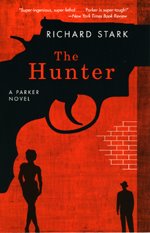 On some scores, I am as good as my word. I said that I would reread the new University of Chicago reissue of The Hunter that I picked up the day before Donald E. Westlake died, and I did. It’s not like it was difficult; everything Donald Westlake wrote goes down smooth. Some random thoughts.
The book is meaner and even darker than I remember. It’s plain that Mr. Westlake didn’t intend to start a series that would last 40 years with this novel, but the intervention of an editor changed that.
A passage that leapt out on this reading:
He could look out at the street, and let his fifteen-cent cup of coffee cool. It was a Park Avenue coffee shop, and expensive. Pastrami on rye, eighty-five cents, no butter. Like that.
Like that. That phrase is an example of how, as Lee Goldberg noted, Mr. Westlake “wrote books that inspired people to become authors.” He made it look effortless.
The Hunter, like many Westlake books, is so attuned to the city of New York that it can be plotted on a subway map. So far it’s been filmed twice, as a definitive Los Angeles movie and then in Chicago.
Point Blank was acclaimed for its Nouvelle Vague-influenced storytelling, but the structure deployed in the Parker novels – four sections, with three from Parker’s POV and the fourth from other characters related to the job at hand – is every bit as impressive, with a formal rigor of its own. The Hunter features one of its more dazzling uses. Parker attempts to gain entry to a building, and things go wrong. Horribly so. Westlake generates tremendous suspense from this sequence even though we already know that Parker’s target is no longer in the building.
Over the weekend I also reread “Fugue For Felons,” a short story from the 2004 collection Thieves’ Dozen (eleven stories, natch) that showcases Mr. Westlake at his most inventive. Fearing that he might lose the rights to the name of his character John Dortmunder to Hollywood, he wrote a tale featuring a “parallel universe” version of the hangdog thief. The only problem is John Rumsey didn’t behave in quite the same way. It’s a treat. And it features one of Mr. Westlake’s trademark observations that strikes particularly close to home, about the New York subway:
... and the poor G, the Brooklyn-Queens crosstown, which never gets into Manhattan at all but just shuttles back and forth between Brooklyn and Queens, full of people wearing hats.
Tributes to Donald Westlake are all over the web, many of them collected at Sarah Weinman’s Confessions of an Idiosyncratic Mind. I’d recommend the ones by Duane Swierczynski and Max Allan Collins. But the most astonishing is by Ethan Iverson of The Bad Plus, who carried on a longtime email correspondence with Mr. Westlake. If you’re a fan, it’s a must-read.
And I’ll echo Jeffrey Wells and say that now more than ever, we need a quality DVD of 1973’s The Outfit. Not only does it feature a cast of noir legends like Robert Ryan, Marie Windsor, Timothy Carey, Jane Greer and Elisha Cook, Jr., it’s also the Parker movie that Donald Westlake himself said was his favorite.
Cocktails: Insert Absinthe Pun Here
The New York Times Sunday Style section has done more than its share to propagate idiotic trends. So it’s nice to see them Rochambeau one before it gets out of hand. From Eric Konigsberg’s article on the absinthe craze:
If absinthe were a band, it would be Interpol, third-hand piffle masquerading as transgressive pop culture. If absinthe were sneakers, it would be a pair of laceless Chuck Taylors designed by John Varvatos for Converse. If it were facial hair, it would be the soul patch. If absinthe were a finish on kitchen and bath fixtures, it would be brushed nickel.
Saturday, January 03, 2009
DVD: The Maltese Falcon (1941)
Falcon was my first movie of 2009. I always watch a classic on January 1 to set the tone for the rest of the year. And it’s preparation for a jaunt to San Francisco later this month to take in some of Noir City.
One of my favorite scenes is the initial encounter between Sam Spade (Humphrey Bogart, but you knew that) and “the fat man” Kasper Gutman (Sydney Greenstreet). They take each other’s measure with that sparkling Dashiell Hammett dialogue left largely untouched by John Huston. (“Here’s to plain speaking and clear understanding ... I’ll tell you right out I’m a man who likes talking to a man who likes to talk.”) Spade tries to leverage what he’s learned into more information, but Gutman refuses to play along. So Spade erupts, hurling his glass down, threatening Gutman’s gunsel Wilmer, and storming out of the room. It’s a startling moment.
Cut to the corridor. As Adolph Deutsch’s music takes a turn, a smile spreads across Spade’s face. Losing his temper was an act, a way of stirring the pot. What makes the scene is that as Spade presses the button for the elevator, he notices that his hand is shaking. And he smiles at that, too.
As I watched it for the umpteenth time, I thought: no way this scene would play out like this today.
Spade would still pitch a fit, of course. Only we’d be told about it in advance. The hero of the movie appearing not to be in control? That note would be fast in coming. We’d get a simple dialogue fix, Spade telling loyal secretary Effie Perine that he’ll raise a ruckus if the fat man won’t play ball. And something ineffable would be lost.
I’ve had this deluxe edition of Falcon for ages, but I’ve yet to watch either the 1931 adaptation or the ’36 version Satan Met A Lady. That situation will shortly be rectified. I did, however, watch the 1941 Warner Brothers blooper reel included on the DVD. Profanity in black and white? Jimmy Stewart cursing? Unbelievable.
On The Web: Movie News on the Move
Brush up your web links. Aaron Hillis takes over GreenCine Daily, while outgoing editor David Hudson begins working his magic at IFC.com’s The Daily. David does a superhuman job collecting all the net’s film news at a single location. It’s worth bookmarking his site and reading it every day.
Thursday, January 01, 2009
Donald E. Westlake (1933-2008)
A sad start to the new year. Donald E. Westlake died late yesterday.
Mr. Westlake was one of my all-time favorite authors. More than that, he was one of the best. Named a Grand Master by the Mystery Writers of America, and considered one of the greatest writers of the 20th century by some critics.
But their opinion doesn’t matter when the novels make their own case. His older ones are forever being reprinted and finding new audiences. I just picked up the University of Chicago reissue of The Hunter on Tuesday.
I admired him for so many reasons. His versatility. Writing wry comic capers under his own name, then offering the genre’s photo negative as Richard Stark, books that live up to the pen name. His longevity. Starting in the pulps and ending his career with some of his strongest work, like 1997’s The Ax, a book I’ve been thinking of a lot these last few months. His ability to work in different mediums. He cowrote the script for the marvelous thriller The Stepfather and was nominated for an Academy Award for his adaptation of Jim Thompson’s The Grifters. His matchless skill at capturing the rhythm and flavor of life in New York City. A Westlake coinage – “Harya” – is still my greeting of choice.
I never met Donald E. Westlake, but I felt like I knew him. I’m certain that I’m going to miss him. I’m going to start rereading The Hunter right now.
When a fresh-faced guy in a Chevy offered him a lift, Parker told him to go to hell. The guy said, “Screw you, buddy,” yanked his Chevy back into the stream of traffic, and roared on down to the tollbooths. Parker spat into the right-hand lane, lit his last cigarette, and walked across the George Washington Bridge.
