Showing posts with label music. Show all posts

Saturday, January 07, 2023

Noir City We’ll Meet Again Edition

Issue 36 of the Film Noir Foundation’s magazine Noir City is now out in both digital and print editions, and it marks a bittersweet moment for yours truly. It’s my final issue as editor-in-chief. After fourteen years on the editorial staff, the last three-plus in the top job, I’m hanging up my spurs. 


But I’m leaving on a high note. Check out that cover image, for starters. We celebrate 100 years of film noir icon Veronica Lake with Lynsey Ford’s story looking at Lake’s career and her private life, “as tragic and convoluted as any film noir plot.” Also in the issue—

A brilliant feature by Farran Smith Nehme, aka the Self-Styled Siren, on the neo-noir world of “the French Hitchcock,” Claude Chabrol;

Brent Calderwood surveys the slippery history of masseurs and masseuses in film noir;

Noir City’s own Steve Kronenberg hears the siren song of Gale Sondergaard;

Jim Thomsen profiles “Driver’s Seat” singer and noir-inspired artist Paul Roberts;

Bob Sassone unwraps the singular charms of the classic yuletide-set noir Cover Up;

Eddie Muller offers a heartfelt memorial to his friend and colleague, novelist Jim Nisbet;

The Nitrate Diva Nora Fiore compares the book and film versions of Out of the Past.

Plus book reviews, film reviews, and more—including the farewell edition of my Cocktails & Crime column, with one last libation for the road.

It’s been an honor to work alongside publisher/FNF honcho Eddie Muller and ace designer Michael Kronenberg on every issue of this magazine, and I’m particularly proud of helping to launch the print edition of Noir City. I’ll still write for the magazine on occasion—look for a story from me later this year—and I’ll remain on the FNF’s advisory board. If you want to know which incredibly capable people will be taking the Noir City reins, why not get yourself a subscription by donating to the FNF, with your contribution going to support the Foundation’s film restoration efforts? If you prefer the hard stuff, you can order a print edition exclusively from Amazon. Either way, you won’t regret it.

Tuesday, October 09, 2012

Miscellaneous: Assorted Recommendations

Buy this album. This one right here, Made Possible by The Bad Plus. Listen to it regularly. It’s one brilliant song after another. Then see them live at your earliest opportunity. You can thank me later.

Here’s a plot: hard-working family man Wade Benson falls asleep at the wheel one night and accidentally kills a young woman. He’s sentenced to several years’ probation, but must serve two days of each of those years in jail. A friend of the victim’s family feels Wade hasn’t suffered enough for his crime and picks one of those days to kidnap Wade’s college-age daughter.

Odds are you’re picturing a white-knuckle ride about a decent individual desperate to atone for a horrible mistake, pitted against a hardened criminal. Perfect airplane reading. That’s not Lake Country. Sean Doolittle, a cagey writer who sidles up on his narratives, has something more interesting in mind. After a brief introduction putative villain Darryl Potter, back from Iraq and battling a host of post-war demons, disappears until the halfway point. We never even meet Wade Benson, an authorial decision that practically renders the book experimental. Instead Doolittle adopts an outside-in approach, letting characters on the periphery work their way to the center of the drama. A TV reporter having second thoughts about her career. A bounty hunter who has mastered his own form of destructive Zen. And Darryl’s only friend Mike, a fellow veteran who “came home from the Marine Corps with a plastic knee, 63 percent hearing loss in his left ear, and a bunch of grisly sludge where his nighttime dreams used to be.” The result is a portrait of a Minnesota community and a subtle, moving thriller about the unexpected repercussions of tragedy.

Leo Waterman is back after a too-lengthy hiatus in G. M. Ford’s Thicker Than Water. The irascible shamus has finally cashed in the trust fund his deeply crooked politico old man left him. He’s still got the boys – the motley assortment of indigent misfits who work as his “operatives” – to spend his newfound gain on, but he’s lost Rebecca, the woman he loves, to another man. When Rebecca vanishes without a trace, Leo slips out of semi-retirement and back onto the mean streets of the Pacific Northwest. Thicker Than Water is a solid old-school detective novel shot through with Leo’s trademark grumpy humor and rich Seattle atmosphere. I may be biased because Rosemarie’s workplace and several watering holes I frequent are name-checked, but nobody captures the spirit of my adopted hometown like Ford.

Wednesday, August 29, 2012

Book: Hitless Wonder, by Joe Oestreich (2012)

Watershed doesn’t get much radio airplay outside the Midwest, as if radio airplay matters anymore. On Rhapsody they’re under “noise pop,” which I didn’t even realize was a category of music. Give a listen to “Anniversary,” a brittle little gem that will introduce you to the memorable phrase “shotgun divorce.” The song’s potency comes from the fact that it’s about a long-term relationship running out of gas; only someone who’s been around can tell that story.

The band built up a following in the Heartland, centered around their hometown of Columbus, Ohio. They were poised to break out in the mid-1990s when they were discovered by rock god Jim Steinman and landed a major label deal. Then the worst of all possible fates befell them: no fate at all. This “surefire Next Big Thing” discovers “it’s damn near impossible to shed Next and Thing and become simply big.”

They’re still around after 20 years, a bunch of guys pushing 40 and in some cases tumbling over it, vacating their day jobs to pile into a rental van and play their hearts out for dozens of people on a good night. Joe Oestreich, the bass guitarist and one of two lead singers – that arrangement may be part of the problem, but hey, the band is the band – explains why they do it in a dazzling memoir. His book is like one of those perfect pop songs that lays bare the meaning of life in a tight 2:20. At its core, Hitless Wonder asks questions that don’t only apply to aging jukebox heroes. When do you give up on the dream? How do you measure your worth when every standard is in flux? What if you’ve got the talent and the drive but none of the luck? What takes more pride, walking away or rocking on?

Oestreich alternates between documenting Watershed’s checkered history and its most recent tour, in support of an album few clamored for and even fewer have purchased. The departure puts strain on his marriage; his wife leaves him at the airport with the words, “No one gives a shit about a Watershed tour except the guys in Watershed.” Oestreich’s chronicle essentially bears that out while observing that it doesn’t matter. His band “would forever play in the minor leagues. But that was okay: a win in the minors was still a win.” Or as the friend of a friend puts it, “That’s the key. Having something to aim at. Whether or not you hit it is immaterial.”

Oestreich is a terrific writer; it will be hard to forget the revelation that singing into the ancient microphones at CBGB is “like licking the screen door at a VFW hall.” He’s particularly strong when detailing changes in the business, like the tyrannical crooked math behind New Band Nites: “This is how rich capitalists convince poor folks to vote Republican. We’re not fucking you; we’re giving you the power to sink or swim on your own – in a system that’s designed to fuck you.” This “generational divide” has affected the music itself. “Watershed belongs to the last wave of bands that dreamed big,” their fantasy futures defined by big label deals and arena gigs. Oestreich contrasts this with one of their opening acts, a duo influenced by Radiohead “but even more experimental and ponderous – all bleeps and bloops and self-indulgent passages that are so damn long, I swear I can see the singer’s beard growing.” Coming of age at a time when artists break on YouTube and roller derby has claimed the arenas, it makes sense for bands to become “uneasy with big.”

But for all his rhapsodizing about the allure of the road – you’ve got to love any band with a philosophy inspired by “John D. MacDonald’s literary hero Travis McGee, the self-proclaimed ‘salvage expert’ who works when he wants, thereby taking his retirement in installments” – Oestreich keeps the focus on hard choices. He and his bandmates are good enough to be paid to do what they love but can’t earn a living at it. When you claim a seat at the table but somehow don’t get anything to eat, you’ve got to find other ways of sustaining yourself. Oestreich details one way that’s possible in a moving book about marriage, friendship, and how Cheap Trick fucking rules.

Tuesday, December 27, 2011

Music: Woody Allen & His New Orleans Jazz Band

It’s not like I didn’t know what I was getting into. The posters for the concert trumpeted Woody Allen & His New Orleans Jazz Band in the same font used on the titles of his films. The band’s standing Monday night gig in New York – and Woody missing out on accepting his Annie Hall Oscar to keep the date – is the stuff of legend. Still, I was astonished at the unabashed thrill I felt seeing Woody walk out onto the stage at the Paramount Theater last night. The scandal, the inconsistent movies of recent years, none of that mattered. That was Woody Allen, in person, and I was happy to be in the room.

The band plays what Woody described in one of his few comments to the crowd as “New Orleans music ... whorehouse music.” There’s no set list; bandleader Eddy Davis on the banjo calls out a song and the group launches into it. Monday’s repertoire included “Oh, You Beautiful Doll,” a melancholy “Once in a While” and “Girl of My Dreams,” which I always think of as the tune Johnny Favorite took to the top of the charts in Angel Heart. The lack of chatter and the band’s practice of playing straight through applause gives the show the feel of a rehearsal that’s open to the public. Clarinetist Woody is easily the least of the capable crew, which includes Conal Fowkes on piano and Jerry Zigmont on trombone, but he makes up for it in enthusiasm. His joy in performing a school of music that he clearly loves comes across. He didn’t want to leave the stage; after two hours and multiple encores he said, in his only line of the night, “I have to get eight hours of sleep or I start to look my age.” Woody and the boys will be playing in Portland tonight.

Monday, July 04, 2011

Books: Stranger Than Fiction

A pair of fascinating non-fiction books to recommend ...

Moonwalking with Einstein: The Art and Science of Remembering Everything, by Joshua Foer. Science journalist Foer covers the U.S. Memory Championship. The following year he’s back – as a competitor. The book details his training, utilizing techniques that date back to ancient Greece. Foer also explains our evolving understanding of how memory works, and how it’s changing in the internet age. He avers more than once that the approach described won’t help you remember where you left your car keys. But there’s a sequence where his trainer gets him to remember a random list, and Foer encourages the reader to personalize the technique. I did, and that list is now in my head to stay. This stuff works.

The Psychopath Test, by Jon Ronson. A chilling proposition lies at the core of the book, subtitled “A Journey Through the Madness Industry.” The traits that define psychopaths – confidence, charm, narcissism – are shared by politicians and captains of industry. Does that mean the world is run by lunatics? How do we define madness, anyway? Ronson (Them: Adventures with Extremists, The Men Who Stare at Goats) writes with a hugely engaging style, inserting himself and his own neuroses into the material in a way that illuminates the questions he raises.

Ruth Roberts, R.I.P.

The songwriter died July 1 at age 84. Her work was recorded by Buddy Holly and the Beatles among others. But her greatest accomplishment is my all-time favorite song: “Meet the Mets.”

Monday, March 07, 2011

Miscellaneous: Anatomy of a Weekend

The McCoy Tyner Quintet. Might as well kick things off by seeing a legend in person. Tyner is one of the great jazz pianists and a living link to John Coltrane. (He played on A Love Supreme, people.) At Jazz Alley, he was backed by a brace of sterling musicians: Gary Bartz on saxophone, John Patitucci on bass, Herlin Riley on drums and the one and only Bill Frisell on guitar. Each had his moments to shine, but all were happy to defer to the master at the keyboard. Their rendition of Duke Ellington’s “In a Mellotone” was pure joy. The show was packed, to the extent that I was initially concerned about our seats at the side of the stage. But that’s where the boys hung out right before they were introduced. And we were positioned perfectly to see Mr. Tyner’s face throughout the set, issuing signs like a wily catcher calling a close game behind the plate. I may request those seats in the future.

Local 360. Dinner was terrific at this new locavore restaurant, but what do I know? I’m no foodie. Of greater interest was the application of their philosophy to the cocktail menu. I had a Manhattan made with Desert Lightning corn whisky from the Yakima Valley. The whisky’s sharp, almost astringent taste was reminiscent of moonshine – yes, I’ve had moonshine – and resisted blending with the vermouth. The result was not entirely successful. But damned if I don’t want another one.

The Adjustment Bureau (2011). This Philip K. Dick-inspired thriller about a man who stumbles onto the mysterious forces who keep us mere mortals on plan is, at heart, a love story. Its light tone makes a nice change of pace from the usual paranoid intensity. Matt Damon and Emily Blunt have better chemistry than any screen couple in recent memory. Writer/director George Nolfi provides them with some good dialogue. Throw in great New York locations and fine haberdashery and I was happy to go along for the ride.

No Orchids for Miss Blandish (1948). James Hadley Chase’s 1939 novel about a kidnapping gone wrong, and then really wrong, is one of the premier WTF reading experiences, with jaw-dropping, mind-bending and occasionally eye-rolling plot twists all the way to the closing paragraphs. This lurid U.K. adaptation, its cast of English actors Noo Yawkin’ it up, kept some lulus that an American version would never have gotten away with, but still had to water the strongest stuff down. Despite gutting Chase’s book, it remains deeply nuts.

Sunday, January 09, 2011

Book: Frank: The Voice, by James Kaplan (2010)

Many serious celebrity biographies (the “serious” is meant for you, Kitty Kelley) tend to buy into one of two theories. Either the subject was such a genius that his sins against his fellow man must be forgiven, or to hell with his accomplishments because the bastard treated everyone like shit. James Kaplan walks the fine line between the two poles in Frank: The Voice, his hugely engaging new biography of Sinatra. Excuses aren’t made for Sinatra’s frequently loutish behavior, but respect is always paid to his overwhelming gift.

The book runs through 1953, ending when Frank has won his Academy Award for From Here to Eternity, lost the love of his life in the tempestuous Ava Gardner, but met his most significant partner in Nelson Riddle, arranger of the songs that would become the soundtrack to the rest of the twentieth century. Some have knocked Kaplan’s novelistic approach, putting himself in the heads of Sinatra and those around him. But that’s only an instance of the author taking cues from the master. Frank, we learn, was a supreme interpreter of lyrics because he lived inside them, analyzing them so he could “understand the point of view of the person behind the words ... his emotions.”

Sinatra’s background and resulting psychology aren’t all that unusual; not everyone who’s the product of a domineering mother and a weak father ends up being a noirish antihero. What’s different is Sinatra’s talent, his awareness of it and confidence in it. That talent is what Kaplan always leads with. There’s juicy gossip galore – in the midst of the Hollywood shenanigans, Frank’s first wife Nancy emerges as a compelling figure – but the focus is always on the music first. Kaplan provides plenty of nuggets, like how Sinatra’s rejection of the Mitch Miller-selected novelty songs “The Roving Kind” and “My Heart Cries For You” (“I’m not recording this fucking shit”) single-handedly led to Guy Mitchell’s career, and the trickery deployed by Capitol Records to get Frank to work with Riddle. Kaplan, let it also be said, is a very funny writer.

A week or so later, Sinatra had yet another on-set visitor at Columbia: the syndicated columnist Harold Heffernan, whose prose style was as clunky as his byline. “Salient factors that keep the pugnacious Frank Sinatra’s career from wallowing are a dogged tenacity and an enthusiasm about whatever he attempts,” Heffernan thesaurused, in his April 2 column.

Kaplan’s also serious about exploring all of Sinatra’s music. Thanks to this book I have now been exposed to “Mama Will Bark,” Sinatra’s 1951 duet with the evanescently famous bombshell Dagmar. Kaplan is far too kind to the song, which astoundingly was the B-side to Frank’s triumph “I’m a Fool to Want You.” Then again, why should you take the word of someone whose ringtone is “Bim Bam Baby”?

Wednesday, December 15, 2010

Music: The Bad Plus

The Bad Plus has been together for ten years. Their show at Jazz Alley last night drew entirely from Never Stop, their new album celebrating that anniversary. As always, it was a sensational performance. The trio played one of my favorites, “Bill Hickman at Home,” a salute to the stunt driver of Bullitt and The French Connection, and Reid Anderson’s heartbreaking “People Like You.” Drummer Dave King truly got to shine, using his box of toys to full effect. They’re at Jazz Alley again tonight, with upcoming dates in Chicago, Minneapolis and New York. Go, go, go.

After the show, Rosemarie and I spent some time chatting with pianist and crime fiction connoisseur Ethan Iverson. Talk turned to ‘70s era detective shows and we mentioned Columbo, season one of Mannix, and the short-lived Ellery Queen. (We’ve been making our way through the recent DVD release; expect a post when we’re done.) At his blog Do The Math, Ethan details his recent reading.

Of course, this post is simply an excuse to link to Ethan’s astonishing overview of Donald E. Westlake’s career, now back on the web and somehow expanded. As it happens, Ethan’s classic rendering of the opening of The Da Vinci Code in the style of one of Westlake’s Richard Stark novels is today’s guest post at The Violent World of Parker.

All the TV shows mentioned above were created by the team of William Link and Richard Levinson. In another nice bit of serendipity, today is William Link’s 77th birthday. Mr. Link is still going strong; we recently had the pleasure of hearing him speak at Bouchercon. Extend your birthday greetings at The Rap Sheet.

And one final link to a piece on a subject that is also near and dear to my heart: Ethan’s wife Sarah Deming on cocktails bars that go too far. Who doesn’t serve Amaretto sours?

Friday, November 05, 2010

Music: Lucy Woodward, Hooked! (2010)

I haven’t raved about an album in a while. What say I do that now?

Rhapsody has Lucy Woodward filed under “Teen Beat” because of her earlier hits. Hooked! is her debut on Verve, and while it’s certainly a jazz record she retains a sharp and lively pop sensibility. It’s evident in her treatment of standards like “Stardust.” (I’d also call “I Wan’na Be Like You (The Monkey Song)” a classic, but some people don’t feel that way about The Jungle Book.) Not to mention her own songs like “He Got Away” and the wickedly funny “Babies.” Whatever category she’s in, she’s a fantastic singer with a supple, smoky voice. The ballad “Purple Heart” is proof of that.

Here’s the video for “Ragdoll.” Sexiest thing about it? The way she sings the word “Damn.”


And here’s Lucy tearing it up live at Joe’s Pub in NYC.


She has a concert coming up at Jazz Alley this month that I have to miss, and it’s killing me. I’ll just have to listen to the album again.

Monday, November 23, 2009

Movies: The Quality of Mercer

Amidst multiple deadlines I’ve been making my way through some of the films in Turner Classic Movies’ month-long salute to the centenary of the birth of Johnny Mercer, singer and songwriter extraordinaire.

1937’s Ready, Willing and Able introduced “Too Marvelous for Words,” as well as some lesser tunes. (“Handy With Your Feet,” anyone?) “Marvelous” is featured several times, most memorably in the stupendous closing number. When it was excerpted in TCM’s Mercer documentary, Rosemarie began waving her hands in front of her face like a giddy six year old. Ruby Keeler and Lee Dixon, a second-rate Cagney impersonator trapped in Conan O’Brien’s body, dance on a gigantic typewriter with the legs of a bevy of chorines serving as typebars. Based on the words that appear on the equally enormous sheet of paper behind them, it’s a non-QWERTY keyboard.

I just looked down to spell QWERTY. How sad is that?

Hollywood Hotel (1937) gave the world “Hooray for Hollywood,” the tongue-in-cheek anthem that Tinseltown took at face value, belted out by Johnnie ‘Scat’ Davis. The real reason to watch is the Benny Goodman Orchestra performing “Sing, Sing, Sing,” followed by a tight session with Benny, Gene Krupa and Lionel Hampton.

Garden of the Moon (1938) is the least regarded of the three films that we saw, so naturally I liked it the most. Lots of novelty songs here performed by a band that includes Davis, John Payne and Jerry Colonna, among them “The Lady on the Two-Cent Stamp.” The closest thing to a standard on the soundtrack is “The Girlfriend of the Whirling Dervish,” and when I heard it I got a touch giddy myself. Whenever Warner Brothers needed a hint of Arabian Nights mystery in a cartoon, they’d play an instrumental version of this song. Which is unfortunate, because the lyrics show off Mercer’s wordplay at its best.

She’s got her nervish
Throwing him a curvish
Which, of course, he doesn’t deservish


Astute readers will have noticed I haven’t bothered with plot synopses. All three movies are trifles, showbiz farces with mistaken or bogus identities. There’s just enough story to keep things humming ‘til the next tune starts. Warner Brothers’ musicals owe something to the studio’s signature crime dramas; they’re earthy and sharp, with a kick of bourbon in the meringue. It’s worth noting that these three films, in addition to the handiwork of Johnny Mercer, also share writing by Jerry Wald and Richard Macaulay. They would later pen They Drive by Night and Manpower together, while as a producer Wald would make Mildred Pierce, Dark Passage and one of my favorite backstage dramas, The Hard Way.

TCM has one more night of Johnny Mercer fare airing on Wednesday – after their showing of The Money Trap at 4:15PM EST, 1:15PM PST. I told you there’d be other reminders.

UPDATE: Here’s “The Girlfriend of the Whirling Dervish,” which grows progressively unhinged. It’s still odd to see John Payne singing, considering that I think of him as the lead in noirs like Kansas City Confidential and Slightly Scarlet. Oddly the original choice to star in Garden of the Moon was Dick Powell, who preceded Payne down the boy-singer-to-tough-guy path.

Friday, October 23, 2009

DVD: Anvil! The Story of Anvil (2009)

It’s not just one of the best titles of the year. This documentary is also one of the best movies.

The Canadian band Anvil is a pioneer in heavy metal music. Guys from Anthrax, Guns N’ Roses and Motörhead attest to their unassailable awesomeness. The movie opens with rare footage from an epic 1984 Japanese metal fest featuring Anvil’s lead singer Lips wearing a bondage harness and playing the ax with what ‘70s game shows used to call a marital aid.

Many of the acts on that bill went on to achieve success. Not Anvil. A series of bad breaks kept them in the minor leagues, famous only to other musicians and a small circle of fans. But the band keeps rocking. Sacha Gervasi, a screenwriter who was an Anvil roadie in their brief ‘80s heyday, picks up their story as they set aside their day jobs to embark on an extended European tour organized by their guitarist’s girlfriend and then record their thirteenth album.

It’s a real-life Spinal Tap crossed with The Wrestler, following men in their fifties who won’t give up on their dream even in the face of age and common sense. It’s about family, friendship, and the power of belonging to a community. I may have teared up once or twice, but I was banging my head so nobody noticed.

Sunday, March 15, 2009

Movie: Shack Out on 101 (1955)

Like all great works of art, Shack Out on 101 functions on several levels.

First, there’s the level at which it’s total shit. The budget for this Red Scare melodrama was so low that virtually all of the action is limited to one set, a California burger stand that has inexplicably become an espionage hotbed. Every scene runs too long, especially the ones that should have been cut. Like the indoor deep-sea fishing expedition. Or the love scene between deeply uninteresting leads Frank Lovejoy and Terry Moore that includes a civics lesson, with a kiss for each branch of government. Or the workout that takes place next to the serving area, in clear violation of any number of health codes, with the participants complimenting each other on how their bodies look with and without clothes. (“Them’s my pecs!”)

Then there’s the level at which the movie’s flaws work in its favor. Sometimes having three sweaty actors wedged into a tight frame shouting at each other does build intensity.

Finally, there’s the Lee Marvin level. As fry cook/spy Slob, his performance is loose and funny until he fires up that gangly, agile menace. When he turns on Moore, I was certain he was going to kill her – not her character, but the actress. He makes this lousy movie crackle with life. You can’t not watch Lee Marvin, even when he’s pimping cigarettes. (H/t to Bill Crider.)

Music: The Bad Plus

The trio is closing out a four-night run at Seattle’s Jazz Alley in support of their latest album, For All I Care. The first half of last night’s fantastic set had the boys performing their usual dense yet delicate instrumental pieces. Pianist Ethan Iverson introduced an original about stunt driving legend Bill Hickman’s love of fruit salad that had an entire movie playing in my head.

Then they were joined by rock vocalist Wendy Lewis for some amazing covers. A spare “Lock, Stock and Teardrops” that included every echo you’ll hear when your lover finally leaves, a version of “New Year’s Day” stripped of bombast but full of passion, a “Comfortably Numb” that can cut through the haze and make any stoner’s hair stand on end. Together, they even found tendrils of twisted longing in “Blue Velvet” that David Lynch somehow missed.

Here’s Fred Kaplan, who knows a thing or two, on For All I Care. And Ethan’s extraordinary reminiscence of Donald E. Westlake. And again, my favorite thing on the internet, Ethan’s opening of The DaVinci Code as written by Richard Stark.

Miscellaneous: Links

Repeating these from my Twitter feed. Are you following me over there? You should be.

The New Yorker profile of Tony Gilroy is packed with great information on screenwriting.

My favorite bar and a grand cocktail jointly celebrated. Watch the video to see the legend Murray Stenson in action.

Tuesday, December 09, 2008

Music: You Got EBN In My OZN!

The MTV Music video database expands. Gaspo, this one is for you. Still not enough Adam and the Ants, though. Johnny Depp’s Sweeney Todd look owes something to EBN. It’s amazing we communicate at all. Languages and dialects ...

Wednesday, November 19, 2008

Miscellaneous: Business, Bigamy & Brass

Busy, busy, busy here at Chez K. There’s always my Twitter feed. It’s amazing how often you can say all you need to in 140 characters or less. But here are some recent discoveries worth a sentence or two.

Ahead of the Curve: Two Years at Harvard Business School, by Philip Delves Broughton. The author, the former Paris bureau chief for the Telegraph, dealt with doubts about the future of his profession by enrolling in the Crimson’s MBA program. His book is an engaging, warts-and-all portrait of an institution with an uncommon amount of global influence; HBS graduates include George W. Bush and Enron CEO Jeffrey Skilling. (OK, that’s not exactly a representative sample. But in light of recent financial events, fuck fair.) If you want to understand how the people who can be said with little exaggeration to run the world think, this book is a good place to start.

The Bigamist (1953). Don’t let the pulpy title fool you. Sadness is the overriding tone of this Ida Lupino film, which I caught on TCM. Edmond O’Brien is a decent, profoundly lonely man who finds different satisfactions from each of his two wives (Joan Fontaine and Lupino, directing herself for the only time). The story is handled in compassionate, humane fashion, right up through the slightly unsatisfying ending.

But the goodwill is almost squandered in a strange reflexive moment. Miracle on 34th Street’s Edmund Gwenn is cast as the adoption agency employee whose investigation causes O’Brien’s double life to unravel. It’s already tempting fate to have Fontaine say that he looks like Santa Claus. But when a Hollywood tour guide blithely announces that the bus is now passing the home of actor Edmund Gwenn, that’s a stunt even Charlie Kaufman would steer clear of.

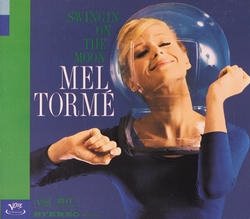
Moon & Sand. This Rhapsody channel dedicated to West Coast jazz of the ’50s and ’60s was off the air last week, stranding yours truly at his wit’s end. It’s my daily soundtrack. Recently it introduced me to my new favorite song, ‘Swingin’ on the Moon’ from Mel Tormé’s album of the same name. It features the immortal lyric “Tell mater and pater/We live in a crater.” And dig that crazy cover art.

Wednesday, November 05, 2008

Music: You Have Your MTV!

With the election over, you’re no doubt on the hunt for prime time-wasting opportunities. Look no further than MTV Music, a database of almost 20,000 videos. It’s already yielding surprises. More to the point, it has finally delivered unto me my own personal white whale.

For years I have been obsessed with the 1986 video for “American Storm” by Bob Seger. Not the straight performance version that occasionally surfaces on VH1 Classic or is easily found on YouTube. No, I mean the video featuring scenes from an action thriller with an all-star cast including James Woods, Scott Glenn, Randy Quaid and Lesley Ann Warren.

The only problem is ... the movie doesn’t exist.

The “scenes” were shot exclusively for the Seger video. To this day I have no idea if this was intended as post-modern commentary on the then-standard practice of using videos as film promotion tools, or just a really, really bad idea.

I hadn’t seen that version of “American Storm” since high school. Thanks to MTV Music, I present it to you now.


As if that’s not enough, you can also enjoy an absolutely pristine copy of “Crucified” by Army of Lovers. My first wife has never looked so good. The minx.

Sunday, November 02, 2008

Miscellaneous: Your Samhain Weekend Roundup

The Black Scorpion (1957). This low-budget creature feature was our Halloween evening entertainment. Ignore the scorpions’ “faces” and focus instead on the tremendous stop-motion work by Willis O’Brien and Pete Peterson. No less an authority than Michael Weldon’s Psychotronic Encyclopedia of Film (now celebrating its 25th anniversary) says: “The terrifying huge scorpions make the monsters in most other films look pathetic.” Star Mara Corday is so much of a ringer for Gina Gershon that it lends a whole new layer of meaning to the proceedings.

The movie has a special place in my heart because of the circumstances during which I first saw it. I was nine years old, visiting family in Ireland with my mother. She noticed that the movie would be coming on at two in the morning and suggested that we watch it together. Sure enough, she woke me at 1:45 AM with tea and cookies at the ready. I sat with her in my grandfather’s living room watching giant scorpions rampage across Mexico, then went back to bed and slept like an angel. It’s funny to think she had me figured out that early.

Pride and Glory (2008). After all the trouble this movie had, it’s almost unfair of the New York Times’ Dan Barry to have a go at it in an admittedly funny piece about the depiction of Irish Catholic New York cops. But Pride and Glory can take the heat. It doesn’t break new ground, but director/co-writer Gavin O’Connor, the son of an NYPD officer, knows the terrain and gives it a gritty, lived-in texture. Colin Farrell continues his string of terrific performances. Jon Voight’s teary Christmas dinner speech would be right at home in any number of Keenan family gatherings. I could have done without the reel on the jukebox during the bar fight. But the one cliché that did stand out – Edward Norton’s character living on a boat – has nothing to do with being Irish, and O’Connor takes pains to justify it. Smart, solid filmmaking.

Earshot Jazz Festival. I missed most of Seattle’s premiere jazz event thanks to traveling. But we did squeeze in the Phil Markowitz Trio at Tula’s last night, and we’re glad we did.

Sunday, June 15, 2008

Comics: Two, Please

This week’s installment is below or here.


Movie: The Incredible Hulk (2008)

Two hours of solid, entertaining superhero action. Rosemarie, who knows about this kind of thing, assigns bonus points for Tim Blake Nelson’s performance as the most believable movie scientist in a long time. Louis Leterrier has directed four films including The Transporter and its sequel, plus the woefully underrated Unleashed with Jet Li and Bob Hoskins. I like ‘em all.

Music: James Hunter, The Hard Way

Perhaps, like Carl Carlson, you have asked, “How ‘bout some new oldies?” If so, ask no more. The latest album from James Hunter is out, and it’s like a wormhole has opened to the early 1960s, pumping out original music with that vintage sound. Part soul, part R&B, all tasty. Give it a listen.

Thursday, May 29, 2008

Music: The Kenny Barron Trio

Yeah, I should have just thrown up an Army of Lovers placeholder post. Busy, busy, busy. Multiple projects, staggered deadlines, etc.

I did have a night off yesterday, and marked the occasion in style by seeing the Kenny Barron Trio at Jazz Alley. Featuring Kenny Barron on piano, Kiyoshi Kitagawa on bass, and Francisco Mela on drums. The trio has a lively onstage dynamic. Mela is wildly expressive, his joy in performing unbounded; Rosemarie and I both called him the Jose Reyes of percussion. Kitagawa is the steely virtuoso, while Barron simultaneously hangs loose and rides herd. The result was a fantastic, supple set. I knew I was in for a good time when Barron introduced the opening number, the standard “Beautiful Love,” by saying that Benny Golson had told him the song was featured in The Mummy with Boris Karloff.

Miscellaneous: Links

15 years later, Maxim talks to the principals of True Romance.

I own very few TV series on DVD. Two of them are The Larry Sanders Show and Arrested Development. What do they have in common? Jeffrey Tambor.

Tuesday, May 06, 2008

TV: Frank’s, For The Memories

I’m on deadline, meaning I’ll be taking a sabbatical for the next few days. Lucky for you it’s Sinatra month on Turner Classic Movies, so you have this widget to tide you over ‘til I return.

UPDATE: Initially I embedded the widget, but it starts automatically and I hate that. So you can find it here.

The High Society number with Bing Crosby is a favorite. TCM is also airing some of Frank’s TV specials on Sunday evenings at 8PM Eastern and Pacific. I’m waiting for his 1967 show with Ella Fitzgerald and Antonio Carlos Jobim, which airs May 18.

Tuesday, April 01, 2008

Book: City of the Sun, by David Levien (2008)

Another day, another screenwriter’s novel. And as it happens, another good one.

With Brian Koppelman, David Levien has written several entertaining movies, among them Rounders and Ocean’s 13. His first foray into crime fiction ventures into some truly dark territory.

In suburban Indianapolis, 12-year-old Jamie Gabriel disappears while on his paper route. Over a year later, the police are no closer to finding him and the marriage of his parents Paul and Carol is on the verge of collapse. Out of desperation and resignation the Gabriels hire Frank Behr, a brooding ex-cop with a tragic past. Behr’s investigation will yield reasons for them to hope – and to despair.

There are a few plot developments that strain credibility, and the ending is a lot to swallow. But I went along with it, because Levien knows how to power through a story. He also peoples it with a strong gallery of characters. Not just Behr and the Gabriels but the range of criminals responsible for Jamie’s abduction, all of whom are given some shred of humanity.

In a recent essay, ESPN’s Bill Simmons names Rounders as one of the only classic sports films of the past decade. Which raises the question: is Rounders a sports movie? Feel free to respond in the comments.

A few years ago, Simmons did a two part Q&A with Koppelman and Levien. Glad to hear that my reaction to Rounders is fairly typical. First time around you can take it or leave it, mainly because the poker scenes leave you in the dust. But for some reason you’re compelled to watch it again, and the lingo makes more sense. By the third viewing, you’re completely on board. And that ending is still ballsy.

Music: Brad Mehldau Trio: Live

I have reached some kind of jazzbo milestone. The new album from the trio – Mehldau on piano, Larry Grenadier on bass, Jeff Ballard on drums – was recorded during an October 2006 run at New York’s Village Vanguard. Rosemarie and I were at one of those shows. Which means that could be us you hear applauding. Only I didn’t applaud. I snapped my fingers beatnik-style and then requested “Freebird.”

Listen to the album. You won’t be disappointed.

Miscellaneous: Folding Links

The New York Times profiles Mad Magazine’s Al Jaffee, complete with interactive gallery of his fold-ins.