Sort-Of Related: Get Real, by Donald E. Westlake (2009)/Made in U.S.A. (1966)
That there’s not a pall hanging over Get Real, the last novel completed by Donald E. Westlake before his death last year, is a testament to how funny the book is, how sharp Westlake’s eye was. Only when it ended did it truly sink in that we won’t get another John Dortmunder book.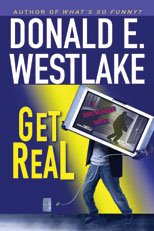 The sad-sack criminal mastermind and his gang of misfits are between heists when the strangest of all opportunities comes along – their own TV show. A company that produces reality television has the brilliant idea of following the crew while they plan and execute a job. Dortmunder agrees to play along as cover for an actual caper. There are a few snags, naturally. Like, how do you put professional thieves on salary? How do you steal something and get away with it while cameras are rolling? But the biggest problem is one that Dortmunder doesn’t see coming: Andy, Tiny, even Dortmunder himself kinda like being on TV.
The reality genre – which shapes the truth, into entertainment – takes plenty of well-deserved hits. There are some sly observations about the acting life, which crops up often in Westlake’s books, plus a few bits of business that will only be funny to New Yorkers. Things don’t exactly work out – that wouldn’t be Dortmunder – but they go less wrong than usual, and our last glimpse of the hangdog burglar is him rounding a corner with something that’s almost but not quite a spring in his step. It’s a nice sendoff for the character.
Coinciding with Get Real’s release was the debut of Made in U.S.A. on DVD. Jean-Luc Godard’s film was based, theoretically, on The Jugger, one of the Parker novels that Westlake wrote as Richard Stark.
I knew going in that the film bears no resemblance to the source novel, that it was made hastily under bizarre circumstances, that Westlake himself hated it. Here, I’ll quote him: “it’s such a rotten movie.” Godard films, even ones I like, leave me a little cold. But I’m a Westlake completist, so I had to check it out.
Or at least I had to try. I tapped out after forty minutes, and only lasted that long because of Anna Karina. I did watch the entire 20 minute short film on the new Criterion disc cataloging Godard’s many political and cultural references. A writer in the movie is named David Goodis. Daisy Kenyon is paged at a health club. It’s eighty-five minutes of meta-rib-ticklers and preening self-regard.
Rosemarie’s review: “Movies like this make me appreciate the Jonas Brothers.”
Say what you will about Kevin, Joe and Nick – and if you talk trash about Joe, I will so NEVER SPEAK to you AGAIN – you can at least understand how some people find them entertaining. Made in U.S.A., on the other hand, exists simply to make those who “get it” feel superior. That’s not true to the serie noire spirit Godard claims to be honoring. It’s certainly not true to the ethos Donald E. Westlake embodied. I’m fairly sure I know whose works will stand the test of time better.
Westlake is having quite a few weeks. Also out now is Darwyn Cooke’s graphic novel adaptation of the first Parker novel The Hunter. I ordered myself a copy as a birthday present. Speaking of my birthday ...
Miscellaneous: Meaningless Milestones
... it’s today. I’m not picky. Making the check out to cash is fine.
Monday, August 03, 2009

Friday, July 31, 2009
Book: Bury Me Deep, by Megan Abbott (2009)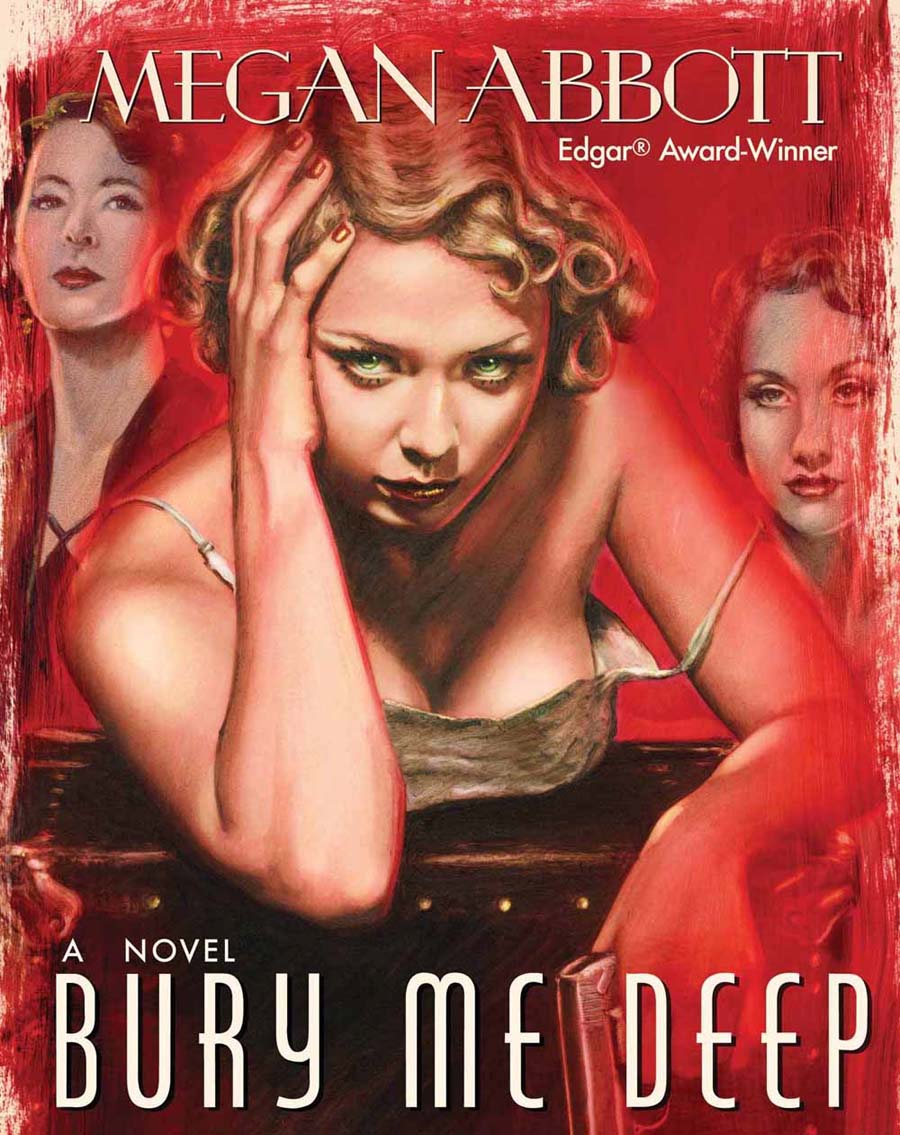 It’s been so hot in Seattle that I can barely string two ... dammit, it’s on the tip of my tongue. You know, a unit of language that acts as the principal carrier of meaning. Anyway, I can barely string two of those things together, but I can’t let any more time pass without singing this book’s praises. It’s that good.
Abbott’s follow-up to the Edgar Award-winning Queenpin is inspired by “Trunk Murderess” Winnie Ruth Judd. Normally, I’d link to some background on the case, but you won’t find a better summary than the one Abbott provides at the end of her novel. Besides, you don’t want to know too much about how actual events played out, especially when Abbott deviates from the facts to unearth a larger story.
In 1931, Marion Seeley is alone in the strange city of Phoenix after her drug addict husband takes the only job he can get south of the border. Innocent young Marion becomes friends with both a nurse at the clinic where she works and the nurse’s tubercular roommate. She also becomes fascinated by their lifestyle, entertaining wealthy businessmen. Marion falls for one of these men, learning some disturbing truths about her own needs and desires. Abbott describes this intimate struggle for control in evocative language that can blindside you with its force.
Then things get worse, and Abbott lays that out in a relentless manner that would do Cornell Woolrich proud.
Hell, just look at the cover. You know you want to read it. Go ahead.
Monday, July 27, 2009
DVD: Golden Age Noir The role of television is an under-reported chapter in the evolution of film noir. The small screen supplemented and eventually supplanted the B movie, attracting talent from both sides of the camera. Many of these shows, episodes of various anthology series of the 1950s, no longer exist.
Cultural impresario and freelance wild man Johnny Legend is doing his best to rectify the situation. His Raunchy Tonk Video label has released Golden Age Noir, a DVD containing seven blasts from the past. They’re from a variety of series, with an emphasis on name actors.
Sound Off, My Love (Four Star Playhouse, 1953). Merle Oberon stars as a woman too vain to admit she requires a hearing aid. She relents only to discover that she hasn’t been fooling anyone – but several people have been fooling her. Starts slow but picks up thanks to direction by old noir hand Robert Florey (Danger Signal).
Dark Stranger (the premiere of The Star and The Story, 1955). Edmond O’Brien is a pulp writer who falls in love with a woman (Joanne Woodward) who may be his own creation. It bears a resemblance to Stranger Than Fiction.
The Squeeze (Four Star Playhouse, 1953). Gambling house owner Willie Dante (Dick Powell, who played the role several times) gets pressured by the ne’er-do-well son of a crusading D.A. Sharp script by Blake Edwards – have I mentioned I’m still on a Peter Gunn kick? – and direction by Robert Aldrich.
F.O.B. Vienna (Suspense, 1953). Hooey about an American engineer caught up in European espionage. Director Robert Mulligan strains against the limitations of live TV. It’s a dud, but it stars Walter Matthau, so what are you gonna do?
House For Sale (Four Star Playhouse, 1953). A house-hunting Ida Lupino encounters escaped lunatic George Macready. Minor fun.
Counterpoint: The Witness (1952). A true rarity, the sole episode of a cop series starring Lee Marvin several years before M Squad. It’s about a botched robbery and the resulting murder of a burlesque clown. With some great gritty locations and a few odd David Lynch-style moments, but it’s easily the worst of the bunch. The show is set over three city blocks but features more walking than the Lord of the Rings trilogy.
A Place of His Own (Four Star Playhouse, 1953). A mentally damaged WWII veteran is coerced by his family into taking the blame for a murder he didn’t commit. The winner, hands down, with a fine performance by Charles Boyer.
The disc is a fascinating peak into a neglected era of film noir. Johnny’s already got a second volume set for release next month, along with a sex-and-drugs Dragnet compilation that I should order right now.
Sunday, July 26, 2009
Movie: Bunco Squad (1950)
It’s been a strange week. Several new projects cropped up, and I ceded control of the television to Rosemarie for five nights so she could watch Torchwood: Children of Earth.
I was able to squeeze in a few short items, like this movie recorded off TCM in the wee hours. How could I resist a title like Bunco Squad? Plus it’s about phony psychics, and you know how I feel about them.
Robert Sterling is the wooden detective in the titular unit. His aspiring actress girlfriend is played by Howard Hughes discovery Joan Dixon. Hughes certainly had a type: skittish brunettes who couldn’t convey fear if their hair was on fire. Sterling, at the request of a lieutenant who has never missed a meal, engages in some baffling police work to track down a ring of sham spiritualists. They’re led by Ricardo Cortez, more animated here than he was playing the first Sam Spade. Their target is a kindly rich woman mourning her dead son. Sterling’s brilliant plan is to set Dixon up as another fake fortuneteller, preying on the poor grieving mother’s emotions for the greater good. I’m sure the idea made sense to Lieutenant Are-You-Going-To-Finish-That on paper.
Bunco Squad is crap, but it’s fast-moving crap. Director Herbert Leeds churned out entries in the Cisco Kid, Charlie Chan, Mr. Moto and Mike Shayne series, so he knew how to move things along. There are some interesting tidbits explaining how mendacious mediums work. Dante, once known as “king of magicians,” appears as himself, aiding the police in their inquiries. You also get a ridiculous fight scene a la Mummenschanz. And Cortez and his cronies can only kill people by tampering with their brake lines. It happens not once, not twice, but three times in 67 minutes. Not that that establishes a pattern or anything.
DVD: The Paul Lynde Halloween Special
Why did I watch this now? Good luck trying to rent it in October. You can’t get near the thing. The Lynde special aired exactly once in 1976, and was then thought lost. They haven’t found the full eight-hour cut of von Stroheim’s Greed, but they did dig this one up.
It features every All Hallows’ Eve staple: witches, CB radio, and sketches spoofing Valentino. There’s also Kiss making their TV debut, but none of their numbers is anywhere near as scary as Florence Henderson’s rendition of “That Old Black Magic.”
Also on the show is Roz (Pinky Tuscadero) Kelly. Pinky is the character she played on three episodes of Happy Days. That’s how she’s billed. Lynde even announces her name that way in the wrap-up. It’s like putting an expiration date on her fame. “You’ll get fifteen minutes if you’re lucky, sweetheart.”
Here, for your viewing pleasure, is the closing disco number. Don’t let the three-minutes-plus running time fool you. It seems much longer.
Tuesday, July 21, 2009
Cocktails: Words of Wisdom
"A proper drink at the right time – one mixed with care and skill and served in a true spirit of hospitality – is better than any other made thing at giving us the illusion, at least, that we’re getting what we want from life. A cat can gaze upon a king, as the proverb goes, and after a Dry Martini or a Sazerac Cocktail or two, we’re all cats."
- From Imbibe!: From Absinthe Cocktail to Whiskey Smash, a Salute in Stories and Drinks to “Professor” Jerry Thomas, Pioneer of the American Bar, by David Wondrich
Truer words never written, and ones that came back to me last night in my favorite bar while enjoying a variation on the Battle of New Orleans.
Sunday, July 19, 2009
Books: Bulletin From Hard Case Crime An extraordinary piece of news from Hard Case Crime this weekend. In April 2010 they will release Memory, a never-before-published novel by the late, great Donald E. Westlake. Westlake’s friend Lawrence Block provided them with the manuscript. Barring any additional discoveries, it will be the last novel we get from one of the greats. The opening chapter already has me clamoring for more.
DVD: On Guard (1997, U.S. 2001)
This sumptuous swashbuckler was recommended by author and fellow OSS 117 enthusiast Walter Satterthwait. It’s truly the kind of film they don’t make any more. Considering that it took four years to find an American distributor, they seldom release them, either. An acrobat and child of the road who falls in with a nobleman during Louis XIV’s reign must raise his friend’s young daughter in secret to protect her from a scheming relative. This movie has it all: hissable villains, hidden identities, real estate swindles, and hunchbacks aplenty. Plus too many swordfights to count. Technically, it should be called En Garde.
Or Le Bossu, as it was known in France. (The novel by Paul Féval, a contemporary of Alexandre Dumas, has been filmed six times.) There’s so much story that the third act felt a touch frantic; it’s the rare movie that would be benefit from being a few minutes longer. The conclusion initially gave me pause, but it’s all of a piece with the film’s swooning tone. Grand, old-fashioned entertainment. Thanks for the tip, Walter.
Movie: The Hurt Locker (2009)
I’ve been meaning to say this for a week. You won’t see a better action movie, suspense film, or drama this summer. Get out there and support this one.
Friday, July 17, 2009
Miscellaneous: Dick Tracy Meets The Phantom
In November 2008, the Los Angeles Times website featured this article on Warren Beatty’s federal lawsuit over control of the character Dick Tracy. Beatty bought the rights to the detective two decades ago and made the Oscar-winning 1990 film. According to the article:
The sale allowed Tribune, the original publishers of the classic strip, to take back the rights if Beatty didn’t film another project.
Tribune, which owns the Los Angeles Times, recently sent Beatty a letter saying time is up and it is reasserting control of the character. But the actor claims he should retain the rights because he started filming a Dick Tracy TV special earlier this month.
Imagine my joy upon opening the July issue of Now Playing, the Turner Classic Movies program guide, and seeing the following listed as airing as part of their salute to the character on July 18 at 7PM EST:
Dick Tracy Special (2009). Leonard Maltin interviews Warren Beatty as Dick Tracy, while film clips trace the history of the comic strip detective. BW&C30m.
I circled it in the schedule, and had the DVR ready to go.
Check the schedule now. Airing at 7PM EST on July 18 is Role Model: Gene Wilder, an interview with the comic actor by Alec Baldwin. I saw it when it first aired. It’s a fine show, as Mark Evanier will tell you. But it lacks the zest that only contractual obligation can bring.
In a March 25, 2009 Chicago Tribune article, Beatty’s attorney says, “He sold [the special], even though the contract doesn’t require him to do that. The contract doesn’t even require him to finish it. He just has to start it.” The article also notes that in promotional materials, “the half-hour movie chat between film critic Leonard Maltin and Tracy (played by Beatty), is simply called ‘innovative.’”
The special is listed as being in post-production in the IMDb. I honestly hope that Beatty completes it, and that it turns up on TV eventually. Something tells me it’ll be a hoot.
Monday, July 13, 2009
Book: Preston Sturges by Preston Sturges (1990)
Yes, I’m feeling much better now. Thank you for asking, and for the many cards and letters. It’s your strength that keeps me going.
My convalescence was sped along by reading Preston Sturges’ memoir, adapted and edited by the filmmaker’s widow Sandy from material Sturges was writing at the time of his death. I was hoping to glean some insight into that five year stretch, unparalleled in movie history, when Sturges made one dazzling comedy after another. The Lady Eve, The Palm Beach Story, Hail The Conquering Hero, so many more.
On that score, I was disappointed. Sturges doesn’t head for Hollywood until the last quarter of the book, and most of those pages chronicle frustration and financial woes. His advice is worth taking, though.
Money is not star material. One should never have enough of it, or enough lack of it, to allow of its playing a principal role.
If I’d had Sturges’ childhood, I’d have lavished attention on it, too. His mother Mary was a peripatetic Auntie Mame type. Whatever her flaws, she showed her son that the world was a place of great possibility. Through her, Preston met countless interesting people. He briefly shared a room with silent screen siren Theda Bara. Occultist Aleister Crowley called him a “brat.” His mother gave Isadora Duncan the scarf that led to her death.
Glamorous ocean voyages, romance with heiresses, disaster avoided with the help of wealthy benefactors. Sturges’ early years were out of a Sturges movie. Only someone who led a charmed life could make films so blithe. Yet another reason to be disappointed.
The Sturges family has set up a terrific website dedicated to the man and his work. Pay special attention to his eleven rules for box office appeal.
Maybe it’s better not to know too much about people whose work you admire. I thought that after reading Lawrence Block’s recent memoir, in which he evinced little interest in the questions I would have asked him. Maintaining a touch of mystery is a good thing, maybe a necessary one. Albert Brooks often talks about his odd friendship with Stanley Kubrick, who called him full of praise after seeing Modern Romance. (Kubrick told him he’d wanted to make his own film about jealousy, which became Eyes Wide Shut.) They spoke on the phone often, but when Brooks suggested meeting in person Kubrick said it would be a bad idea. After Francois Truffaut raved about James Toback’s Fingers, Toback wanted to get together. Truffaut declined, saying, “Let’s continue to communicate with each other through our films.” And then there’s the time Mel Brooks ... why don’t I let Mel tell the story?
Tuesday, July 07, 2009
Miscellaneous: Missive From My Deathbed
The title is pure hyperbole. A particularly intractable sinus infection has held me in its grippe for over two weeks. I feel like I can only muster a few hours of concentration per day, and those are needed for the paying gigs.
Example: Just now I was unable to think of the word hyperbole. I wandered into the other room and asked Rosemarie, “Isn’t there a term that means the use of exaggeration as a literary device?” I really ought to go back to watching baseball highlights, but with the Mets’ season going the way it is and my delicate condition, I could trigger something.
Still, I want to give. So I’ll say that I devoted my Independence Day ration of cogent hours to Michael Mann’s Public Enemies and was glad I did. I’ll also say that I’ve added Donna Moore’s Big Beat from Badsville to the links page, and you should be checking it out regularly.
Here’s how addlebrained I am. I almost tied together three articles I read today – Cass Sunstein’s exploration of how association with like-minded individuals breeds extremism; Roger Ebert’s levelheaded response to those who disagreed with his review of the Transformers sequel; and an analysis of how porn is abandoning plot and going fuck scenes only – with the Bing advertising campaign that gives me night sweats in an epic post about our mile-wide, inch-deep, instant-gratification culture. Then I remembered I was me and said to hell with it.
So instead, here’s Slate’s article on stuntmen’s favorite stunt movies. Along with one in its entirety, Claude Lelouch’s blistering Rendezvous. Watch to the end. It’s tres French.
Friday, July 03, 2009
Too Soon Gone: The Noir Legacy of Fabián Bielinsky
An edited version of this article appeared in the May/June 2009 issue of the Noir City Sentinel. To subscribe, become a member of The Film Noir Foundation.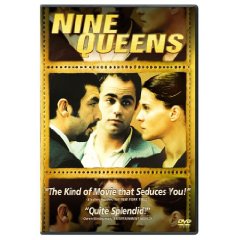 Two movies. That’s not much of a legacy. But the brief filmography of Argentina’s Fabián Bielinsky is enough to prove that, with his death in 2006, world cinema lost more than a gifted storyteller. After watching Nueve Reinas (2000) and the darkly glittering jewel El Aura (2005), Film Noir Foundation founder Eddie Muller said he was “so miserably sure that Bielinsky would have been the greatest writer-director of contemporary noir.”
Born in Buenos Aires in 1959, Bielinsky earned his stripes as an assistant director on over 400 commercials and numerous feature films. During this fifteen-year apprenticeship he worked on projects as varied as an ad directed by German auteur Wim Wenders and Eversmile, New Jersey (1989), an oddity about an itinerant dentist fated to be remembered as the other movie Daniel Day-Lewis made the year of his Academy Award-winning triumph in My Left Foot. In 1998, Bielinsky received his first above-the-line credit as one of three writers of the allegorical science fiction film La Sonámbula (Sleepwalker). He longed to make his own movies but felt hamstrung by an industry dominated by established names and prejudiced against genre fare. He ultimately made the transition to the director’s chair the way so many of the greats did – by winning a contest. The Patagonik Film Group selected his screenplay out of 350 entries in a 1998 competition, giving Bielinsky a green light and a modest $1.3 million budget. The resulting movie revolutionized Argentinean filmmaking.
Nueve Reinas (Nine Queens) is a con man caper with a distinctive Latin flavor, seasoned by the corruption endemic during Argentina’s fiscal crisis of the 1990s. Veteran grifter Marcos (Ricardo Darín) bails novice Juan (Gastón Pauls) out of trouble for his own selfish reasons; he needs a partner for the day, and his usual sidekick is unavailable. Marcos gives Juan a crash course in the art of the short con. Among his pearls is knowing when to act aggrieved. “The more offended you are, the less suspicious you look,” he advises his protégé. But plans change quickly when an aging confederate presents Marcos with a “once in a lifetime” opportunity – unloading a forgery of the title sheet of Weimar Republic stamps on a shady financier poised to flee the country. To make the score Marcos reaches out to his estranged sister, Juan risks his own nest egg, and each man will have to trust the other.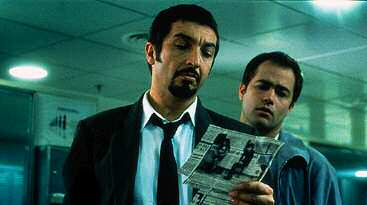 Bielinsky’s film is ferociously entertaining. Breezy yet tense, packed with reversals and plot complications but never difficult to follow, culminating in a note-perfect ending. Much of the film’s impact can be traced to the bravura sequence when Marcos points out to Juan the countless “mustard chuckers ... operators, swindlers” hiding in plain sight on the streets of Buenos Aires, watching for any hint of vulnerability on which to pounce. Bielinsky’s on-the-fly technique, which Darín described as “almost as if we were carrying out a raid or pulling off a heist,” only adds credibility. Nueve Reinas posits a world of tricksters and thieves, leavened by the wounded insistence of all involved that they are not crooks. Even the acquaintance offering Marcos a motorcycle with minor damage, namely a “small caliber” perforation in the gas tank, bristles at the accusation. It’s all just business.
Hollywood took note of Nueve Reinas’s international success, but Bielinsky resisted the call. An Americanized version happened without him. As remakes go, Criminal (2004) is not at all bad. It has a nice sense of scale, a game cast featuring John C. Reilly and Maggie Gyllenhaal, and a feel for the multicultural vibe of Los Angeles, beautifully shot by cinematographer Chris Menges. Producers Steven Soderbergh and George Clooney turn it into a scruffy, low-key cousin of their Ocean’s Eleven films. (Soderbergh cowrote the adaptation with director Gregory Jacobs under the name Sam Lowry, the Brazil-inspired pseudonym he used on The Underneath, his 1995 retooling of the classic noir Criss Cross.) Criminal’s primary problem is that it simply cannot compare with the movie that spawned it. It lacks the danger and unpredictability of Nueve Reinas. Some of the best beats and lines from Bielinsky’s film had to be cut because they were unique to the original’s setting. Take the ending. There’s no way it could be used in an American film. Actually, scratch that. It might work now.
Nueve Reinas has a jaundiced view of human relations, but Bielinsky’s noir sensibility would not reach full pungent bloom until his follow-up effort. El Aura, known as Dawn in Argentina, is a singular achievement, a truly existential film that comes across as an unholy combination of Richard Stark and Oliver Sacks. Its cunning use of traditional genre elements – fate, choice and chronic blackouts – makes it one of the finest cinematic noirs of this decade. We meet the film’s nameless protagonist (Ricardo Darín again) lying amidst a swirl of ATM receipts, seemingly rehearsing for his own chalk outline. He’s not dead, just suffering from an epileptic fit. The character works as a taxidermist, bloodlessly applying logic to recreate the savagery of animals. As a colleague notes, he has “a weird fantasy for a taxidermist who’s never gotten in a fight with anyone,” and that’s plotting perfect heists he lacks the nerve to carry out. “It can be done neatly. It can be done well ... There’s no reason why anyone should die,” Darín insists. “Yes, there’s a reason,” his skeptical colleague replies. “There’s a load of guys with guns.”
Darín gets an unlikely chance to put his theories to the test. While on a hunting trip he accidentally kills a man, only to discover that his victim was an underworld figure whose plan to rob the local casino is already in motion. The taxidermist can step into the dead man’s role and live the fantasy he has long imagined.
Bielinsky’s growth as a filmmaker, from the effervescent charm of Nueve Reinas to the command on display in El Aura, is hugely impressive. Much of the latter movie plays with minimal dialogue, communicating information purely through images. Consider the sheer elegance of the way Bielinsky uses details in the background of shots to convey that the taxidermist’s wife has left him. He immediately follows this revelation with an extraordinary series of edits moving Darín from his apartment to the lush greenery of the Patagonian countryside. Darín suffers a seizure when he’s alone in the woods about to bring down a deer, and thanks to Bielinsky’s kinetic treatment of the incident we experience it right along with him.
But it’s the robbery scenes that showcase Bielinsky’s mastery. Early in the film, Darín waits with a fellow taxidermist to cash his check. As Darín explains how he’d loot the place, his scheme comes to life. It’s beautifully choreographed mayhem, the sad sacks in line behind them abruptly transformed into icy professionals, Darín and his associate blithely commenting on the action. Contrast this with the botched factory job that occurs halfway through the movie. Darín is no longer conductor but bystander. The sequence deftly illustrates the power and the impotence of bearing witness as Darín reacts to every gunshot and cry of agony, trying to piece together what went wrong.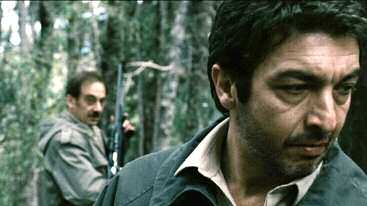 El Aura has style to burn, but Bielinsky knew that true noir is about character. He has an able collaborator in Ricardo Darín. The actor shines playing a man who takes refuge in his intellect as he finds his masculinity constantly questioned. He’s at his best during a halting speech to the dead man’s wife in which he explains the not-altogether-unpleasant sensation (the aura of the title) that precedes one of his neurological episodes: “There’s a moment, a shift ... things suddenly change ... The fit is coming, and there’s nothing you can do to stop it. Nothing. It’s horrible ... and it’s perfect. Because during those few seconds, you’re free. There’s no choice. No alternative. Nothing for you to decide.”
That sense of inevitability pervades the movie, ratcheting up the tension and coloring the taxidermist’s actions. Darín has ample opportunity to walk away from the situation, but his refusal to do so – or even to recognize those moments of opportunity – adds force to the ending, which is as bleak as can be. For the taxidermist everything has changed, but nothing is different. Chilling stuff.
Special mention must be made of the dead man’s dog, who alone knows that Darín has disposed of his master. Easily noir’s greatest canine since Pard in High Sierra. And both of Bielinsky’s movies make reference to a shadowy figure known as “El Turco,” integral to each plot but never appearing onscreen. One can’t help but speculate that future Bielinsky films would have drawn us deeper into the Turk’s demimonde.
El Aura did not achieve Nueve Reinas’s level of exposure in the United States. It was distributed via the Independent Film Channel’s First Take series, released on demand and in theaters simultaneously. This approach makes films available to a wider audience – your correspondent saw El Aura on TV on “opening night,” a full three months before its truncated big-screen run in Seattle – but at the expense of publicity. Even being named one of 2006’s best films by The New York Times’s A.O. Scott didn’t garner El Aura additional attention.
Hollywood again made overtures to Bielinsky, but he continued to spurn them. He said it would take a different type of movie to tempt him to America. For crime dramas he would remain in his native Argentina, where he could “keep full control.” Bielinsky undoubtedly had the right idea. It’s unlikely that a studio would give him free rein to make a thriller as spare and unsettling as El Aura. On June 26, 2006, El Aura swept Argentina’s film awards, taking home prizes for best picture, Bielinsky’s script and direction, and Darín’s performance among others. Two days later, in a hotel room in São Paulo, Brazil where he was casting a TV commercial, Fabián Bielinsky died of a heart attack at age 47, leaving behind a wife and a young son.
Two movies. That’s all we’re going to get. Considering the innate understanding of noir that Fabián Bielinsky showed, it’s nowhere near enough.
Wednesday, July 01, 2009
Extra, Extra!: Noir City Sentinel
The July/August issue of the house organ (keep your snickers to yourselves) of the Film Noir Foundation hit in-boxes around the globe this morning. At an epic 33 pages, it’s no longer a newsletter but a magazine.
Including for your reading pleasure:
* An extensive interview with writer/director Arnold Laven!
* Eddie Muller’s profile of Belita, the figure skating Ice Queen of film noir!
* Philippe Garnier’s astonishing article on a pair of jailbirds who found success as screenwriters in 1930s Hollywood!
Plus, this issue of the Sentinel features the byline of yours truly not once but twice, on a survey of the Catholic noir of John Farrow and a book-versus-film comparison of Nightmare Alley.
You know you want to read it. Kick in a few bucks to the Film Noir Foundation and enjoy.
Tuesday, June 30, 2009
Book: No More Heroes, by Ray Banks (UK 2008, US 2010?)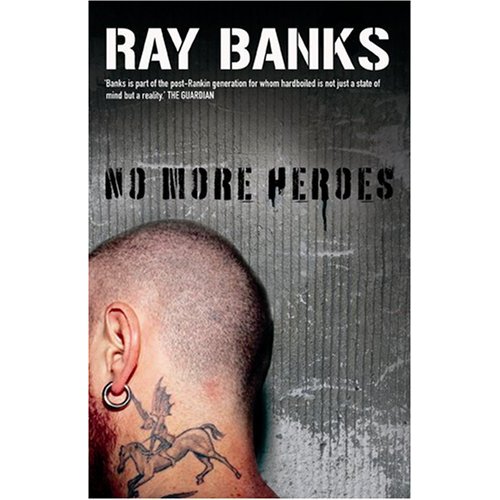 This is the third Ray Banks book I’ve touted in 2009, and the second this month. Why? Because Banks is just that good. And because the photographs that he has of me could be so easily misinterpreted by a judgmental public, various animal rights groups, and the good people at Comfort Inn and Suites.
Ex-con Cal Innes, through with the California dreamin’ of Donkey Punch (aka Sucker Punch Stateside), is back home with a new job serving evictions for Mancunian slumlord Don Plummer. When a publicity storm arises after Cal saves a young boy from a fire in one of Plummer’s deathtraps, he takes advantage by restarting his P.I. business. His first client: Plummer, desperate to know who torched his property and is threatening to do so again.
The sharply-turned, deceptively simple plot ranges the political spectrum from neo-Nazis to crunchy student protestors. But it’s the development of Cal as a character that shines. The Innes books are so closely linked that they’re practically one novel, and Banks capitalizes on the scarce daylight between them. Cal’s every decision has consequences. Many are physical; in a genre where other protagonists shake off a lead-pipe beating like a head cold, Banks makes every bruise count.
And, of course, Heroes is funny. Cal’s voice – profane, grumpy, hopeful – is one of the sharpest in crime fiction.
Beast of Burden, the last of the Innes books, is by all accounts something to look forward to. I’ve got a copy on hand, but I’m not going to dive into it. I want to pace myself.
I give it two weeks. Three at the outside.
Sunday, June 28, 2009
Sort-Of Related: McQ (1974)/Harry In Your Pocket (1973)
At The Rap Sheet recently, J. Kingston Pierce linked to this clip, an annotated car chase from the shot-in-Seattle cop movie McQ.
I found it fascinating, particularly because the sequence ends on the exact spot where Rosemarie’s office now stands. It got me thinking how infrequently the Emerald City turns up in movies. Sure, there’s Sleepless in Seattle, which depicts a romantic comedy burg I don’t recognize. And Singles, capturing the city during the decade it would define. But the truth is Seattle, especially the downtown core that I seldom stray from, has an innate seediness due to its hardscrabble roots and the weather. And if you want seediness on film, you’ve got to turn back the clock to the 1970s.
McQ seems to have been spawned in a fit of municipal jealousy. It’s as if Seattle’s city fathers said, “San Francisco had Bullitt and Dirty Harry. We need a movie that showcases us a crime-infested West Coast hellhole made for tough guys, too!” John Wayne is in Eastwood mode as SPD lieutenant Lon McQ. We never learn what that’s short for, but I’m guessing McQuestionable Police Practices.
You’ve seen McQ even if you haven’t seen McQ, and I don’t mean that as a knock. You’ve got a heroic cop kicking against the suits, police corruption, lots of talk about drugs as “junk,” a flashy pimp informant. It’s the ur-cop movie, the collective unconscious as Quinn Martin Production. Director John Sturges allows us one fleeting glimpse of the Space Needle as the Duke wakes up on his boat – of course he lives on a boat – determined not to show Seattle as a forward thinking bastion but a working-class town dealing with real-world problems. Colleen Dewhurst is great as an aging junkie waitress, managing a regal grandeur as she observes that she doesn’t do skag.
Rosemarie’s Review: “This movie has some of the worst small talk I’ve ever heard.”
McQ whetted my appetite for ‘70s Seattle sleaze. Harry in Your Pocket filmed here the previous year. By all accounts the production was a big deal locally; then-mayor Wes Uhlman has a cameo as one of the many people whose wallets are lifted by ace cannon James Coburn. Coburn and his partner Walter Pidgeon, dapper and addicted to cocaine, train a pair of kids (Michael Sarrazin and Trish van Devere) to become stalls, providing the distraction that allows Coburn’s Harry to work his magic. The youngsters have an extended practice session in King Street Station, currently being restored to the let’s say glory seen in the film.
Harry is the sole feature directed by Mission: Impossible creator Bruce Geller, and it’s essentially a photo negative of that series: a team of perfectly trained individuals functions in perfect sync, not to hoodwink a Latin American dictator but relieve innocent folks of their cash. The movie presents its characters as criminals in their native habitat, and that lack of judgment is its greatest asset. Harry ultimately feels a bit insubstantial, but it possesses a breezy charm. It’s not available on DVD, but you can watch the entire film on Fancast.
Rosemarie’s Review: “This movie also stars a woman who was married to George C. Scott?”
I’ve lived in Seattle more than fifteen years, and my personal jury is still out about the place. Several reasons why are enumerated in this article, particularly #3.
Friday, June 26, 2009
Book: The Star Machine, by Janine Basinger (2007)
It’s a question Hollywood constantly wrestles with: are stars necessary? On the one hand, of course not. On the other, as the new TV ads remind us, Depp IS Dillinger. One reason why I was able to look past The Taking of Pelham 123 being a remake of my favorite movie is that it’s a rare chance this summer to see two big personalities go through their paces. Alas, that doesn’t seem to have helped at the box office.
Bringing me to one of the best books I’ve read on the film business in years. The Star Machine focuses on the system established by the studios in their heyday to groom and maintain those in the Hollywood firmament. As the title indicates, Wesleyan professor Basinger is interested in the mechanism of stardom, so she doesn’t write about actors who would have found their way to the top without it. Instead she concentrates on talented performers who were transformed by it, like Dennis Morgan and Ann Sheridan, and on oddities who benefitted from it, such as Maria Montez and Clifton Webb.
She also offers extended case studies on those who bucked the system. Tyrone Power, a beautiful (no other word is appropriate) leading man who had the misfortune to be talented and ambitious as well. Deanna Durbin, a massive draw in the ‘30s and ‘40s who became the true Garbo when she walked away from Hollywood and America at the height of her fame. Loretta Young, whom Basinger views as a now-neglected visionary. The book closes with a section on stardom without the machine. As Basinger notes, it’s easier to achieve but harder to hang onto in the modern era, and she singles out actors who deserve more credit for the way they’ve managed their careers (Matthew McConaughey) and who would have fared every bit as well under the auspices of the studios (Sandra Bullock, who just had the best opening weekend of her career with The Proposal).
The Star Machine is actually too much of a good thing; Basinger gets so absorbed in the details of the actors’ lives that she occasionally loses the thread of her argument. But she writes with such verve and wit that I didn’t mind. It helps that I share many of her opinions. I, too, am somewhat immune to the charms of Katherine Hepburn. And I second her passionate defense of Tom Cruise.
A late footnote made me feel bad, though. Basinger laments how genre has warped the understanding of film history. Most hardcore movie fans are more familiar with Dana Andrews than Ronald Colman or even Clark Gable, for instance, because of the emphasis on noir. I can only raise my hand and say guilty as charged.
Monday, June 22, 2009
Book: Step by Step, by Lawrence Block (2009)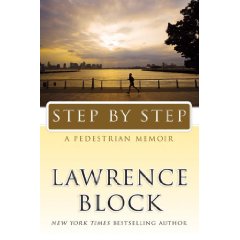 This is an odd book, and Lawrence Block lets you know that in the subtitle A Pedestrian Memoir. Not that it’s going to be commonplace; Block is incapable of producing a dull piece of writing. But it’s about walking. Specifically racewalking. Except when it’s not.
It’s a curiously reticent autobiography. Block begins an extended section on a trip during which he and his wife traced an ancient pilgrimage route by saying “it’s difficult for me to write about the Spanish walk.” He says that he writes fiction so he won’t have to reveal anything of himself directly, and when he does it’s as if he resents the intrusion.
There’s little about his career here save for a section on the creation of his strangest novel, Random Walk (which, to be fair, is about walking) and a few hints that he may not write another book. His focus, in these pages and in his life at present, is on racewalking.
Even that subject gives him pause. His concern about a book on it is “that no one but family members and indulgent friends would have much interest in reading it.” I can understand his fear. Initially, reading Step by Step reminded me of conversations I’ve had with friends after they pick up a new hobby. They do all the talking, laced with terms I don’t know and references to friends I’ve never met, and after a few moments I’m lost. (This is why I haven’t picked up a new hobby in ten years.)
But Block’s effortless style and the purity of his obsession won me over. When he explains why he’s prouder of a finish in a marathon event than anything in his entire literary career, I understood. I started to share his enthusiasm. Not enough to lace up my own sneakers, but it’s better than nothing.
Ultimately, this strangely compelling book isn’t about walking but the ebb and flow of interests in life, and how having one keeps you moving forward even when that interest is ... moving forward. Block touches on a few recent incidents that I wish he’d explored in greater detail - like his stint as a TV writer and collaborating on a movie with Wong Kar Wai – but they’re sights that we glimpse as we amble along. It’s maintaining a brisk and steady pace that counts.
For the record, if Mr. Block does decide to publish the memoir of his days in the ‘50s paperback racket that he admits he’s written a few thousand words of, I’ll snap that up at once. I know a few other people who will, too.
Sunday, June 21, 2009
Movie: OSS 117: Lost in Rio (2009)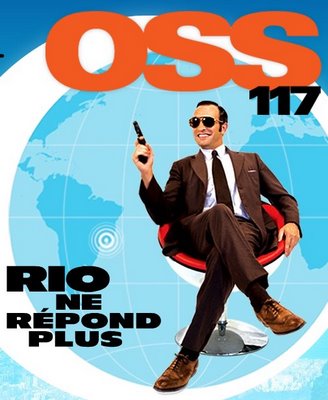 I’ve watched OSS 117: Cairo, Nest of Spies more times in the past eight months than I care to admit. When a chance to see the sequel at the Seattle International Film Festival came up, I jumped at it.
In 1967, France’s best secret agent – vain, spectacularly obtuse, and culturally ignorant – heads to Brazil and teams up with a beautiful Mossad colonel in pursuit of a fugitive Nazi turned lucha libre impressario with plans to start the Fifth Reich. (The fourth one didn’t work.)
The original is, in its way, a perfect thing, lampooning early ‘60s spy films in part by flawlessly recreating their look. (I’ve said it before: even the fight choreography in Cairo makes me laugh.) The sequel is bigger, broader, and sillier, but then so are the late ‘60s movies it’s satirizing. Again the era’s filmmaking is meticulously copied, with split-screens and lens flares galore. There are some sharp political barbs amidst the physical comedy. But the biggest laughs come from star Jean DuJardin and his extraordinary facial expressions.
Rio is not yet scheduled for U.S. release, which gives you a chance to watch Cairo first. The follow-up isn’t as good, but it’s still funny. The opening sequence, of DuJardin doing the twist with a chalet’s worth of lovely ladies to Dean Martin’s “Gentle on My Mind,” made me feel like a million bucks.
Here’s a trailer, with captions available. And a Wall Street Journal article on the series’ success, with hints about a third film.
Tuesday, June 16, 2009
Book: Gun, by Ray Banks (2008)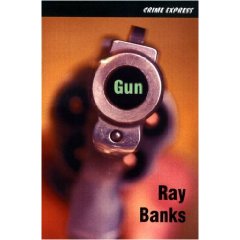 The Saturday Boy kept it brief, so I’ll follow suit. Gun kicks ass.
Less than ninety pages. Simple story. Richie’s out of stir and at the end of his rope. He goes to a guy for a job, is told to pick up the titular piece of equipment. Things go wrong. Not epically wrong. Just regular, grind-you-down wrong. Some days, that’s enough. It sure as shit is for Richie.
The Crime Express books from Five Leaves Publications are beautiful little editions. Pick this one up. It proves that stories are like weapons. They don’t have to be big to do a lot of damage.
Sunday, June 14, 2009
Movie: The Taking of Pelham 123 (2009)
Come on. You knew this post was coming.
Regular readers are well aware of how I feel about the 1974 film The Taking of Pelham 123. It’s the movie I’ve seen more than any other. I have referred to it here variously as the perfect thriller, the quintessential New York movie, my all-time favorite film, and The Greatest Movie Ever Made.
When I heard that a big-budget remake was in the works - a second remake, actually - I had a brief bout of existential dread. It passed quickly, because I am a realist when it comes to the ways of Hollywood. I always knew I’d see the update. I like the people involved and the premise of John Godey’s novel – a carload of subway passengers held hostage – is still unbeatable.
In this open and optimistic spirit did yours truly approach the new version. And thus did he pronounce the new version ... good.
I’m going to keep comparisons to the still-unmatched original to a minimum and judge the new movie on its own terms. After all, New York itself has changed since ‘74, becoming slicker, more garish, more impersonal. I still go back home every chance I get. As a summer action film, the ’09 Pelham is an entertaining piece of work.
The material has been smartly updated in terms of technology and how New York City is now hardwired to respond to perceived acts of terrorism. It’s also been turned into a more conventional star vehicle with Denzel Washington’s regular Joe train dispatcher squaring off against John Travolta’s hothead criminal mastermind. This approach does not always pay dividends, but it quickly and clearly gets this version out of the original’s shadow. The best thing about the ’09 film is easily James Gandolfini as the mayor, offering a sharp and very funny gloss on current Hizzoner Michael Bloomberg.
The original film was made at a time when the city was falling apart, and a man with a plan could conceivably take advantage to get whatever he wanted. The only thing stopping him was the tenacity and spite of everyday New Yorkers, the working-class heroes who ride into the city on the 7 train. That’s a huge part of my affection for Pelham 1.0; it’s a movie where the good guys come from my old neighborhood. Enough of that spirit survives into the remake to make it worthwhile.
Thursday, June 11, 2009
Movie: Picture Snatcher (1933)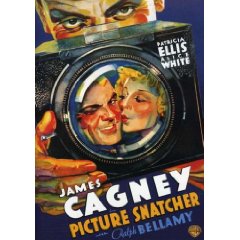 This movie has been on my DVR so long that it has since been released on DVD. On the bright side, if it sounds appealing you can queue it up.
James Cagney plays Danny Kean, a New York hoodlum freshly sprung from the slammer. Only Danny’s decided to go on the straight and narrow, see? He’s gonna follow up on an offer to work as a photographer for a newspaper. Naturally, the rag’s the worst in the Big Apple. Naturally, his editor (Ralph Bellamy) is sneaking shots of hooch at his desk. Naturally, Danny’s got to hustle and cut corners to make his mark.
Does he succeed? It’s a lead pipe cinch. But Danny may take things too far when he returns to the big house – to snatch a picture of a woman in the electric chair at the exact moment of her execution.
This movie is over 75 years old, but the energy in Cagney’s performance feels so contemporary it’s startling. He’s virility incarnate, his every gesture – a wave, an offer of a handshake – a demonstration of aggression. Screw CGI and 3D. From now on, everything should be shot in CagneyVision™.
The plot creaks a bit. The great rollicking metropolis of New York has a population of about twelve when it suits the story. But on the whole Picture Snatcher is like its star, nimble and tough. This is a Pre-Code movie that delivers on the promise of illicit sex and violence. Bellamy’s girl, a reporter on the paper, puts her not-inconsiderable moves on Cagney because he’s a bad boy. Even better, the movie doesn’t punish her for it. And an entire arsenal is deployed during the climactic shootout. It’s seventy-seven minutes of moxie with a wicked sense of humor.
The movie was inspired by the Daily News photographer who strapped a camera to his ankle and snapped a photo of Ruth Snyder as she was electrocuted. In 1927, Queens housewife Snyder and her travelling salesman lover murdered her husband for the insurance money. The case served as an inspiration for James M. Cain’s Double Indemnity. The scandal surrounding her execution spawned both this movie and its remake Escape From Crime. Years later, Snyder’s cell at Sing Sing was occupied by Martha Beck, one of the Lonely Hearts Killers, whose rampage has been chronicled in at least three films. That has to be one of the strangest intersections of crime and popular culture ever recorded.
Wednesday, June 10, 2009
Music: Bucky Pizzarelli & Benny Green
The world’s greatest living jazz guitarist and the gifted hard bop pianist kicked off a brief West Coast tour with a long, extraordinary set at Seattle’s Jazz Alley on Tuesday night. Bucky is 83 years old – eighty-three! – and still throwing heat; I’m fairly certain I saw smoke pouring off his guitar neck at one point. He soloed on one of my favorite standards, “This Nearly Was Mine” from South Pacific, conveying every ounce of acceptance and regret in the song without any of the lyrics. And Benny’s got chops to spare as well. The two men’s styles complement each other beautifully, their joy at performing together contagious.
To top it off, Bucky offered me his hand as he walked offstage following the encore. Rosemarie shook the other one, then turned to me and said, “I got the one that does all the fretwork.” Bucky also thanked us, which is officially the most absurd thing that has ever happened to me.
Bucky and Benny have another show at Jazz Alley tonight, then hit California and B.C. over the next several days. See them if at all possible.
DVD: Detective Bureau 2-3: Go To Hell, Bastards! (1963)
So we’re in agreement. This is the greatest movie title ever, right?
This Seijun Suzuki film may lack the formal rigor of Tokyo Drifter, but makes up for it with sheer unadulterated goofiness. Two rival yakuza gangs find themselves victimized by a third that favors ascots. Jo Shishido, who may be a private eye but is almost certainly storing nuts for the winter in his cheeks, cons his way inside this third group to bring them down.
I think. I’m still not sure why the Japanese police trust Shishido so completely, or if the people who share his office actually work for him or are only subletting the space. But I enjoyed the movie tremendously. Especially the musical numbers. Think of it as a live action manga adaptation of a Black Mask story. (There, Kino Video! I dare you to slap that quote on the DVD box!)
Once my ship finally comes in, I will spare no expense to recreate the Christmas party from this movie. And on that grand day, brothers and sisters, you will all be invited.
Sunday, June 07, 2009
Book: The Way Home, by George Pelecanos (2009)
When George Pelecanos is good – witness The Night Gardener – he has few peers. When he misses, he manages to do so in his own unique way. The unsuccessful Pelecanos novels seem to have been set down on paper because there were no stone tablets handy. They’re not sober but somber, ascetic to the point of being overbearing. Reading his books is occasionally like falling into conversation with a guy at a bar who becomes steadily more grave until he seizes your arm and says, “Let me tell you what it means to be a man.” Then you shake him off and point out that you only came in for a cold beer and some of the ball game, and things stay awkward until you close out your tab with the game still in progress.
That said, I prefer Pelecanos’s approach, always mindful of choice and consequence in people’s lives, to the cavalier one prevalent in other crime fiction. And I continue to pick up every book he writes.
It’s no surprise that The Way Home is one of his stronger outings, because he’s working with the genre’s elemental plot – The Bag of Money. It’s an intriguingly structured book, the first third devoted to the adolescence of Chris Flynn, a troubled kid from a good working class background. He finally goes too far and ends up doing juvenile time. Several years later he’s working as a carpet installer at the family business. Unambitious and half-heartedly trying to go straight, he’s still a worry for his father. And he continues to hang out with people he met on the inside.
Then, on a job, he discovers The Bag of Money.
The simplicity of the story and the leanness of Pelecanos’s prose complement each other here, leading up to a finale with genuine understated power. Pelecanos introduces the shrewish realtor trying to flip a house Chris is working on, apparently a minor character, then beautifully sketches in the woman’s life with a few concise paragraphs involving a waitress at the restaurant she frequents. He then goes one better by giving us the totality of the waitress’s existence in miniature. This is one of the Pelecanos books that’s like buying a round for a stranger to keep the conversation going.
On The Web: Ebony, Ivory & Jade
Meet my new favorite thing on the internet, courtesy of Jaime Weinman. It’s the titles to Ebony, Ivory & Jade, a busted 1979 TV pilot starring Bert Convy and Debbie Allen. (Convy is Jade, in case you were wondering.) As far as I can tell, the premise is Tony Orlando & Dawn as crimefighters. As far as I’m concerned, that’s pure genius. Turns out it was written by one of my heroes Jimmy Sangster, from a story by M*A*S*H’s Mike Farrell. I want this show found, and found now.
On The Web: New Blogs In Town
Hey! Joe R. Lansdale has a blog!
Hey! Scott Phillips has a blog, too!
Wednesday, June 03, 2009
Book: The Midnight Room, by Ed Gorman (2009)
A serial killer cloaked by a veil of respectability in a small Midwestern city. For most authors, that’d be enough to play with for a few hundred pages.
But not for Ed Gorman. In The Midnight Room Ed gives you that entire city – not just the cops but a family of cops, along with their significant others. The victims, their families, the press, people on the margins of the investigation who will use it to make their presence felt. All that plus a bravura corkscrew plot. Ed starts the game, then every few dozen pages jolts the board so that pawns become kings and pieces you thought would stand tall topple over. Ed calls the book his version of a Gold Medal paperback, and it delivers the goods in that tradition. Put it on your summer reading list.
Miscellaneous: Links
Movieline sits in on a roundtable with TV gurus Norman Lear, Phil Rosenthal and Seth MacFarlane, parts one and two. For a roundtable of movie producers, you have to go to the L.A. Times.
Sunday, May 31, 2009
Movie: Cop Hater (1958)
This low-budget adaptation of the first 87th Precinct novel by Ed McBain has been parked on my DVR since last October. I promised Matt at Scrubbles a review, so here it is.
Someone is picking off detectives at the 87th, and Steve Carella, here named Carelli and newly engaged to girlfriend Teddy, is leading the investigation. Underrated character actor Gerald S. O’Loughlin is his partner. The story felt a little Law & Order, which makes sense considering how much that warhorse series owes to McBain. But it’s told in gritty, New York in the blast furnace of summer style, building to a dandy twist ending followed by a potent kicker – Carella catching his next case as the credits roll past his weary mug, the grind of police work unceasing. Jerry Orbach, looking like Valley Girl-era Nicolas Cage, owns the joint in his big screen debut. It’s strange to watch Robert Loggia, so young it’s unseemly, as Carella and “Vince” Gardenia in a scene and think, “The pair of yous will have long careers and in thirty years you’ll get Oscar nominations.” Loggia, still going strong, was a special guest at this weekend’s Arthur Lyons Film Noir Festival in Palm Springs.
Semi-related rant #1: There’s a potent and very real sexual undercurrent running through Cop Hater. Not the typical golden boy/pretty girl vibe of most movies, but an earthier and at times angrier kind. Two bored people sweltering in the same tiny apartment, familiarity breeding contempt breeding arousal, tormenting each other with their availability. I’d like to see more of that. In movies, not in life. I’ve got enough problems.
Movie: Dreams With Sharp Teeth (2008)
This documentary on Harlan Ellison is on DVD and the Sundance Channel, which is offering additional clips. Harlan, as always, is great copy. And he answers some long-standing questions about The Oscar, the overheated melodrama that he says essentially ended his feature film career. According to Harlan, he wrote it for Steve McQueen and Peter Falk and got Stephen Boyd and Tony Bennett.
Semi-related rant #2: The doc features plenty of clips of Harlan being interviewed by the late Tom Snyder. Who’s booking writers now, other than Craig Ferguson? In an environment with multiple web talk shows in which B-list celebrities talk to C-listers, how come there’s not a quality program highlighting author raconteurs? I could book the first month of shows off the top of my head. Do I have to do everything myself?
Movie: Drag Me To Hell (2009)
I enjoyed every minute of Sam Raimi’s gypsy curse scarefest, from the ‘80s Universal logo to the last ballsy shot. Great fun. Go now.
Semi-related rant #3: Um, actually, I don’t have anything for this one. I’m good.
Thursday, May 28, 2009
DVD: Killshot (2008)
The Elmore Leonard adaptation, on the shelf for years save for a brief theatrical run in Arizona in the wake of Mickey Rourke’s Oscar nod for The Wrestler, finally debuted on video this week. As was the case with another recent film based on the work of a high-profile crime writer, it deserves better.
A feuding Michigan couple (Diane Lane and Thomas Jane) is stalked by a half-Native American hit man (Rourke) and his hair-trigger sidekick (Joseph Gordon-Levitt) following an attempted crime. Not even relocation under the auspices of the Witness Security Program can help them.
The plot ambles along in the Leonard style, with a few lapses I found hard to swallow. But the movie is admirably terse and hard-boiled, shot in great gunmetal gray locations. Rourke does some subtle work, and Gordon-Levitt channels Warren Oates. It’s a solid film that’s more interesting than most of what will be in theaters this year.
DVD: Peter Gunn
Henry Mancini’s soundtrack album to the vintage Blake Edwards private eye series is in regular rotation on Rhapsody’s West Coast jazz channel. After listening to it day in and day out, I finally watched the show. And now I’m hooked.
Gunn, played by Craig Stevens, is unlike any other P.I. He doesn’t have an office, instead hanging his hat at a swinging club called Mother’s. He spends most of his time making goo-goo eyes at chanteuse girlfriend Lola Albright. Each episode is a slick noir vignette, packed with prime hipster patois and always with a killer hook. Edwards was a man who knew how to grab the attention.
Mancini’s music figures prominently. And you occasionally glimpse other West Coast jazz legends like Shorty Rogers. The best aspect of the show, hands down, is Herschel Bernardi as Gunn’s police contact Lt. Jacoby. Bernardi, doing more with less than anyone I’ve ever seen, plays the cop as if he’s a thousand years old and has seen it all twice. Pure minimalist genius.
There are 32 episodes on DVD. I’m rationing them out carefully. Edwards made a Peter Gunn film without Albright and Bernardi, cowritten by Exorcist author William Peter Blatty, that’s rarely screened and supposedly not very good. I still aim to track it down.
Here’s Art of Noise’s cover of Mancini’s distinctive Gunn theme, featuring surf guitar god Duane Eddy and Rik Mayall as the shamus.
Miscellaneous: The Rooster Crowed At Midnight
China Miéville on the inevitable disappointment of crime novels. As for Miéville’s “only flawless” example of the form, Ray Banks offers both explanation and excerpt. My question: isn’t there an episode of M*A*S*H with the same plot?
Monday, May 25, 2009
Book: The Complete Game, by Ron Darling (2009)
Here’s how much I enjoyed this book. I would recommend it even if it weren’t written by a member of your 1986 World Series champion New York Mets.
Darling, who had a solid journeyman career, revisits nine innings he either pitched himself or observed closely as an Emmy-winning commentator for the Mets, plus an extraordinary bonus from his days at Yale. “Pitchers are considered the non-athletes of the game,” he notes, and as such are often the most isolated players. The book takes you inside their process as they face every conceivable situation – a must-win game, an injury, an inning in which the wheels come off, a session on the hill late in life’s season when the pitcher finds himself wearing a May hat in August. Casual baseball fans will like The Complete Game. Hardcore ones will devour it.
Here’s Ronnie promoting the book with my fellow Mets fan Jon Stewart on The Daily Show.
Tuesday, May 19, 2009
Miscellaneous: Shorter San Francisco
Now that I’ve caught my breath, highlights of a trip that was all highlights.
The Mets game went as if I’d scripted it. We got to see one of baseball’s best pitchers, Giants ace and reigning NL Cy Young winner Tim Lincecum, in action on a night when he had strong stuff. But a late offensive explosion spearheaded by Rosemarie favorite David Wright tied the score. The Mets seized the lead in the top of the ninth, so Francisco Rodriguez came in to shut the Giants down. Mets win 8-6.
We stopped in at Bourbon & Branch during San Francisco’s Cocktail Week. The bar had some extraordinary specials, like a Tom Collins variation with applejack instead of gin that included rhubarb syrup and a sprig of rosemary. But it was staples like the Democrat – bourbon, honey, peach liqueur – that hit the spot on a scorcher of a weekend.
We ended up being invited to a wedding officiated by czar of noir Eddie Muller and his lovely wife Kathleen that took place on the day of our anniversary. Who could say no to such romantic symmetry?
As a result, we were able to enjoy a performance by artist, lounge singer and honest-to-God licensed private eye Mr. Lucky. When he heard it was our anniversary, he insisted that we have our picture taken in front of his mint ’61 Chrysler.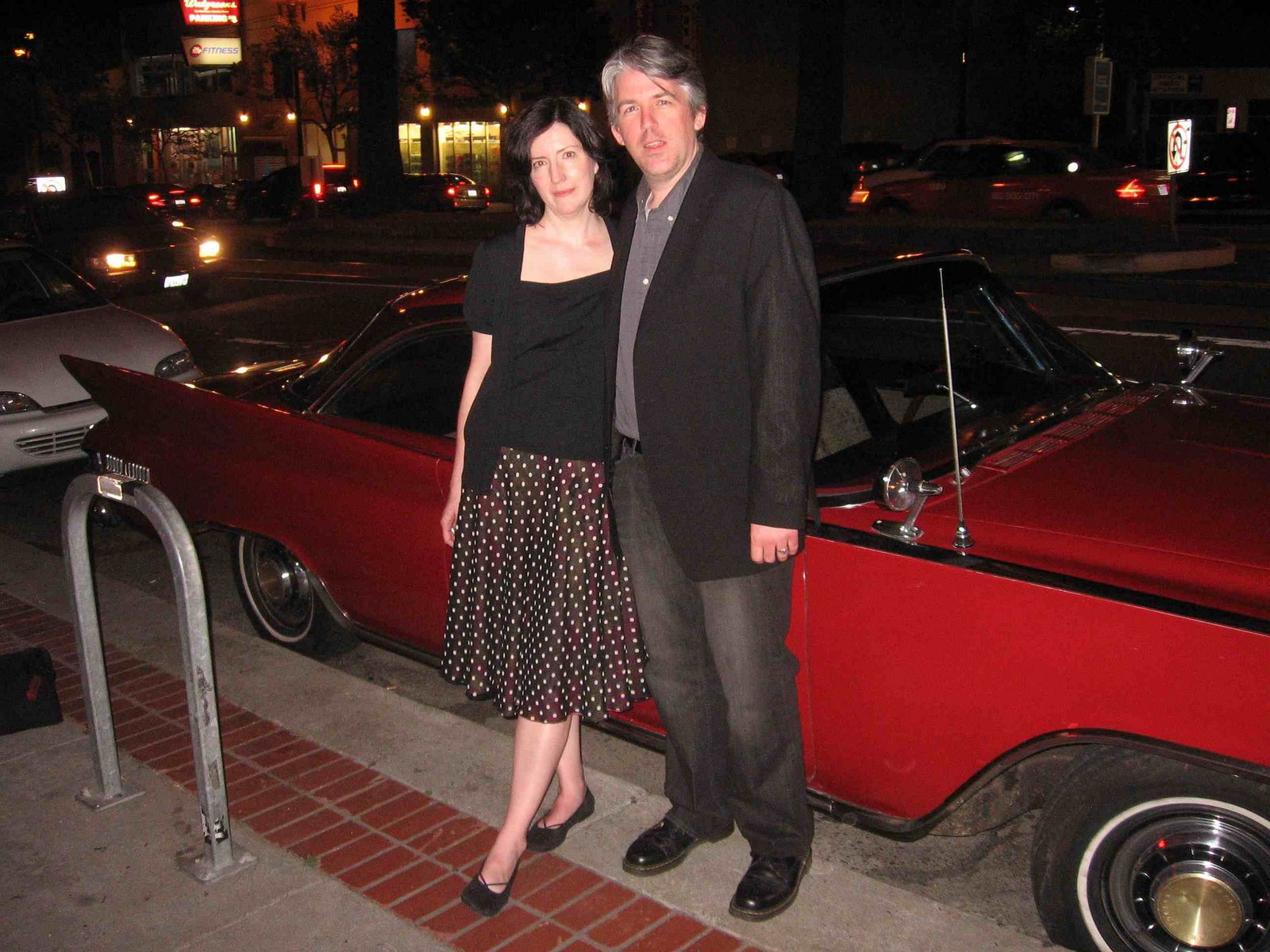
Ever the professional, Mr. Lucky set the mood. Henry Mancini’s soundtrack to Touch of Evil is booming out the windows of his sweet ride.
Next, we crashed the Thrillpeddlers closing night party at the Hypnodrome Theater, where we found ourselves having a conversation with Jello Biafra. When he talked about the early days of the California punk scene I almost told him that Henry Rollins once called me presidential, but thought it would be uncool.
All in all, a fantastic weekend full of good friends, good times and good cocktails. Now back to my real life and more quotidian concerns, like bears.
Thursday, May 14, 2009
Book: Hunt at the Well of Eternity, by James Reasoner (2009)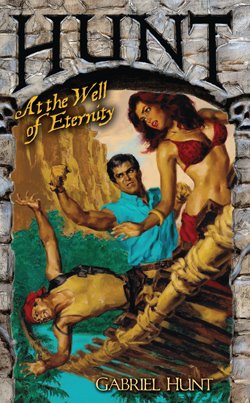 Odds are a few of you have heard of this book by now. What with the gales of publicity, the starred review in Publishers Weekly, the raves across the blogosphere. High time, I think, for someone to be a contrarian, to throw a little cold water on this enterprise.
That someone ain’t gonna be me.
James Reasoner launches the new adventure series from the people at Hard Case Crime in high style. The tone is perfectly established from the opening pages, when an exotically beautiful woman turns up at New York’s Metropolitan Museum of Art bearing some strange artifacts for globe-trotting adventurer Gabriel Hunt, and the gala erupts in gunplay. Before long – and I mean that, because I read this book in a flash – Gabriel’s up to his ears in Civil War lore, ruthless Mexican bandits, and, of course, more exotically beautiful women. Additional books are coming from a battery of authors including Christa Faust. I’ll read ‘em all.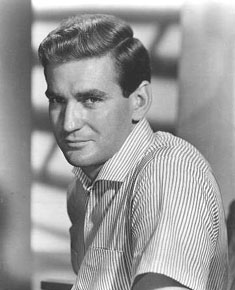 Random question #1: Is it me or is Gabriel Hunt in the Glen Orbik cover art above a dead ringer for Rod Taylor?
Random question #2: Does anybody remember the 1986 movie Jake Speed, another cable staple of my youth? Jake’s the hero of pulp paperbacks that turn out to be chronicles of his actual derring-do. I recall a great dyspeptic performance from John Hurt, the vague sense that the movie was crap, and nothing else. Maybe I should rent it.
On The Web: JAFO
Saints be praised, author Terrill Lee Lankford has a blog. Currently it features a long overdue critical reappraisal of Porky’s. It’ll also point you toward part one of Conflict of Interest, an original companion film to Michael Connelly’s upcoming novel The Scarecrow, written by Connelly and directed by TL. Go watch in HD.
Tuesday, May 12, 2009
DVD: Recent Release Round-Up
Just Another Love Story (U.S. 2009). I read some rave reviews for this movie when it opened in New York earlier this year and kept an eye out for it. Next time I saw the title, it was on the new release list. Jonas is a Danish crime scene photographer, married with kids. He’s responsible for a car accident and goes to visit the victim in the hospital – where he’s mistaken for the woman’s mysterious boyfriend by her family and eventually the woman herself.
Some classic noir threads are at play here. The disgruntled man led astray, Cornell Woolrich-style mistaken identities. The opening minutes are too cute and self-conscious, but soon the movie settles down and tells its story simply and well. One of the better films of the year so far.
Murder at the Vanities (1934). Director Mitchell Leisen praised himself at the expense of Busby Berkeley in a book I recently read, saying that at least the numbers in this film could be staged in a theater. Because that’s what we’re looking for in a musical – rigorous fidelity to the confines of the proscenium arch.
It is a backstage film, so (minor) point taken. If only the numbers were any good. The best, “Sweet Marihuana,” gets by on the basis of strategic nudity. As a musical comedy lead, Kitty Carlisle is a great game show panelist. Her costar Carl Brisson is one of those European exports that takes America by storm, like bidets, Fiats and socialized medicine. The murder plot is investigated by Victor McLaglen, who delivers every line around a mouthful of corned beef. Dorothy Stickney is fun as a nervous maid, and you do get a little Duke Ellington.
Search for Beauty (1934). Olympic athletes Buster Crabbe and Ida Lupino (then a mere sixteen years old, using her native English accent, and wearing scary eyebrows) are hoodwinked by con man Robert Armstrong (King Kong) into fronting a lurid “fitness” magazine. The kids then set up a spa, which Armstrong tries to turn into a brothel. Featuring multiple bare asses of the male variety and a number, “Symphony of Health,” best described as Leni Riefenstahl’s Xanadu.
The latter two films, part of Universal’s new Pre-Code Hollywood Collection, feature fetching ‘30s sexpot Toby Wing and actress Gertrude Michael. A hellraiser who dated pulp novelist Paul Cain and inspired a character in his legendary Fast One, she’s easily the best thing in both movies.
Friday, May 08, 2009
Sort-Of Related: The Couch Trip
Thank you for seeing me on such short notice, Doctor. I wanted to – there’s no couch? Only a chair?
No, it’s not a problem, I just expected a couch. Too many New Yorker cartoons, I suppose.
Anyway, Doctor, I’ve had psychiatry on my mind lately and I wanted to talk to someone about it.
How did it start? With High Wall, a film noir from 1947. Robert Taylor plays a veteran who suffers blackouts as a result of an injury sustained in the war. When he comes out of one of them his wife is dead, so he ends up in an institution under the care of Audrey Totter. Unsure if he killed his wife, afraid to find out the truth.
He didn’t do it. That’s one of things I like about the movie, the very elegant way you find out at the start that Herbert Marshall is the killer.
What else did I like? The hospital scenes are good. Honest without being overwrought, like in a lot of nuthouse – sorry, mental hospital films. And I appreciate the role that money plays in the plot, driving a wedge in Taylor’s marriage and indirectly setting up the murder. Very ... adult, I guess you’d say.
You know what’s funny? I saw this movie years ago and didn’t realize it until it was half-over. There’s a scene where Taylor recreates the crime, and as it comes back to him the rest of the movie came back to me. Part of the problem is Robert Taylor. He never leaves much of an impression. When I hear is name all I think of is Sarah Jessica Parker’s outsized enthusiasm for him in Ed Wood. But you’d think I’d remember Audrey Totter ...
No, I don’t care to explain that. Why would – what could I possibly be hiding?
All right. I am hiding something. I’d never seen Alfred Hitchock’s Spellbound.
Of course I’m ashamed. I’ve seen all of Hitch’s other big films. And most of the lesser ones. I’ve even seen his two wartime shorts, Bon Voyage and Aventure Malgache, on the big screen, so ...
I don’t understand. Overcompensating for what?
The point is, I finally saw Spellbound. Ingrid Bergman’s the psychiatrist. Gregory Peck is the new head of her institution, only maybe he’s not. And he’s got mental problems of his own.
Yes, I did like it. It was made during the Hollywood vogue for psychiatry, so it treats the practice a little too much like magic. It’s best known for the dream sequence designed by Salvador Dali. Which is dated and somewhat silly, because it contains the solution to a murder in code. But Hitchcock really sells it. The movies he made with David O. Selznick have a swoony, gothic feel like no other. I would have liked more of Rhonda Fleming as a nymphomaniac.
There’s nothing to read into that sentiment, Doctor. I think it’s pretty obvious.
You’re right. There is something further back that triggered all of this.
No, not in my childhood. I meant last month, when I started watching the new season of In Treatment on HBO.
Gabriel Byrne’s the shrink – sorry – and we sit in on four of his appointments a week, then his own session with Dianne Wiest. It’s a brilliant structure. Byrne is the model of rectitude with his patients, but when it’s his turn on the couch – actually, he and Dianne don’t have them, either – he’s petty, judgmental. Human.
I don’t follow every patient. I usually pick one or two. This season it’s Oliver, an overweight boy whose parents are getting divorced. And at the opposite end of the spectrum Walter, a businessman suffering panic attacks. John Mahoney from Frasier plays him, and he’s doing some of the best acting I’ve ever seen on TV. The man breaks my heart every week. Walter’s convinced his problems stem from an ongoing corporate crisis, but over the course of his treatment it becomes apparent that pain he buried sixty years ago is still seeping into his life. Powerful stuff. I never took therapy seriously, but the show illustrates how it can be beneficial for people. Who knows? Maybe even I could get something out of it.
It costs how much per session?
I see our time is up.
Wednesday, May 06, 2009
Book: Fright, by Cornell Woolrich (1950)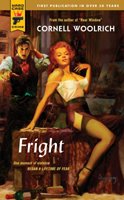 I’m circling back to some Hard Case Crime titles that I missed. No matter when I read this book, I’d have to be talked off a ledge. Fright, published under Woolrich’s pen name George Hopley, is that bleak.
It’s tricky to talk about the plot. A man about to be married has a moment of weakness. That moment comes back to haunt him. Let’s put it another way. Things start out bad. Then they get worse. And when you’re convinced the situation is as grim as it can possibly be, Woolrich kicks you one last time. And knowing that the kick is coming doesn’t help you. Not at all.
The setting, soon after the turn of the last century, is integral to the story, making every twist that much more inevitable. Woolrich’s occasionally overwrought style works wonders here, limning the inner life of a man forever looking over his shoulder and seeing only himself.
Damn. I need a drink just thinking about this one again.
Sunday, May 03, 2009
Extra, Extra!: Noir City Sentinel
The latest issue of the Noir City Sentinel, trade rag of the Film Noir Foundation, hits the streets today. A donation of any amount gets it delivered to your in-box. Twenty-four pages packed with noir news that’s piping hot and ice cold. Here’s just a sample of what’s inside:
* Guy Maddin lists his five favorite noirs!
* Bertrand Tavernier on the underrated Cry Danger – and details on the film’s restoration courtesy of the FNF!
* Edgar Award winner Megan Abbott on Clash By Night!
* Czar of noir Eddie Muller’s manifesto Noir for a New Century!
* A vintage pin-up of Kim Novak sure to steam up your monitor!
And appearing for the first time in the Sentinel, the byline of ... yours truly.
My debut piece is a tribute to the late Fabián Bielinsky. I look at the pair of extraordinary films made by the man Eddie says “would have been the greatest writer-director of contemporary noir.” Special attention is paid to El Aura, which I call “one of the finest cinematic noirs of this decade.”
The article will run here eventually. Of course, if you can’t wait, go to the Film Noir Foundation and contribute. You’ll get some terrific reading, and you’ll be helping the Foundation in its vital work.
Either way, do yourself a favor and rent El Aura. You’ll thank me later.
